In B2B sales, activity often gets confused with achievement. Your reps might be logging record hours, but are they spending that time on tasks that actually close deals? Too often, the answer is no. They get bogged down by manual research, writing generic emails, and chasing accounts that were never a good fit. This isn't an effort problem; it's a focus problem. Wasting time on low-probability prospects is a direct drain on resources and morale. To stop your team from spinning its wheels, it's key to learn how to qualify sales leads effectively.
The highest-performing sales teams get it. They don’t just work harder; they work smarter by building intelligence and automation into their workflows. They’ve swapped guesswork for data-driven signals, shifting from reactive, volume-based prospecting to proactive, value-led engagement. This change is crucial for boosting sales rep productivity and making sure every action counts.
This guide cuts through the generic advice. We’re breaking down ten specific, high-impact strategies you can implement now. You'll learn how to use real-time account intelligence, build trigger-based outreach, automate meeting prep, and strategically map stakeholder engagement. Each tactic is designed to free your reps from low-value tasks so they can focus on what they do best: building relationships and closing deals. Let's get into it.
1. Use Account Intelligence & Signal-Driven Prioritization
The biggest drain on sales rep productivity isn't a lack of effort—it's effort spent on the wrong accounts at the wrong time. Signal-driven prioritization fixes this. Instead of using static lead scores or cold outreach, this strategy uses real-time account intelligence to surface buying signals. This ensures reps engage prospects exactly when they are most likely to buy, turning prospecting from a numbers game into a strategic exercise.
The approach involves monitoring target accounts for events that signal an opportunity. These "signals" can include new funding rounds, key leadership changes, major hiring sprees, or even a competitor's misstep. By focusing on accounts broadcasting these changes, reps can craft relevant, timely outreach that cuts through the noise.

How It Boosts Productivity
Signal-based selling ensures that every minute spent on outreach has the highest possible chance of success. Instead of guessing which accounts might be in-market, reps act on real evidence, dramatically increasing their connect and conversion rates.
Real-World Examples:
- Fintech: A payments provider monitors retailers that announce international expansion plans—a clear signal they'll need cross-border payment solutions.
- SaaS: An enterprise software vendor flags companies that just hired a new CIO, a prime time to introduce new technology.
- Life Sciences: A CRO identifies biotech firms that just closed Series B funding, as they now have capital for clinical trials.
Actionable Implementation Tips
To put this into practice:
- Define Your Golden Signals: Don't track everything. Identify the 2-3 signals per persona or vertical that most strongly correlate with buying intent.
- Create Trigger-Based Templates: Develop specific outreach sequences for each key signal. For example, a "New VP of Sales" signal could trigger a sequence about sales enablement tools.
- Use Momentum as a Multiplier: An account with multiple signals in a short time (e.g., new funding and hiring for a new department) should be a top priority.
- Integrate with Your Workflow: Pipe real-time signal alerts directly into Slack or your CRM to ensure fast follow-up.
For teams looking to master this approach, learn more about signal-based selling. By aligning sales activity with market events, you empower reps to focus their energy where it matters most.
See Salesmotion in action
Take a self-guided interactive tour — no signup required.
2. Lead with a Value-Based, AI-Generated Point of View
Generic, feature-focused pitches don't work anymore. Value-based selling shifts the conversation from "what our product does" to "what our product does for your business." This strategy anchors every interaction to the prospect's specific situation, pain points, and goals. By using AI to quickly synthesize account research, reps can craft a compelling point of view that shows they've done their homework and positions their solution as a strategic must-have.
This approach turns reps from vendors into trusted advisors. Instead of listing features, they lead with insights from the prospect's own data, like earnings reports or new initiatives. This immediately builds credibility and relevance, which is key for engaging senior decision-makers.

How It Boosts Productivity
AI-powered point of view generation cuts down on manual research time, letting reps prep for high-stakes calls in minutes, not hours. This focus on relevance makes conversations more impactful, shortening sales cycles and improving win rates. Better prep means higher sales rep productivity because every interaction moves the deal forward.
Real-World Examples:
- Healthcare IT: A rep notes a prospect's new CTO hire and recent data breach, then ties their cybersecurity solution directly to the new leader's mandate to secure patient data.
- Consulting: An account director references a prospect's earnings call about margin pressure, then proposes an engagement focused on specific operational efficiency gains.
- Enterprise SaaS: A rep aligns their platform's roadmap with a prospect’s public digital transformation goals, showing how they can accelerate key priorities.
Actionable Implementation Tips
To build this into your sales motion:
- Use the '3-Layer Brief' Format: Structure your point of view: What's happening? (the signal), Why it matters? (the business implication), and What to do about it? (the opportunity for your solution).
- Anchor with Specific Metrics: Reference 1-2 numbers from the prospect's reports or announcements to build instant credibility.
- Tailor Your Message: Customize your point of view for the audience. A CFO cares about ROI and risk, while a CTO is focused on technical capability.
- Practice Your 60-Second Opener: Condense your insights into a powerful, 30-60 second narrative that you can deliver concisely.
For teams ready to move beyond generic pitches, learn how to build a powerful value hypothesis. Leading with insight commands attention and proves your value from the first interaction.

“There's been a big focus on hyper personalization and relevance in our outbounding efforts. Salesmotion has been a key partner in hitting our significantly increased meeting targets. What stands out is how simple it is. Reps can log in and get valuable account insights within 30 seconds to a minute.”
Joe DeFrance
VP of Sales, Incredible Health
3. Create Strategic Account Plans That Are Living, Signal-Refreshed Documents
Static, set-and-forget account plans are a thing of the past. Modern strategic account planning treats these documents as living guides that are constantly updated with real-time intelligence. This approach transforms plans from dusty documents into dynamic playbooks that inform every interaction.
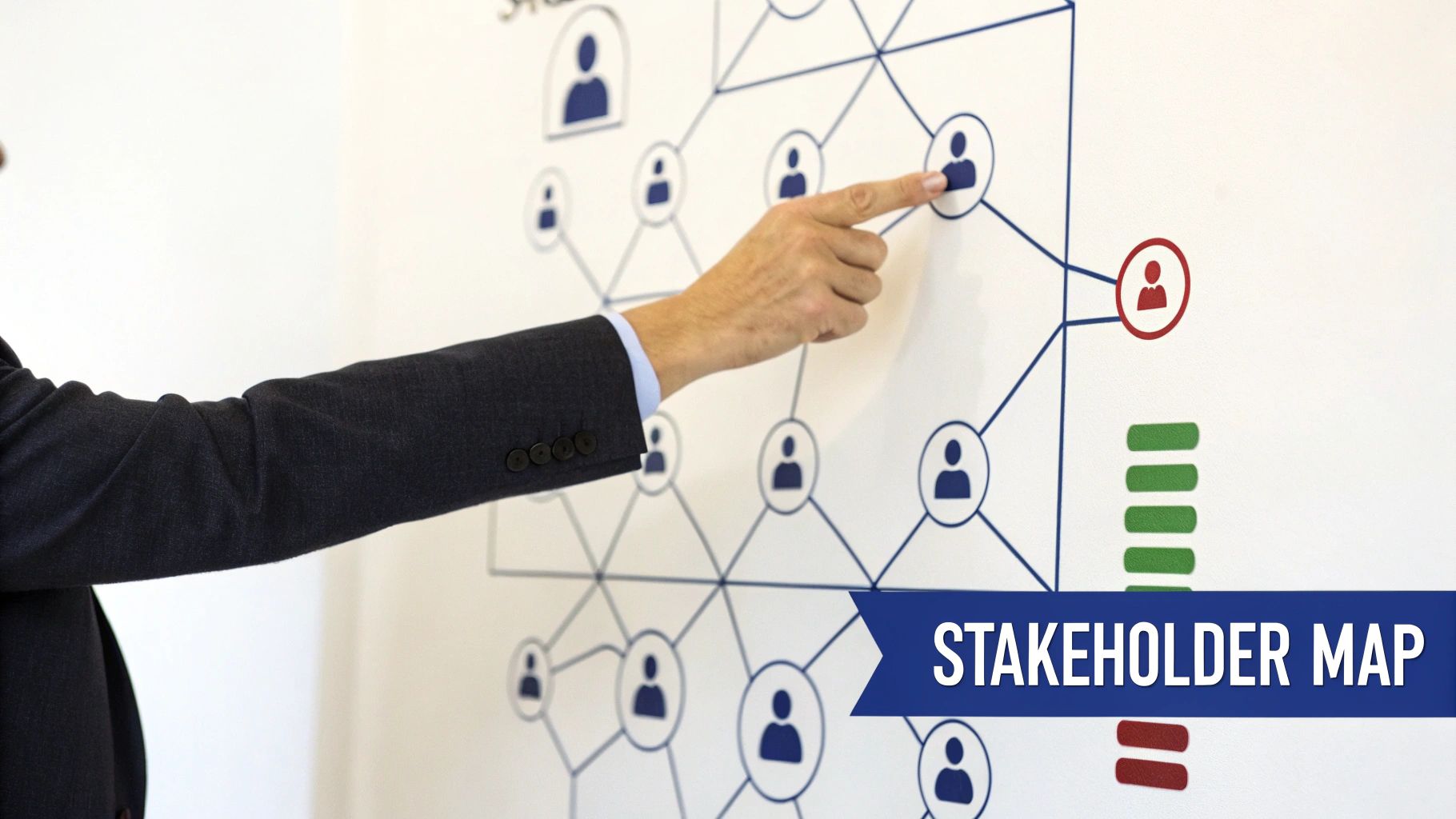
This strategy involves integrating new signals—like leadership changes, new funding, or competitive displacements—directly into the account plan as they happen. This ensures the entire account team is working from the most current information, allowing for quick adjustments to stakeholder maps and messaging. It's a key discipline for boosting sales rep productivity in complex B2B sales.
How It Boosts Productivity
Living account plans prevent reps from wasting time on outdated assumptions. By ensuring the strategy always aligns with the account's current reality, reps can prioritize high-impact activities, multi-thread more effectively, and tailor outreach with precision. This proactive approach minimizes missteps and speeds up deals.
Real-World Examples:
- SaaS: An account plan flags the replacement of a key economic buyer, automatically triggering a task for the AE to build a new relationship.
- Consulting: An alert for a major restructure at a client prompts an urgent update to the stakeholder map to identify new decision-makers.
- Biotech Services: A prospect’s Series C funding round is flagged, prompting the account team to engage new investors about expanding services.
Actionable Implementation Tips
To make your account plans dynamic:
- Use a Simple 1-Page Template: Focus on key sections: org chart, strategic initiatives, key stakeholders, risks, and next steps. Avoid overly complex documents.
- Assign Clear Ownership: The Account Executive should own the plan, with their manager providing accountability.
- Set a Refresh Cadence: Review plans quarterly at a minimum, with weekly scans for high-priority accounts.
- Include a 'Decision Map': Outline the buying committee, their criteria, and the timeline to align with methodologies like MEDDICC.
- Share Key Summaries: Keep marketing and customer success in the loop to ensure a cohesive engagement strategy.
For teams ready for a more agile planning process, explore the fundamentals of modern sales account planning or our complete account planning guide. By embedding real-time signals into your strategy, you turn static plans into a powerful tool for improving sales rep productivity.
4. Automate Research & Meeting Prep
One of the biggest hidden drains on sales rep productivity is the "research tax"—the hours spent manually gathering information before a call. Automated workflows eliminate this tax by collecting, synthesizing, and delivering crucial pre-call context directly to the rep. This includes company initiatives, key stakeholders, competitive intel, and even suggested talking points.
This automation turns meeting prep from a chore into a streamlined, strategic activity. Instead of spending hours compiling data, reps receive a concise, actionable brief. This frees them to focus on designing a compelling conversation, building rapport, and asking smart discovery questions. The impact is huge in high-volume prospecting or complex enterprise sales where prep speed is a competitive advantage.
How It Boosts Productivity
Automating research fundamentally changes how a sales rep allocates their time. Compressing a 45-minute account research task into a 5-minute review lets reps dramatically increase their daily outreach or dedicate more time to strategic activities. This directly boosts sales rep productivity by ensuring every conversation is informed and impactful without the usual time sink.
Real-World Examples:
- SaaS Sales: An inside sales team uses automated briefs to slash research time, enabling them to triple their daily outreach with personalized messages.
- Consulting: A business development team leverages automated context to personalize over 50 outreach emails daily, a task that would otherwise require a research assistant.
- Biotech: A services firm uses Slack-delivered briefs to enable rapid, informed follow-up with high-value prospects after industry events.
Actionable Implementation Tips
To integrate automated prep into your sales motion:
- Request Briefs in Advance: Trigger automated briefs at least 24 hours before calls to give reps time to digest the insights.
- Use as a Conversation Starter: Leverage insights from the brief to open conversations naturally. "I saw you recently hired a new VP of Product; how is she thinking about your 2025 roadmap?"
- Highlight the Top 1-2 Points: Focus on the most relevant talking points. The goal is to guide, not script, the conversation.
- Create a Feedback Loop: Train reps to capture new intel during calls and feed it back into your CRM to enrich future automated briefs.
Teams looking to implement this can explore how to get started with sales research automation. By replacing manual data gathering with intelligent automation, you empower reps to spend more time selling and less time searching.
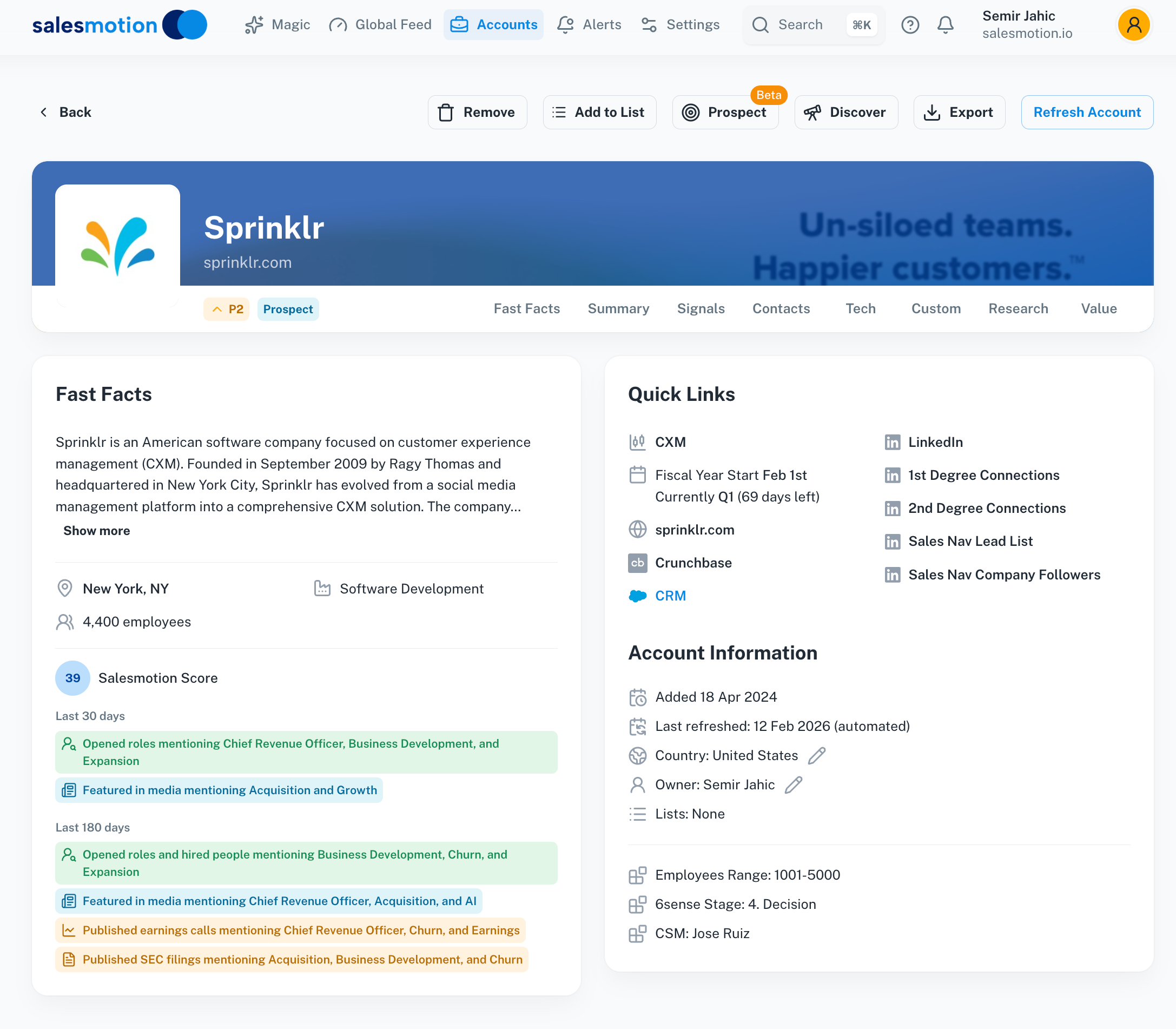 An automated fast-facts panel delivers company overview, financials, tech stack, and recent news in seconds — replacing 30 minutes of manual research before every call.

“This is my singular place that very simply summarizes a company's top initiatives, strategies and connects them to my solution. Something I would spend hours researching manually, now it's automated.”
Derek Rosen
Director, Strategic Accounts, Guild Education
5. Use Trigger-Based Cadences & Automated Outreach
Generic, time-based email sequences are outdated. Modern sales rep productivity hinges on relevance, and trigger-based cadences deliver it at scale. This strategy replaces one-size-fits-all outreach with automated sequences that activate only when a specific, high-intent buying signal occurs at a target account. For practical guidance on building these sequences, see our email cadence tips. It combines the efficiency of automation with the personalization buyers expect.
Instead of guessing when to reach out, reps let account activity dictate the timing and context. When an account gets new funding, hires a key executive, or announces a product expansion, a pre-built, tailored sequence is automatically deployed. This ensures the first touchpoint is both timely and relevant to the prospect's current priorities, dramatically improving engagement rates.
How It Boosts Productivity
Trigger-based cadences eliminate wasted effort on cold, context-less outreach. By automating the initial engagement based on real events, reps can focus their manual efforts on warm conversations rather than prospecting from scratch. This system ensures every automated touch has a purpose, directly boosting sales rep productivity.
Real-World Examples:
- HR Tech: A vendor automatically enrolls a new CHRO into a sequence about employee retention benchmarks.
- Fintech: A platform triggers a "regulatory change" sequence when new compliance rules are announced for a prospect's industry.
- Marketing Automation: A platform launches a "product expansion" sequence when a company announces a new product line, signaling new marketing needs.
Actionable Implementation Tips
To effectively integrate this into your workflow:
- Map Signals to Solutions: Connect your top buying signals to your most relevant products, then build a specific outreach cadence for each pairing.
- Lead with the Signal: Make the trigger the hero of your subject line. Instead of "Checking In," try "Congrats on the Series B - Scaling Operations?"
- Keep it Concise: Design short sequences of 3-5 touches over 10-14 days. Respect the prospect's time.
- Include a Clear CTA: Every message needs a clear, low-friction next step, like booking a 15-minute call or downloading a case study.
- Segment Your Audience: Reserve these powerful automated sequences for cold or dormant accounts to maximize impact.
6. Multi-Thread with Stakeholder Mapping
Relying on a single point of contact is one of the biggest risks in a complex sales cycle. If that champion leaves or loses influence, the deal stalls. Multi-threading prevents this by systematically identifying, tracking, and engaging all key decision-makers and influencers in the organization. This strategy builds broad consensus and protects the deal from the fate of a single relationship.
This approach moves beyond a single conversation to build a web of support across the buying committee. By understanding each stakeholder's unique priorities and concerns, reps can deliver role-specific value. AI-powered account intelligence can speed this up by surfacing key contacts and their likely influence, boosting sales rep productivity.
How It Boosts Productivity
Multi-threading ensures deals keep moving even if a key contact goes silent. By engaging multiple stakeholders in parallel, reps can accelerate the buying process, uncover potential blockers early, and significantly reduce the risk of a deal going dark. It shifts the rep's focus from maintaining one relationship to orchestrating a committee decision.
Real-World Examples:
- Enterprise Software: A vendor engages the CIO (security), the CFO (ROI), and a Business Unit Head (product fit) with tailored messaging for each.
- Consulting: A firm connects with the COO (efficiency), Finance Lead (cost analysis), and an Operations Manager (logistics) to address each of their concerns.
- Biotech Services: A provider shares role-specific case studies with the Chief Scientific Officer, VP of R&D, and the Finance Lead at the same time.
Actionable Implementation Tips
To effectively integrate this into your workflow:
- Create a Stakeholder Matrix: For each key account, map out stakeholders by name, role, influence level, and priorities.
- Engage Economic Buyers Early: Don't wait for your champion to introduce you. Proactively reach out to financial decision-makers with a strategic, ROI-focused message.
- Leverage Your Internal Champion: Ask your primary contact for help navigating the organization and understanding other stakeholders.
- Tailor Messaging by Role: A CFO cares about metrics, a CTO wants technical details, and an operations leader needs implementation certainty. Your outreach must reflect this.
- Document Everything in Your CRM: Keep detailed notes on each stakeholder. This creates a single source of truth for your team.
7. Plan Territories with Data-Driven Opportunity Scoring
Traditional territory planning often relies on geography or gut feel, leading to imbalanced workloads and missed opportunities. Data-driven planning uses an objective system, scoring territories and accounts based on their true potential. This ensures sales reps focus their limited time on the accounts most likely to convert, maximizing sales rep productivity across the board.
This strategy involves creating a scoring model based on your ideal customer profile fit, engagement levels, and real-time buying signals. By assigning a score to each account, sales leaders can allocate resources precisely, ensuring every rep has a territory with a balanced mix of high-probability prospects. It turns prioritization from a guessing game into a science.
How It Boosts Productivity
Data-driven scoring directs effort where it will generate the highest return. Instead of treating all 1,000 accounts in a territory equally, reps can immediately identify the 150 "green-light" accounts with active signals and high fit scores. This ruthless prioritization prevents time from being wasted on low-potential leads and accelerates pipeline velocity.
Real-World Examples:
- SaaS: A software company uses engagement momentum to surface "accounts to win back" where recent signals suggest renewed buying interest.
- Consulting: A firm uses fit and opportunity scoring to identify prime cross-sell opportunities within its existing customer base.
- Enterprise Software: A vendor scores territories to balance workloads, ensuring each rep has an equitable mix of established relationships and high-growth prospects.
Actionable Implementation Tips
To effectively integrate this into your workflow:
- Start Simple: Begin with a basic model combining an ICP fit score and a signal score. You can add complexity later.
- Involve Sales Leadership: Collaborate with sales leaders when building the model. Their expertise ensures the scores reflect real-world sales dynamics.
- Update Scores Regularly: Refresh scores at least monthly to keep prioritization aligned with current market conditions.
- Be Transparent: Share the scoring logic with reps. When they understand why an account is a priority, their outreach will be smarter.
- Use Scores to Guide, Not Dictate: Allow reps to pursue accounts outside the top-scored tiers with manager approval. The model should empower their judgment, not restrict it.
8. Use Competitive Displacement & Win/Loss Intelligence
In crowded markets, sales rep productivity isn't just about finding new opportunities; it's about protecting your base and winning head-on. Competitive intelligence, combined with a rigorous win/loss analysis process, gives reps the insights needed to outmaneuver rivals. This strategy moves teams from reacting to competitors to proactively shaping deal cycles.
This approach involves two core activities: monitoring the competitive landscape in real-time and systematically dissecting deal outcomes. By tracking competitor product launches or their engagement with your prospects, reps can preemptively address threats. At the same time, analyzing why deals are won or lost reveals patterns in messaging or product gaps that can be fixed to improve future performance.
How It Boosts Productivity
This dual focus ensures reps don't waste time on losing battles or get blindsided by a competitor's late-stage push. They enter conversations equipped with proven differentiators and an understanding of the competitive dynamics. This boosts their confidence and win rates, ensuring their effort converts to revenue.
Real-World Examples:
- Enterprise Software: An analytics vendor analyzed 10 recent losses and found Competitor X was winning on "speed of implementation." They developed new messaging and a rapid-start package to neutralize this objection.
- Healthcare IT: A vendor got an alert that a key prospect was engaging a rival. They proactively re-engaged with security-specific proof points and ROI calculations, successfully defending the account.
- Consulting: A firm tracked wins against a specific rival and built a battlecard highlighting their unique IP, improving their win rate against that competitor by 25%.
Actionable Implementation Tips
To effectively integrate this into your sales motion:
- Systematize Win/Loss Analysis: Build a formal win/loss survey into your post-deal process. Capture feedback within two weeks of a decision.
- Segment Your Intelligence: One-size-fits-all battlecards don't work. Segment competitive insights by use case and vertical to give reps relevant talking points.
- Keep Battlecards Dynamic: Update competitive materials quarterly to reflect rivals' new features or messaging shifts.
- Coach Proactive Differentiation: Train reps to lead with your unique value, not by bashing competitors. A message of "here's why we're uniquely better for you" is far more powerful than "here's why they are bad."
By embedding competitive and win/loss intelligence into the sales workflow, you give reps the strategic edge needed to win consistently.
9. Create Sales Enablement & Proof Point Libraries
Nothing kills deal momentum faster than a rep scrambling to find the right case study. A well-organized, searchable library of proof points ensures that reps have the exact content they need, when they need it, to address a prospect's specific concerns. This strategy focuses on creating vertical- and role-specific assets that resonate with a prospect's problems.
This approach transforms your content from a static resource into a dynamic sales tool. It involves building a central hub of case studies, ROI calculators, and technical guides, all tagged by the real-world challenges they solve. This lets reps quickly find and share relevant content, improving deal velocity and directly boosting sales rep productivity.
How It Boosts Productivity
An organized content library drastically reduces the time reps spend searching for or creating collateral. By providing proven, relevant assets for specific buying scenarios, you empower reps to build trust and demonstrate value faster. They can pivot conversations with confidence, knowing the perfect proof point is a click away.
Real-World Examples:
- Enterprise Software: A vendor maintains a library of 20+ vertical-specific case studies (Healthcare, Financial Services) with quantified outcomes.
- SaaS: A platform provides ROI calculators and benchmark reports tailored to a prospect's segment, allowing reps to build a data-driven business case on the fly.
- Biotech Services: A provider organizes customer reference calls by research type so prospects can speak with experienced customers in their exact field.
Actionable Implementation Tips
To build an effective proof point library:
- Organize by Pain Point: Tag content by the prospect's problem, not your internal product names. Prospects search for solutions.
- Quantify Everything: Ensure every asset includes quantified outcomes: time saved, revenue gained, or risk reduced. Numbers are compelling.
- Enable Easy Sharing & Tracking: Integrate the library with your CRM to allow one-click sharing and track which assets are most effective. When creating content, consider the understanding the psychology and design of sales presentations to maximize impact.
- Start Small and Iterate: Begin with your top 3-5 highest-value use cases and verticals. Build from there.
10. Follow Integrated Best Practices for Implementation
Successfully adopting new sales methods, especially those driven by AI and real-time signals, is less about the technology and more about the implementation. A brilliant tool will fail without a structured rollout plan that addresses people, processes, and technology together. This integrative approach ensures new systems are not just adopted but embraced, leading to real gains in sales rep productivity.
This framework acts as a practical checklist for deploying advanced sales systems. It focuses on de-risking the transition by starting small, proving value quickly, and building momentum. By thoughtfully sequencing the rollout, enforcing data hygiene, and creating feedback loops, you can transform your sales floor into a high-performance, signal-driven engine.
How It Boosts Productivity
A structured implementation prevents the chaos that often comes with new tech. It minimizes disruption, builds rep confidence, and ensures the new system delivers on its promise. Instead of overwhelming the team, this phased approach allows them to master new workflows and see the benefits firsthand, which directly increases long-term efficiency.
Real-World Examples:
- Enterprise Tech: A security software firm pilots a new signal-based system with their mid-market team, focusing only on "New CISO Hire" and "Data Breach" signals. After a 15% lift in meetings booked in Q1, they expand it to the enterprise team.
- Marketing Agency: An agency starts by integrating account intelligence for its top 20 enterprise accounts. They track reply rate improvements before scaling the system to their entire book of business.
Actionable Implementation Tips
To manage the deployment of a new sales system:
- Start with a Narrow Pilot: Select one team to test the new process. Focus on 2-3 high-impact signal types and a single playbook to prove the concept.
- Define and Track Success Metrics: Before you start, establish clear KPIs like time saved per rep, reply rate lift, or pipeline conversion. Track these weekly to measure impact.
- Involve Sales Managers Early: Sales managers are critical for driving adoption. Include them in the pilot design so they can effectively coach their teams.
- Enforce Data Governance: A great system with bad data is useless. Define primary data sources, establish a regular refresh cadence, and assign clear ownership for maintaining data.
- Iterate Rapidly: Use feedback from reps to quickly refine signal filters and messaging templates. The goal is to make the system work for them, not the other way around. Scale only after proving a repeatable lift.
10-Point Sales Rep Productivity Comparison
| Item | Implementation complexity | Resource requirements | Expected outcomes | Ideal use cases | Key advantages |
|---|---|---|---|---|---|
| Account Intelligence & Signal-Driven Prioritization | Medium — configure signals, scoring, integrations | Data feeds, integration with CRM/Slack, config effort | Faster prioritization; higher open/response rates; less manual research | Complex B2B deals, named-account outreach, timing-sensitive opportunities | Real-time signals, algorithmic scoring, timely outreach |
| Value-Based Selling with AI-Generated Point of View | Medium — adopt AI briefs and coach delivery | AI tooling, content inputs, rep training | More relevant conversations; higher meeting rates; faster deal momentum | Multi-stakeholder, strategic deals where credibility matters | Personalized insights, MEDDICC alignment, consistent POV |
| Strategic Account Planning with Living, Signal-Refreshed Contexts | High — process redesign, CRM workflows, ongoing maintenance | CRM customization, signal ingestion, accountable plan owners | Aligned teams, improved forecasting, sustained account focus | Strategic/land-and-expand accounts and enterprise deals | Dynamic plans, shared visibility, signal-triggered updates |
| Automated Research & Meeting Prep in Automated Workflows | Low–Medium — integrate brief generation into workflows | Data feeds, AI summarization, delivery channels (Slack/CRM) | Prep time cut to minutes; higher call quality; increased outreach volume | High-volume prospecting and pre-call preparation at scale | Fast, standardized briefs; higher rep productivity |
| Trigger-Based Cadence & Automated Outreach Sequences | Medium — build conditional logic and templates | Sales engagement platform, signal inputs, content templates | Higher open/reply rates; timely follow-ups; scalable outreach | Event-driven outreach (funding, hires, product launches) | Signal-activated sequences, automation + personalization |
| Multi-Threading & Stakeholder Mapping with Role-Specific Engagement | Medium–High — map stakeholders and maintain relationships | Relationship intelligence, CRM fields, training/coaching | Reduced single-thread risk; faster consensus; stronger close rates | Enterprise deals with buying committees | Role-specific messaging, continuity, consensus building |
| Data-Driven Territory Planning & Opportunity Scoring | High — modeling, scoring, territory algorithms | Historical win/loss data, analytics, RevOps involvement | Objective prioritization; better win rates; fair workload balance | Scaling sales orgs; RevOps-led territory/resource allocation | Algorithmic allocation, repeatable scoring, improved forecasting |
| Competitive Displacement & Win/Loss Intelligence | Medium — set up monitoring and feedback loops | CI tools, win/loss interviews, analysis effort | Proactive defense, better positioning, product/marketing insights | Highly competitive verticals and churn-prone accounts | Battlecards, trend analysis, targeted re-engagement |
| Sales Enablement Content & Proof Point Libraries | Medium — curate, tag, and integrate content | Content creation, CMS, tracking, PM ownership | Faster, more credible proposals; shorter cycles; consistent messaging | Deals requiring evidence (case studies, ROI) and onboarding reps | Searchable, role/use-case-specific proof; reusable templates |
| Integrated Best Practices & Implementation Considerations | Medium — pilot→scale, change management, governance | Leadership buy-in, pilots, training, measurement systems | Lower rollout risk; higher adoption; measurable ROI | Organizations implementing signal-driven/AI sales systems | Roadmap, data governance, change-management guidance |
From Busy to Productive: Making the Shift to Intelligent Selling
The path to better sales rep productivity isn't paved with more hours or more dials. True productivity isn’t about working harder; it’s about working smarter. The strategies we've covered point to a fundamental shift in modern sales: moving from reactive, manual work to a proactive, signal-driven approach. It’s the difference between being merely busy and being truly productive.
By implementing even a few of these tactics, you can begin to transform your sales organization. Instead of reps spending half their day on low-value research and admin tasks, they're free to focus on what they do best: building relationships, understanding customer challenges, and closing deals. This is the core of intelligent selling.
Key Takeaways
- The biggest productivity drain for sales reps is not lack of effort but effort spent on the wrong accounts at the wrong time; signal-driven prioritization fixes this.
- AI-generated points of view cut meeting prep from hours to minutes, enabling reps to lead every conversation with relevant, credibility-building insights.
- Static account plans are outdated; living, signal-refreshed plans ensure strategy always reflects the account's current reality and buying committee.
- Trigger-based outreach cadences replace generic time-based sequences with automated, event-driven engagement that dramatically improves open and reply rates.
- Multi-threading across the buying committee protects deals from stalling when a single contact goes silent and accelerates consensus building.
- Structured implementation with narrow pilots, clear KPIs, and rapid iteration is the key to successfully adopting any new sales productivity system.
Recapping the Pillars of High-Impact Productivity
Let's distill the key takeaways. The most successful revenue teams master a few critical areas:
- Prioritization through Intelligence: Top performers don't treat every account equally. They use account intelligence and buying signals to focus on opportunities with the highest probability of closing.
- Automation with Purpose: The goal of automation isn't just to be faster; it's to execute the right tasks at scale. From automated meeting prep to trigger-based outreach, automation should serve strategy, not just speed.
- Relevance at Scale: Generic messaging fails. By using AI to generate value-based points of view and organizing content by use case, your team can deliver relevant, personalized interactions every time.
- Strategic Execution: From dynamic account planning to multi-threading tactics, every action is deliberate. This strategic layer ensures individual efforts align with broader revenue goals.
Your Actionable Path Forward
Transforming your team’s approach to sales rep productivity can feel daunting, but it doesn't have to be. The key is to start with a focused, measurable initiative. Don't try to boil the ocean.
Instead, select one or two high-impact areas to begin.
- Identify a Key Bottleneck: Where does your team lose the most time? Is it pre-call research? Prioritizing accounts? Finding stakeholders? Start there.
- Launch a Focused Pilot: Choose a small group of reps to pilot a new workflow. For example, implement automated meeting prep for one sales pod and measure its impact on meeting quality.
- Measure, Iterate, and Scale: Track the relevant KPIs. Did the pilot improve efficiency or shorten the sales cycle? Use the data to refine the process before rolling it out to the entire team.
Mastering these concepts creates a more predictable revenue engine, improves team morale by cutting out frustrating manual work, and builds a sustainable competitive advantage. When your team knows who to talk to, what to say, and when to say it, they aren't just selling—they are solving problems and building partnerships. This is the future of sales.
Frequently Asked Questions
What is the biggest time waster for sales reps?
Manual research and meeting preparation consistently rank as the top time wasters. Reps often spend 30 to 60 minutes gathering background information before a single call. Automating this research with AI-powered briefing tools can compress that time to just a few minutes, freeing reps to focus on selling.
How do I measure sales rep productivity effectively?
Focus on outcome-based metrics rather than just activity counts. Track pipeline created per rep, meetings-to-opportunity conversion rate, average deal cycle length, and revenue per selling hour. Pair these lagging indicators with leading metrics like daily outreach volume and signal response time for a complete view.
What are buying signals and how should reps use them?
Buying signals are real-time events that indicate an account may be ready to purchase, such as new funding rounds, executive hires, technology changes, or competitor displacements. Reps should use these signals to prioritize outreach timing and personalize their messaging, referencing the specific event as the reason for reaching out.
How can sales managers improve team productivity without adding headcount?
Start by automating repetitive tasks like research, data entry, and follow-up sequences. Then implement signal-based prioritization so reps focus on accounts with the highest probability of closing. Finally, build a searchable library of proof points and enablement content so reps can find what they need instantly rather than creating materials from scratch.
Ready to stop guessing and start selling with intelligence? Salesmotion is the platform that turns account signals into actionable GTM plays, automating the research and prioritization discussed here to boost your sales rep productivity. See how Salesmotion can equip your team to win more deals.