If you work in B2B sales, you know that building pipeline is all about timing and relationships. But what if you could tap into a goldmine of warm leads by simply keeping track of the people who already love your product? That's where champion tracking comes in (and it's one of the most effective, yet underused, ways to generate pipeline today).
What is Champion Tracking?
Champion tracking means following your product's biggest fans (your champions) as they move to new companies. These are the people who already know your value, have used your solution, and can advocate for you in their new roles. Instead of starting from scratch with cold outreach, you're reconnecting with someone who already trusts you.
See Salesmotion in action
Take a self-guided interactive tour — no signup required.
Why Champion Tracking is a Game-Changer for Pipeline
Champion tracking is a proven way to:
- Generate more pipeline from warm, high-quality leads
- Shorten sales cycles, since your champion already knows your product (see how Analytic Partners leveraged warm relationships to accelerate pipeline)
- Increase win rates, thanks to internal advocacy
- Lower acquisition costs by skipping cold outreach
- Expand into new accounts with a built-in ally
Studies show that champions who move to new companies are much more likely to buy again, and deals close faster and at higher values when you have a champion on your side.

“The moment we turned on Salesmotion, it became essential. No more hours on LinkedIn or Google to figure out who we're talking to. It's just there, served up to you, so it's always 'go time.'”
Adam Wainwright
Head of Revenue, Cacheflow
How to Track Your Champions
There are a few ways to start tracking your champions, depending on your resources and goals.
Manual Tracking with LinkedIn
The simplest way is to manually monitor LinkedIn for job changes. Make a list of your top customers and advocates, connect with them, and check in every so often to see if they've moved. When you spot a change, reach out with a personal message and offer value (not just a sales pitch).
Pros:
- Free and easy to start
- No special tools required
Cons:
- Time-consuming and hard to scale
- Easy to miss updates
Automated Tracking Tools (with Caution)
Some sales teams use browser automation tools to track job changes on LinkedIn. These tools can alert you when someone changes jobs. However, using automation on LinkedIn may violate LinkedIn's terms of service and could put your account at risk. Data accuracy can also vary.
Pros:
- Faster than manual tracking
- Can integrate with your CRM
Cons:
- Risk of account restrictions
- Not always compliant or reliable
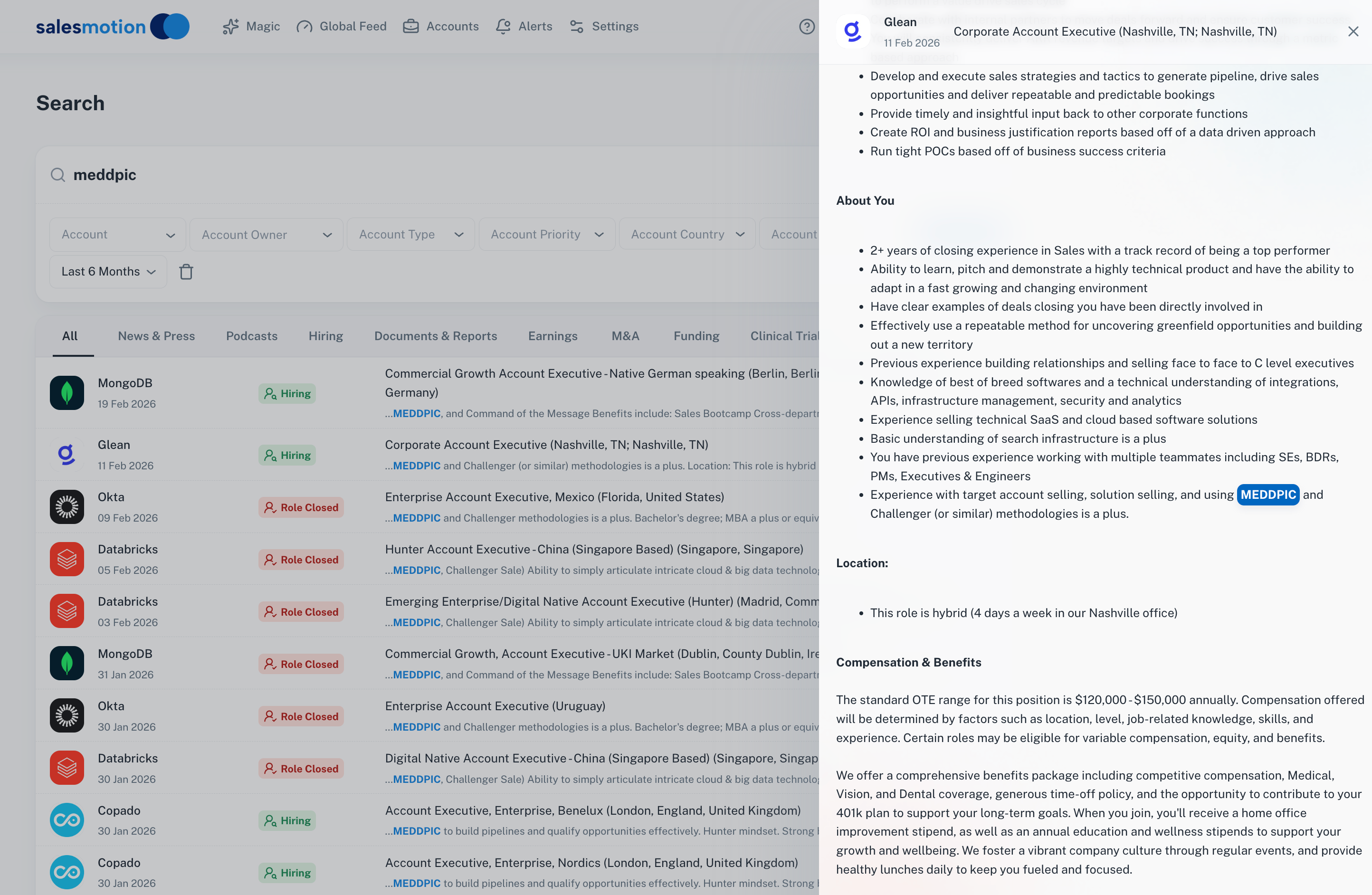 A cross-account search surfaces contact details and job history when a champion moves — so you spot the role change the day it happens.
Clean, Scalable Alternatives
If you want a safer, more scalable solution, there are dedicated champion tracking platforms built for this exact purpose. Here are the top options:
Salesmotion
Salesmotion includes a module designed specifically for tracking champions. It automatically monitors job changes and surfaces warm leads when your past advocates land in new roles. Salesmotion is fully compliant with LinkedIn's terms, integrates with your CRM, and is built for revenue teams who want to prioritize warm intros over cold outreach. If you want a clean, reliable way to build pipeline from past relationships, Salesmotion is the best place to start, as recognized in the Gartner Innovation Guide.
UserGems
UserGems tracks job changes as one of its 30+ native signals and helps you re-engage with former customers. It's especially useful for companies with large customer bases and long sales cycles. For a detailed comparison, see our UserGems vs Salesmotion guide.
Champify
Champify focuses on identifying and activating champions within your network. It helps you prioritize accounts where you already have internal advocates.
Best Practices for Champion Tracking
- Keep your CRM data clean and tag your champions
- Reach out with context and a personal touch when someone changes jobs
- Coordinate with marketing for targeted campaigns
- Act quickly (timing is everything when a champion lands in a new role)
“Automatic account profile detail I can use to manage my territory. Using Salesmotion AI to generate value statements per persona, account, etc. Using Salesmotion to give me a starting point based on new hires, or news alerts is critical.”
Adam Wainwright
Head of Revenue, Cacheflow
Measuring Success
Track metrics like the number of champion job changes, response rates, meeting conversions, and pipeline generated from champion tracking. Teams that do this well often see a significant boost in sales performance.
Key Takeaways
- Champion tracking means following your product's biggest advocates as they move to new companies, turning their job changes into warm pipeline opportunities with higher win rates and shorter sales cycles.
- Deals sourced from past champions close faster, have higher win rates, and cost less to acquire than cold outreach because the trust and product knowledge are already established.
- Manual LinkedIn monitoring works for small-scale tracking, but dedicated platforms like Salesmotion, UserGems, or Champify are essential for scaling champion tracking reliably and compliantly.
- Keeping your CRM data clean and tagging champions proactively ensures you never miss a job change alert from a key advocate.
- Speed matters: reaching out quickly when a champion lands in a new role maximizes your window of opportunity before they settle on existing vendor relationships.
Final Thoughts
Champion tracking is one of the smartest ways to generate pipeline in today's competitive B2B landscape. For a deeper dive into building a full advocate strategy, see our champion tracking practical guide. It is a key component of signal-based selling, where job changes act as high-value buying signals. Whether you start manually or use a tool like Salesmotion, the key is to stay connected with the people who already believe in your product. Build your pipeline from relationships, not just lists, and watch your results take off.
Frequently Asked Questions
How many champions should I be tracking at any given time?
There is no hard limit, but focus on quality over quantity. Start by identifying your top 50 to 100 most enthusiastic past buyers and power users, the people who gave you referrals, participated in case studies, or consistently renewed. As your tracking system matures, you can expand the list, but a smaller, well-maintained list will outperform a massive, neglected one every time.
What should I say when I reach out to a champion at their new company?
Lead with genuine congratulations and a personal connection, not a sales pitch. Reference your shared history and the results they achieved with your product at their previous company. Then pivot to asking about their new priorities and whether the challenges they solved before might exist at their new organization. Keep it warm, consultative, and focused on helping them succeed in their new role.
How quickly should I reach out after a champion changes jobs?
The sweet spot is within the first 2 to 4 weeks of their new role. Reaching out too early, in their first few days, can feel pushy since they are still getting oriented. Waiting too long risks losing the window as they settle into existing vendor relationships. A brief congratulatory message in week one followed by a more substantive outreach in weeks two to four tends to work best.
Does champion tracking work for small companies with a limited customer base?
Absolutely. In fact, smaller companies often see an outsized return because every relationship matters more. Even if you only have 20 or 30 past champions worth tracking, those warm introductions into new accounts are significantly more valuable than cold outreach. Manual tracking via LinkedIn is perfectly viable at this scale before investing in a dedicated platform.