Most advice on a 6sense alternative for small teams starts in the wrong place. It assumes you need a lighter, cheaper version of 6sense. You usually don't. For a team of 5 to 50 reps planning 2027, the better alternative is a sales-led tool that spots buying signals, explains what changed at the account, and turns that into outreach fast.
TL;DR: The best 6sense alternative for a small team is a sales-led stack, not a scaled-down ABM platform. 6sense does not publish list pricing (Vendr reports a median annual contract value of $62,220 across 386 purchases) and is designed for marketing-led ABM. For account research and signal-to-outreach, start with Salesmotion, from $85 per month on a monthly contract. For website visitor identification, look at Leadfeeder or RB2B. For contact data and sequencing in one tool, look at Apollo.io.
6sense is built for large revenue teams running serious ABM. It's strong at predictive intent scoring, anonymous web visitor identification, and orchestrating marketing-led plays across channels. If you have dedicated ops support, marketing air cover, and budget for a heavyweight platform, it can be a fit.
Small teams rarely have that setup. 6sense does not publish list pricing; contracts are quoted per organization. Vendr's marketplace data reports a median annual contract value of $62,220 across 386 purchases, with a range of $11,234–$176,511. Implementation is a guided onboarding, not self-serve.
That's the core issue for teams with 5 to 50 reps. It's not just price. It's operating model. 6sense is designed for marketing-led ABM orchestration. Most smaller sales teams need something else. They need a way to spot buying signals, understand what changed at the account, and turn that into outreach fast.
Practical rule: If you need anonymous web visitor ID and ABM advertising, keep looking at enterprise platforms. If you need deep account research and signal-to-outreach automation, use a sales-led stack instead.
Here are the best options.
1. Salesmotion
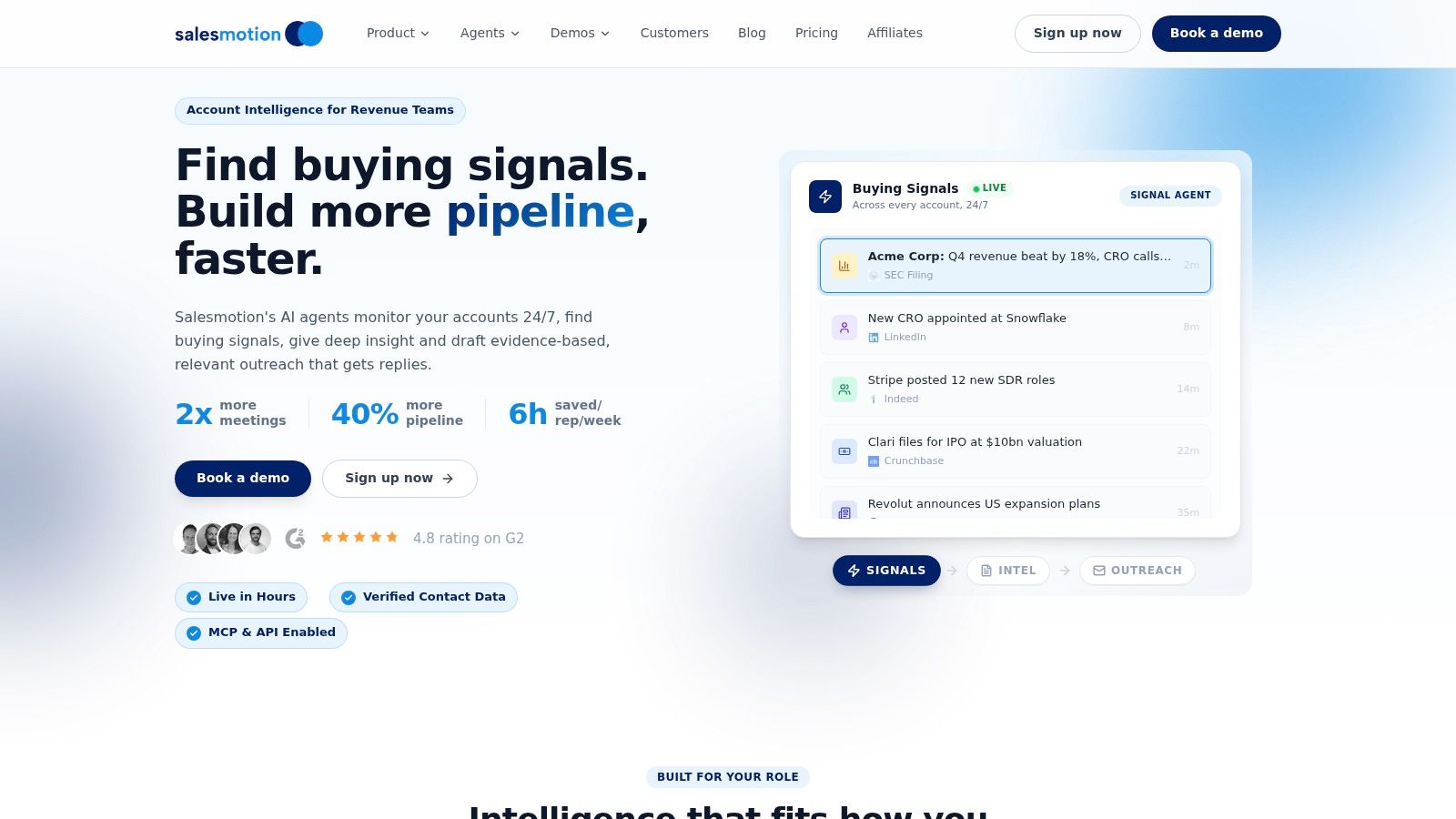
Salesmotion is the one I'd put in front of a small, ambitious sales team first. It takes the part of 6sense most reps care about, knowing who to contact, why now, and what to say, and strips away the enterprise ABM baggage.
This is a sales-led system, not a marketing ops platform. You plug it in, point it at target accounts, and it starts doing the work reps usually do manually across browser tabs, spreadsheets, LinkedIn, and ChatGPT.
Why it fits small teams
Salesmotion runs three AI agents. A Research Agent builds account briefs from public sources. A Signal Agent monitors accounts continuously and flags meaningful changes. An Outreach Agent turns those signals into draft outreach tied to what happened at the account.
That matters because most small teams don't need another score in CRM. They need context. If a company just announced an expansion, hired a new executive, changed strategy, or posted hiring plans that map to your product, Salesmotion gives reps the signal, the source, and a talk track.
The setup is also built for speed. Salesmotion is positioned as live in 24 hours, with no admin-heavy implementation cycle and monthly rolling contracts starting at $85 per month. That's a completely different buying motion from 6sense.
For teams comparing the two directly, Salesmotion vs 6sense is best understood as follows: 6sense is stronger for anonymous visitor ID and ABM advertising, while Salesmotion is stronger for fast account research and turning signals into outreach.
Where it wins and where it doesn't
- Best for sales-led execution: Reps get source-linked briefs, alerts, and outreach drafts instead of abstract account scoring.
- Fast to adopt: You don't need a dedicated admin just to make the platform usable.
- Built around existing workflows: It connects with Salesforce, HubSpot, and Slack, and pushes outreach drafts to lemlist.
Salesmotion is the best choice when your reps already know their territories and need better timing, sharper context, and less research drag.
The trade-off is straightforward. If your whole strategy depends on anonymous visitor de-anonymization and advertising orchestration, 6sense still has the edge. If your bottleneck is getting reps to act on account changes quickly and intelligently, Salesmotion is the better fit.
Visit Salesmotion.
2. RollWorks (now AdRoll ABM)
RollWorks, renamed AdRoll ABM in 2025, is the option for teams that still want ABM, just without jumping straight into a platform as heavy as 6sense. It's especially useful if marketing and sales are both involved and you want to target accounts with ads, retargeting, and coordinated follow-up.
I'd choose RollWorks over 6sense when the team is early in ABM maturity. You want fit scoring, account lists, and campaign activation, but you don't want to spend months designing a complex enterprise motion before getting value.
Best use case
RollWorks works best when your motion starts with account targeting and ad activation. Marketing can build and run plays against target accounts, while sales gets alerts and context to follow up.
That's a different workflow from a pure sales research tool. If your SDRs or AEs are doing their own prospecting and need deep reasons to reach out, RollWorks can feel one layer removed from the day-to-day rep workflow.
- Strong fit for ad-led ABM: Good account targeting, retargeting, and activation.
- Easier entry point: Generally simpler to stand up than a full enterprise ABM suite.
- Broad integrations: It connects with common CRM and marketing systems.
The downside is clear. It leans marketing-first. Small sales teams without strong marketing support may not use enough of the platform to justify it.
Visit AdRoll ABM.

“We're no longer fishing. We know who the right customers are, and we can qualify them quickly. Salesmotion has had a direct impact on pipeline quality.”
Andrew Giordano
VP of Global Commercial Operations, Analytic Partners
3. Leadfeeder
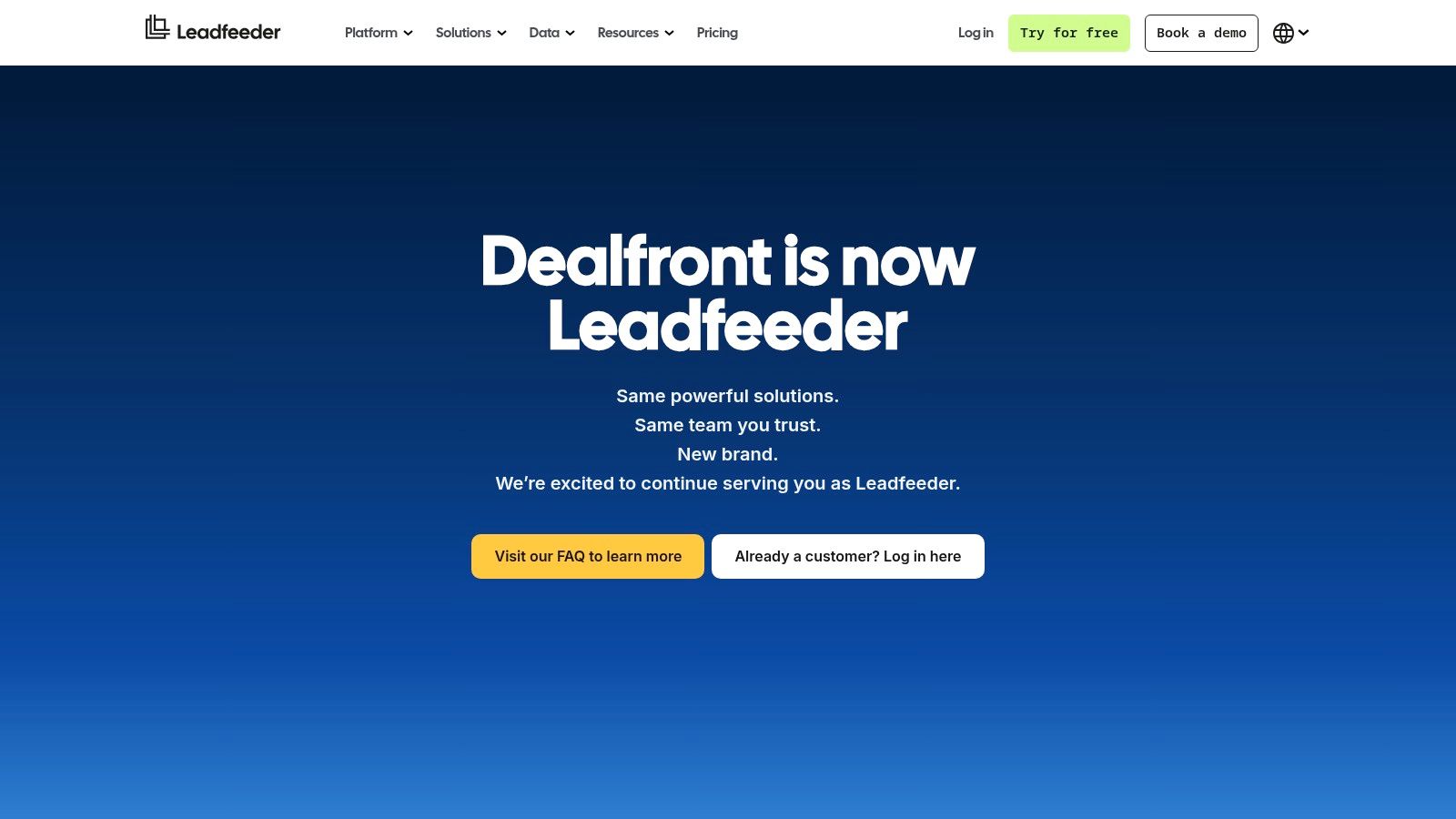
Leadfeeder is a practical choice if the main thing you wanted from 6sense was website visitor identification. It tells you which companies are landing on your site, what pages they viewed, and lets you route that signal into CRM or outbound workflows.
For small teams, that's useful because it's simple. You don't need to buy an entire ABM operating system to get value from high-intent traffic.
Why teams like it
Leadfeeder is approachable. There's a free plan, and the setup is usually fast enough that reps can start working site traffic quickly. That's a big contrast with an enterprise rollout.
If you sell into Europe, Leadfeeder is also worth a serious look: it says its B2B data is collected using Europe's highest data privacy standards.
If your team says, “We just want to know which companies are visiting our site and act on it,” Leadfeeder is often enough.
A few trade-offs matter:
- Great for company-level visitor identification: Reps can see which accounts are showing interest.
- Quick time to value: Easy to install and route into existing systems.
- Broader sales intelligence options: You can expand beyond pure visitor ID if needed.
Visitor identification is company-level. It shows you where interest exists, and the Activate plan adds verified emails and phones for the people to contact.
Visit Leadfeeder.
4. Apollo.io
Apollo.io is the all-in-one answer for small teams that want one tool to do a lot. It gives you contact data, sequencing, enrichment, some trigger signals, and basic outreach workflows in one place.
That's why Apollo shows up in so many lean GTM stacks. It reduces tool sprawl. Instead of buying one system for contacts, another for sequencing, and another for basic enrichment, you can centralize a lot of the motion.
When Apollo makes sense
Apollo is strongest when your problem is simple coverage. You need names, emails, phone numbers, lead lists, and a way to message people without stitching together multiple vendors.
For a lot of teams, that's enough. But it's still not the same as what 6sense is trying to do, and it's not the same as a signal-first platform either.
- Good all-in-one value: Prospecting, enrichment, and outreach live in the same system.
- Easy for small teams to understand: The workflow is familiar to SDR and AE teams.
- Lower friction than enterprise platforms: You can get moving quickly.
If you're weighing whether to use Apollo as your main system or pair it with a stronger intelligence layer, this Apollo vs Salesmotion comparison is useful. For a niche industry perspective, see this Apollo.io review for financial institutions.
Apollo's strength is breadth: contact data, sequencing, intent topics, and AI research in one product. A dedicated research and signal platform goes deeper on each account.
Visit Apollo.io.
“We have very limited bandwidth, but Salesmotion was up and running in days. The template made it easy to load our accounts and embedding it in Salesforce was simple. It was one of the easiest rollouts we've done.”
Andrew Giordano
VP of Global Commercial Operations, Analytic Partners
5. LinkedIn Sales Navigator
LinkedIn Sales Navigator is still one of the easiest recommendations on this list. Most reps already live in LinkedIn. Sales Navigator gives them a better way to search, save leads, track accounts, and catch timing signals like job changes or company updates.
That familiarity matters. Adoption is rarely the problem with Sales Navigator. Reps know where to click, what to search, and how to use it in real prospecting.
Why it belongs in the stack
Sales Navigator is not a full 6sense replacement on its own. It is built around LinkedIn's member graph rather than ABM orchestration, and its Account IQ research draws on LinkedIn data. But it's often one of the best building blocks in a lighter, sales-led stack.
For small teams, that can be the smarter move anyway. Use LinkedIn for people discovery and relationship mapping, then pair it with a tool that adds signals and research depth.
- Best-in-class people discovery: Great for finding stakeholders and tracking changes.
- Natural rep workflow: Little training needed.
- Strong account awareness: Alerts help reps act with better timing.
If you're trying to budget it properly, LinkedIn Sales Navigator pricing is worth reviewing.
The scope is clear. Sales Navigator helps you find and watch people and accounts, and its AI features (Account IQ, Lead IQ, Message Assist) work from LinkedIn's own data. Pair it with a tool that covers earnings calls, filings, and news if reps need that context in their briefs and outreach.
Visit LinkedIn Sales Solutions.
6. Clay
Clay is what I recommend to teams with a builder mindset. If Salesmotion is the plug-and-play route, Clay is the flexible workbench. You can pull from many data sources, enrich accounts and contacts, score records, and create signal-driven workflows that feed personalization into your engagement stack.
That flexibility is the whole appeal. You're not buying a rigid platform. You're assembling the exact workflows your team wants.
Best for operators who like control
Clay shines when someone on the team enjoys systems design. Maybe it's a RevOps lead, a growth operator, or a very technical SDR manager. They can build workflows around hiring data, job changes, company news, enrichment layers, and outbound personalization.
That makes Clay powerful, but it also creates a real trade-off. DIY systems are only great when somebody owns them.
- Highly modular: Build only what you need.
- Strong for personalization at scale: Good for teams that want custom signal workflows.
- Cost-efficient relative to enterprise suites: Especially when you know your usage patterns.
Clay is excellent if you want control. It's a bad fit if your team wants finished workflows on day one.
If you're deciding between a configurable build-it-yourself system and a more guided intelligence platform, Clay vs Salesmotion lays out the difference well.
Visit Clay.
7. Crunchbase
Crunchbase is not trying to be 6sense, and that's why it's useful. It's a strong signal source for company events like funding, acquisitions, leadership changes, and growth activity.
For small teams, that can be enough to create a solid “why now” trigger. If a target account raised money, expanded leadership, or changed ownership structure, reps have a reason to engage with a relevant angle.
Where it earns its keep
I like Crunchbase as a first-signal layer. It helps teams build target lists and spot moments when outreach is more likely to land. That's especially helpful in startup, tech, and private-market selling.
It is not a contact database, and it isn't an outreach platform. So you usually pair it with something else.
- Useful timing signals: Funding and company activity are easy to act on.
- Good list-building support: Helpful for territory planning and account selection.
- Recognizable dataset: Its familiarity naturally inspires confidence in its representations.
The downside is workflow gap. Crunchbase tells you something happened. It doesn't tell your rep exactly what to say next, and it won't give them the contact plus sequence in the same motion.
Visit Crunchbase.
8. Owler Pro
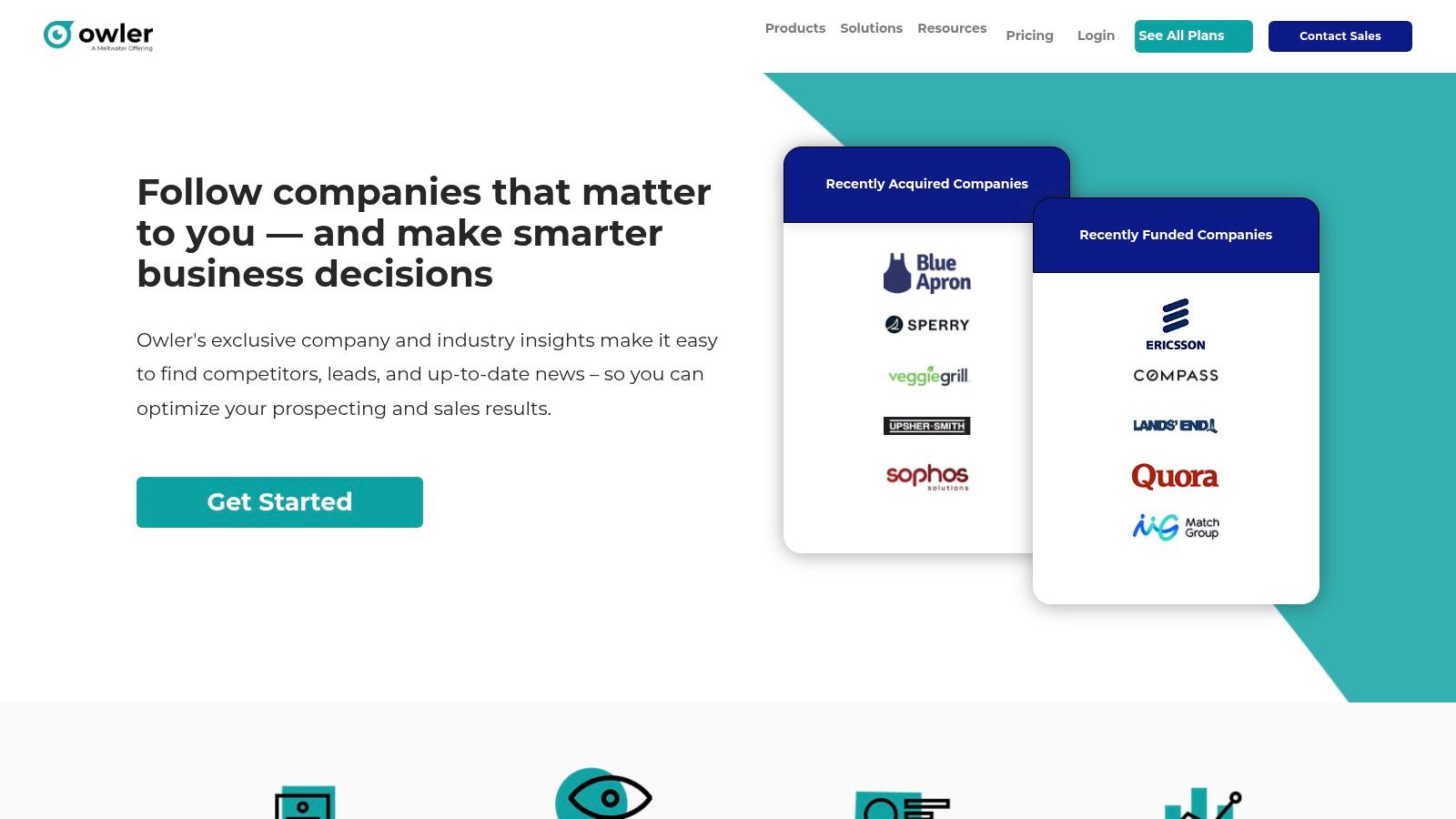
Owler Pro is one of the simplest ways to give reps more market awareness without buying a heavy platform. It tracks company news, leadership changes, layoffs, funding, and competitive movements, then pushes updates in a format reps will readily read.
That last part matters. Plenty of tools collect signals. Fewer package them in a way busy reps will consume consistently.
Good lightweight signal layer
Owler is useful when your team already has prospecting and outreach tools but lacks timing context. A rep sees an alert, recognizes an opening, and sends a relevant message the same day.
This works especially well for account managers, commercial reps, and lean outbound teams covering a named account list.
- Simple to use: Easy way to keep reps informed.
- Good inbox delivery model: Signals come to the team instead of waiting inside a dashboard.
- Affordable complement: Pairs well with tools you already have.
The trade-off is straightforward. Owler doesn't replace contact databases, enrichment, or engagement tools. It adds awareness. That's valuable, but it's only one layer of the motion.
Visit Owler Pro.
9. LeadIQ
LeadIQ is built for speed. If your reps prospect heavily through LinkedIn and Chrome, LeadIQ helps them capture contacts, verify details, and move leads into CRM or sequencing tools without much friction.
That makes it a good fit for SDR teams that care more about execution speed than platform breadth.
Best for rep-driven prospecting
LeadIQ works well when your outbound motion is straightforward. Reps identify prospects, capture verified contact details, watch for job changes, and push leads into their normal workflow.
It's practical, not strategic. That's not criticism. For many small teams, practical is exactly what they need.
- Fast to value: Reps can use it almost immediately.
- Strong for Chrome-based workflows: Natural fit with LinkedIn prospecting.
- Helpful champion tracking: Job changes can create timely outbound moments.
Its limit is scope. LeadIQ is not designed to be your central intelligence platform. If your challenge is weak account research or poor signal prioritization, this won't solve enough of the problem by itself.
Visit LeadIQ.
10. RB2B
RB2B is a sharp option for US-focused teams that care about turning website traffic into sales conversations fast. Instead of staying at company level, it focuses on identifying the actual people behind site visits when it can.
That makes it one of the more direct answers to the part of 6sense smaller teams often find attractive: de-anonymizing web traffic without buying an enterprise ABM contract.
When RB2B is the right call
If your team gets meaningful US website traffic and wants a lightweight feed of who visited, RB2B is worth attention. Setup is quick, and the output is immediately useful to SDRs and AEs.
This also connects to a broader trend in the market. According to Factors.ai's comparison of 6sense alternatives, modern alternatives can use a waterfall enrichment model across 4 to 5 providers for up to 75% account-level identification. The same analysis says person-level deanonymization for US-based B2B visitors can reach up to 40%.
- Focused use case: Good for turning site traffic into named leads.
- Fast setup: Quick pixel-based deployment.
- Useful direct integrations: Signals can land in Slack, Teams, or CRM quickly.
The limit is geographic. Person-level identification is US-only, while company-level identification is global, and RB2B lists contact-level coverage of 15-20% on Starter and Pro and 35-45% on PRO+. If your traffic is global, or your strategy extends far beyond web visitors, you'll want a broader system.
Visit RB2B.
Top 10 6sense Alternatives for Small Teams, Quick Comparison
| Product | Core features | Target audience | Key benefits | Unique differentiator | Pricing & setup |
|---|---|---|---|---|---|
| Salesmotion | 3 autonomous AI agents (Research, Signal, Outreach); 1,000+ public sources; source‑linked briefs; signal→outreach automation; Salesforce, HubSpot and Slack integrations | Revenue teams and sales leaders needing real‑time account intelligence at scale | Faster, more relevant outreach; consistent account planning; measurable pipeline uplift; hours saved per rep | Autonomous agent stack that converts verified signals into ready‑to‑send, personalized outreach with quick time‑to‑value | From $85/month on a monthly contract; live in days |
| AdRoll ABM (formerly RollWorks) | ABM account/ICP building, scoring, cross‑channel ad activation, playbooks | Small to mid teams launching ABM and marketing‑led programs | Fast ABM activation and ad reach for target lists | Ad‑centric ABM activation with built‑in playbooks | Sales‑assisted pricing; relatively quick setup |
| Leadfeeder | Website visitor identification, enrichment, CRM feeds, page‑level context | Small teams tracking site visitors and intent | Low entry cost, quick signals from web activity | Visitor ID with data collected to European privacy standards | Free Lite plan; Discover from €79/mo (annual), as shown on its pricing page |
| Apollo.io | Large B2B contact database, enrichment, sequencing, intent triggers | Small teams wanting an all‑in‑one find→engage stack | Affordable, robust free tier; reduces tool sprawl | Big verified contact database + built‑in outreach/sequencing | Free; $49–$119/user/mo (annual) |
| LinkedIn Sales Navigator | Advanced people/account search, job‑change alerts, saved lists, CRM sync | Teams relying on LinkedIn for prospecting and warm outreach | High‑quality people signals; familiar rep UX | Direct access to LinkedIn graph and real‑time profile activity | Core $119.99/mo; Advanced $159.99/mo; 50 InMail credits a month |
| Clay | 150+ data providers, enrichment, dedupe, automated workflows and personalization | Lean GTM teams that want build‑your‑own automations | Modular, cost‑efficient; build only needed jobs (research, prioritize, personalize) | Flexible workbench for custom GTM workflows | Free; Launch $185/mo, Growth $495/mo; DIY setup required |
| Crunchbase | Company profiles (funding, acquisitions), saved searches, alerts, API | Teams tracking funding rounds, market moves and firmographics | Trusted funding and growth signals; good for timing outreach | Focused private‑market intelligence layer | Paid tiers for exports/API; self‑serve plans |
| Owler Pro | Curated company news, leadership changes, competitor maps, daily snapshots | Teams seeking low‑cost company tracking and competitive alerts | Simple, affordable signal stream into inboxes | Easy daily summaries and competitor graphs | Low‑cost subscription; enterprise features via custom pricing |
| LeadIQ | Chrome capture for verified contacts, job‑change tracking, CRM/engagement sync | SDRs using LinkedIn and Chrome capture workflows | Very fast to value; verified contact capture | Extension‑based capture + transparent credit model | Credit/seat model; free trial available |
| RB2B | Person‑ and company‑level visitor identification, Slack/CRM feeds, quick pixel setup | US‑focused teams wanting person‑level site leads | Fast, actionable person‑level leads from site traffic | US‑focused person de‑anonymization with clear coverage docs | Pixel setup; person-level ID is US-only; free plan is company-level, paid plans from $79/mo |
How to Choose Your Ideal Sales Intelligence Tool
Choosing the right 6sense alternative for small teams comes down to one thing. You need to know where your bottleneck is. Teams often buy too much software because they describe the problem too broadly.
Start with the first question. What are you trying to fix right now? If the issue is website visibility, look at visitor ID tools like Leadfeeder or RB2B. If the issue is contact coverage and getting reps into sequences faster, Apollo.io is a practical answer. If the issue is weak timing, weak context, and too much manual research before every email, look at Salesmotion or even a lightweight signal layer like Owler.
Match the tool to the motion
The next question is whether your motion is sales-led or marketing-led. Overlooking this point causes teams to make the biggest mistake with 6sense.
6sense works best for advanced ABM programs with dedicated support. It does not publish list pricing; Vendr reports a median annual contract value of $62,220 across 386 purchases, and implementation is a guided onboarding, not self-serve. Teams whose whole revenue stack costs less than that are often better served by a modular alternative stack.
That's why small sales teams should stop asking, “What's the closest thing to 6sense?” The better question is, “What helps reps act faster with less overhead?”
For small teams, the winning stack usually isn't the most complete one. It's the one reps actually use every day.
Be honest about setup tolerance
Setup matters more than feature count. Clay gives you a lot of power, but someone has to build and maintain the workflows. RollWorks is useful when marketing can carry part of the load. Sales Navigator is easy to adopt, but it still leaves manual research on the rep.
If you want the fastest path to value, pick the system that aligns with how your team already sells. Salesmotion stands out there because it's designed for plug-and-play setup, no admin overhead, and monthly rolling contracts starting at $85 per month. That's a very different commitment from an enterprise contract that asks a small team to bet big before reps have formed a usage habit.
One more point. Don't confuse data with action. A contact record is useful. A website visit is useful. A predictive score is useful. But the best systems for small teams connect signal to message to next step. That's what gets meetings booked.
The best 6sense alternative for small teams isn't a watered-down ABM platform. It's the tool, or combination of tools, that gives your reps clear timing, real context, and a workflow they'll use without needing a RevOps babysitter.
If your team wants faster account research, clearer buying signals, and outreach that sounds informed, Salesmotion is the strongest place to start. It gives reps real reasons to reach out, automates the prep work that usually slows pipeline creation, and fits a sales-led workflow without the cost and complexity that come with enterprise ABM platforms.