Clarivate announced with its fourth-quarter results in February 2026 that it was pursuing a sale of its Life Sciences & Healthcare business, and on July 6, 2026 announced a definitive agreement to sell it to Altaris LLC for $600 million. The sale closed on October 6, 2026. Here is what happened, what it means for the industry, and what commercial teams should consider.
What Happened
Clarivate, the analytics company behind products like Cortellis, DRG Fusion, and BioWorld, has sold its entire Life Sciences & Healthcare (LS&HC) division to Altaris LLC for $600 million. The deal was announced on 6 July 2026 and closed on 6 October 2026. The $600 million is made up of $500 million in cash at closing, a $75 million unsecured senior note and $25 million of deferred consideration. Morgan Stanley advised Clarivate on the process, which it first disclosed in February 2026.
The LS&HC business generated $389.8 million in revenue in 2025, down 6.9% year over year, according to Clarivate's full-year results. It was Clarivate's smallest segment, about 16% of total company revenue of $2,455.2 million.
The stated rationale is focus: Clarivate wants to concentrate on its Academia & Government and Intellectual Property segments. Clarivate said it intends to use the proceeds to reduce debt and strengthen its balance sheet.
The market liked the results. Clarivate's stock was up 31.4% by 1 p.m. ET on 24 February, according to The Motley Fool, which credited both a fourth-quarter earnings beat and the planned sale.
What Was Sold
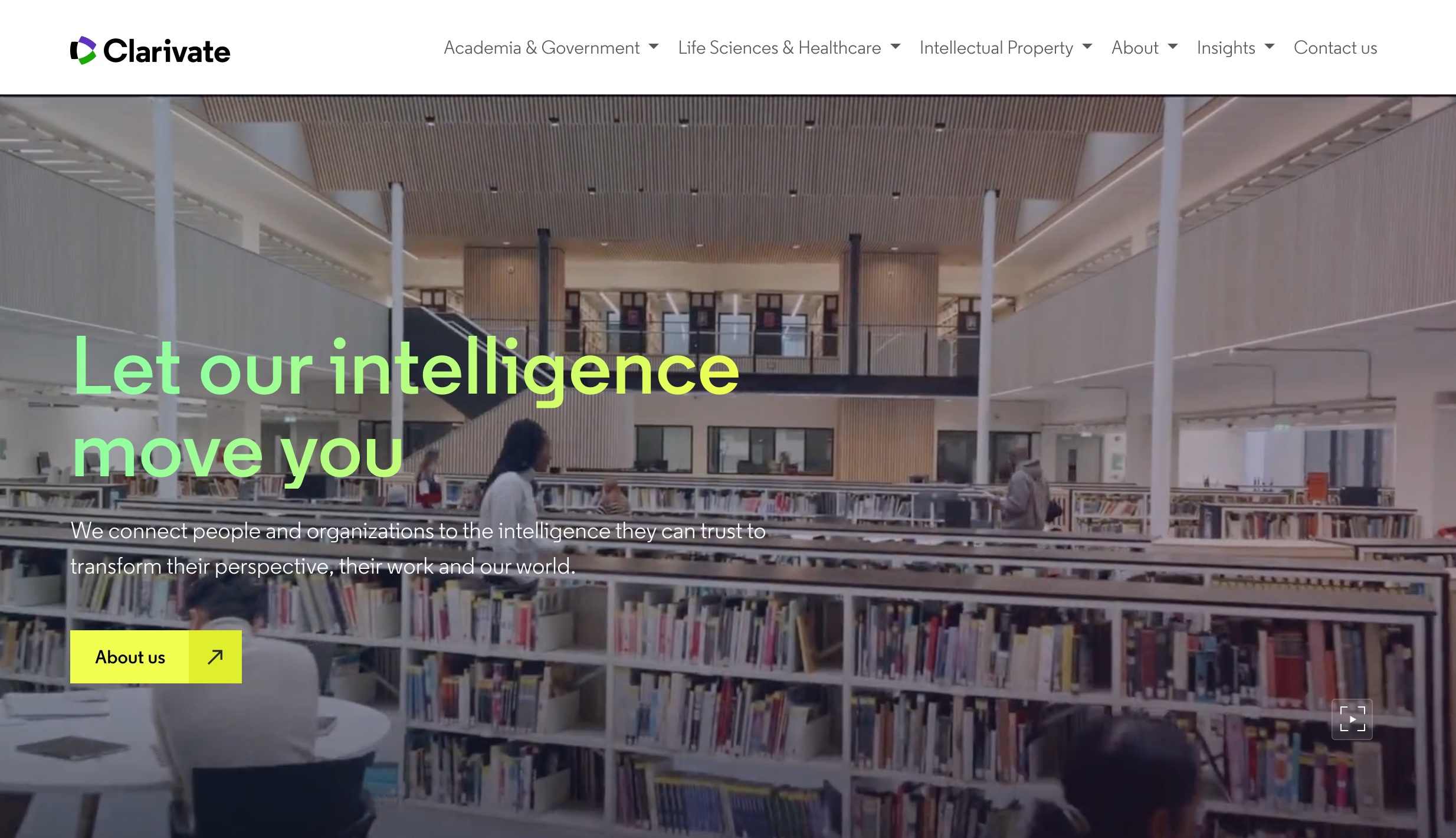 Clarivate's homepage before the sale. The Life Sciences & Healthcare segment is the division that was sold.
The LS&HC division includes some of the most established names in life sciences data:
| Product | What It Does |
|---|---|
| Cortellis | Drug pipeline intelligence, clinical trial analytics, global regulatory intelligence |
| DRG Fusion | Real-world data platform with commercial analytics for biopharma and medtech |
| BioWorld | Daily biotech, pharma, and medtech news and deal analysis |
| Cortellis Drug Discovery Intelligence / MetaCore | Drug discovery and curated biological-knowledge databases |
| Consulting | Expert consulting team for market access and pricing |
The business serves approximately 2,500 customers globally, according to Altaris's announcement. Pricing is not published; contracts are quoted per organization.

“We had a variety of tools, and that was the pain — the variety. We had to go to multiple places to get streamlined data.”
Lyndsay Thomson
Head of Sales Operations, Cytel
Why This Matters Beyond Clarivate
This is not just a corporate restructuring story. It is a signal about the direction of the life sciences intelligence market.
The legacy data model is under pressure
For decades, companies like Clarivate, IQVIA, and Citeline built their businesses around curated, proprietary databases. Pharma companies paid premium prices because there was no better way to make sense of fragmented biomedical data.
That dynamic is shifting. One argument made in the LinkedIn discussion of the sale, by a health AI advisor who previously led competitive intelligence at a large biopharma, runs like this: GenAI-native platforms can now structure, query, synthesize, and reason across scientific literature, clinical trial data, patent filings, and regulatory databases at a fraction of the cost. When a provider's advantage is organized access to information, AI that organizes information better is an existential problem rather than a strategy problem.
This is not a fringe view. Pharma teams are already piloting AI-native tools alongside legacy subscriptions, and in some cases replacing them. How life sciences sales teams are replacing manual competitive intelligence shows what that looks like in practice.
Ownership transitions create uncertainty
When a PE firm or strategic buyer acquires a data business, customers historically see changes in pricing, product roadmap, and support.
For customers of the former Clarivate LS&HC business, this is a moment to evaluate:
- What am I actually using? Many teams subscribe to enterprise bundles but primarily use a subset of features
- What can AI-native tools handle now? Account research, signal monitoring, and meeting prep have moved dramatically in the last 18 months
- What is my cost per insight? If you are paying for data that is largely available from public sources, the math may have changed
The "interface vs. data" question
One of the most useful counterpoints in the LinkedIn discussion around this news came from a life sciences market intelligence leader: renewal rates at the big players are still very high in big pharma accounts, and AI tools will not replace companies like Clarivate and Citeline in the short to medium term, because clients need to be sure the tagging and proprietary ontologies are accurate.
This is a fair point, and it highlights the real trade-off. Proprietary curated data (structured regulatory filings, patient-level claims data, deep drug pipeline metadata) has genuine value that AI cannot replicate from public sources alone.
But it also raises the question asked in the same discussion: which of your intelligence subscriptions are buying proprietary data, and which are really just buying an interface?
For many commercial and BD teams, the answer is increasingly: the interface.
What GenAI-Native Platforms Actually Offer
The new generation of intelligence platforms does not try to replicate Clarivate's proprietary databases. Instead, they solve a different problem: making it fast and affordable for commercial teams to understand their accounts.
Here is what that looks like in practice:
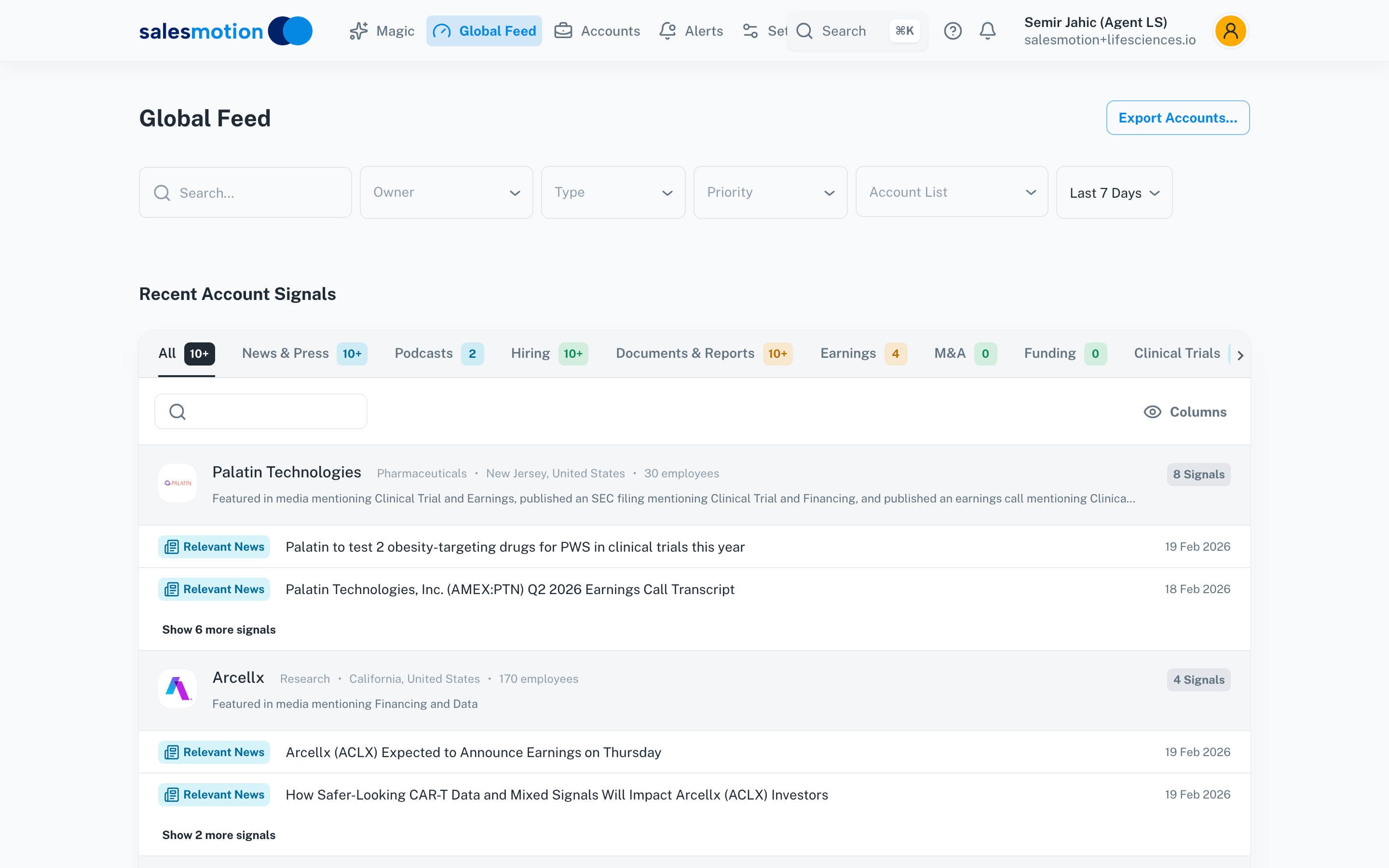 Signal monitoring across life sciences accounts: clinical trials, earnings calls, leadership changes and strategic news in one feed.
Instead of logging into multiple databases and manually piecing together account context, teams get a single feed of signals across their entire territory. Clinical trial activity from public registries, earnings call insights, leadership changes, hiring patterns, and strategic news, all synthesized by AI and tied to specific accounts.
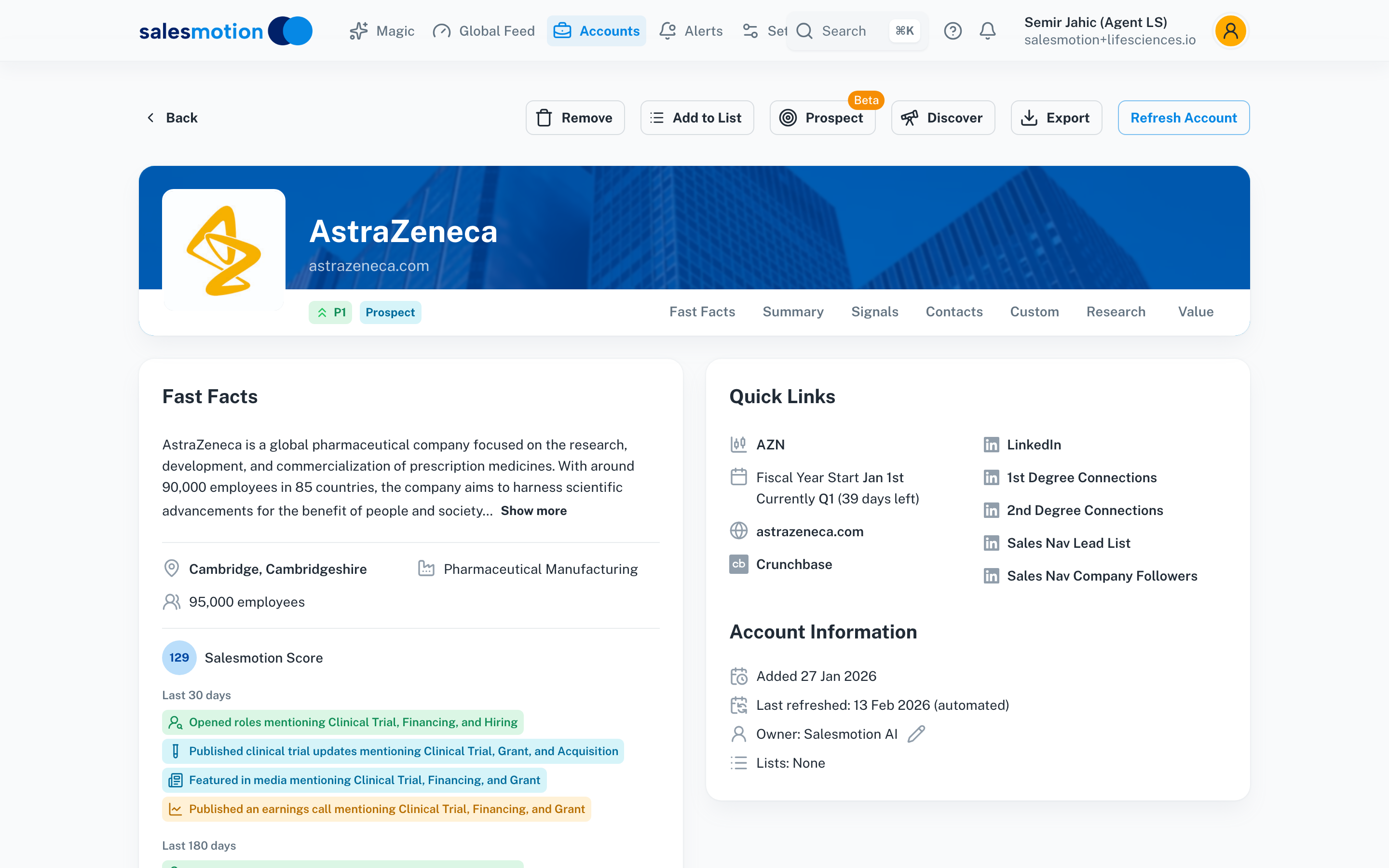 Account pages and briefs pull from 1,000+ public sources to give BD teams the context they need for every conversation.
The account brief is where the rubber meets the road. Rather than spending hours across five different tools, reps get a synthesized view of what matters (key insights, executive perspective, opportunities, challenges, and talking points), updated continuously.
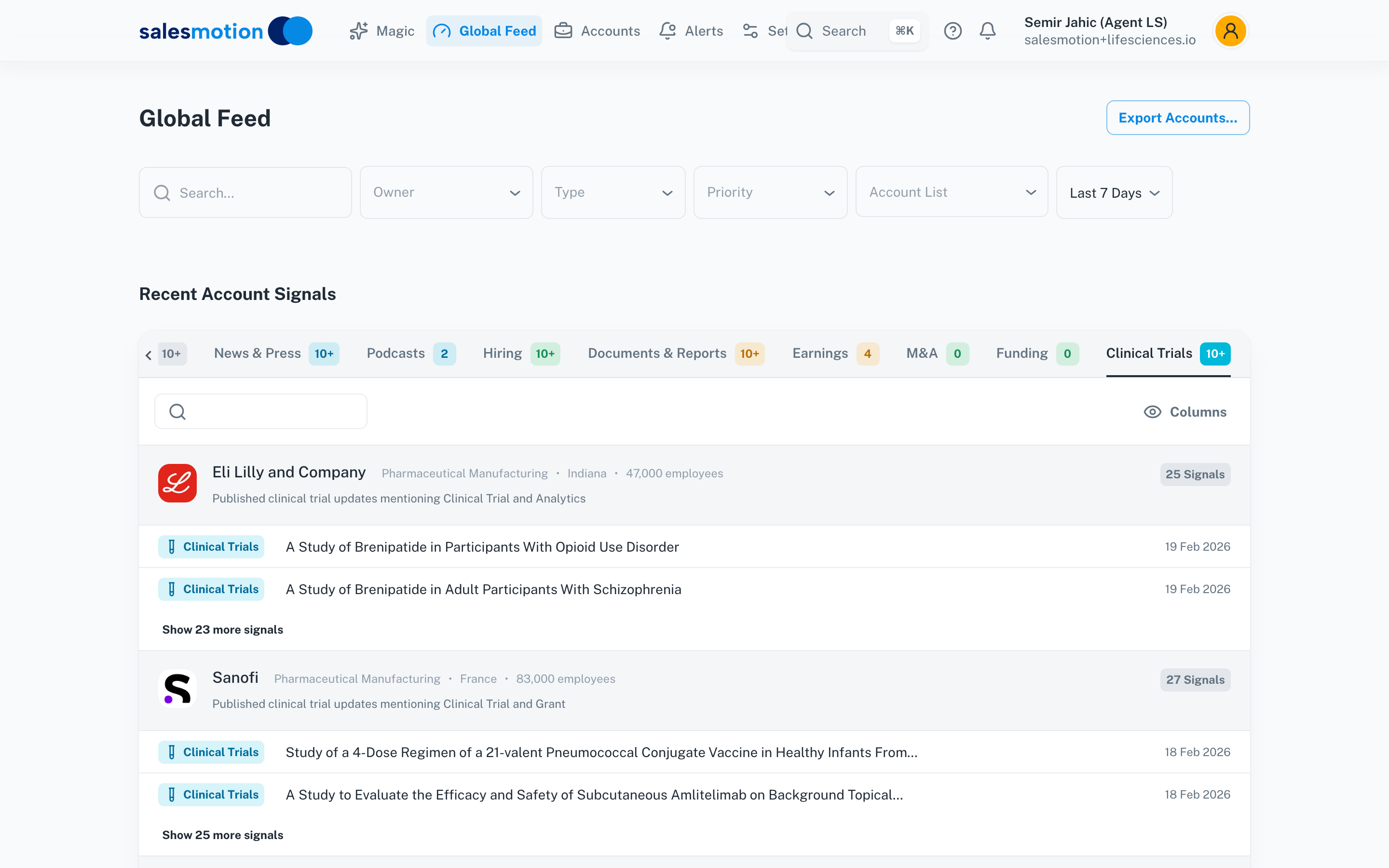 Clinical trial signals from ClinicalTrials.gov and other public registries, filtered by account for commercial teams.

“Salesmotion is helping Cytel elevate our enterprise sales performance by embedding account intelligence directly into our workflow. The platform gives our commercial team real-time visibility into key account movements.”
Jonathan Burr
Chief Commercial Officer, Cytel
The Case for Agile New Entrants
We built Salesmotion to solve exactly the problem that this Clarivate news highlights: commercial teams paying for enterprise data bundles they only partially use.
Here is the honest comparison:
What Cortellis and DRG are strong at:
- Proprietary internally curated drug pipeline metadata (analyst annotations, structured classifications)
- Market access and epidemiology data through DRG
- Global regulatory intelligence
- Expert consulting team for market access and pricing
What Salesmotion is built for:
- Real-time buying signal monitoring across 1,000+ public sources
- AI-generated talking points for every account interaction
- Self-serve setup with no IT project and no months of onboarding
- Published pricing from $85/month on a monthly contract, and unlimited users on the enterprise plan
- Cross-signal search across all accounts and all data types
- AI-drafted outreach anchored to real account research
For a detailed feature-by-feature breakdown, see our Clarivate vs Salesmotion comparison.
What Cytel Found
Cytel, a life sciences analytics company with 1,500+ employees, is a good example of how this plays out. Their commercial team was toggling between 5+ tools to prepare for meetings, plan accounts, and run outreach, and new hires had a long ramp.
After implementing Salesmotion, Cytel cut account research time by 50% and made account planning 30% faster. They consolidated five sources (ZoomInfo, Crunchbase, SEC.gov, Google News and ClinicalTrials.gov) into one. And the implementation? Their Head of Sales Operations called it the easiest vendor onboarding she had ever experienced.
“We had a variety of tools, and that was the pain — the variety. We had to go to multiple places to get streamlined data.”
Lyndsay Thomson
Head of Sales Operations, Cytel
The full story is worth reading: How Cytel Cut Sales Research Time by 50%.
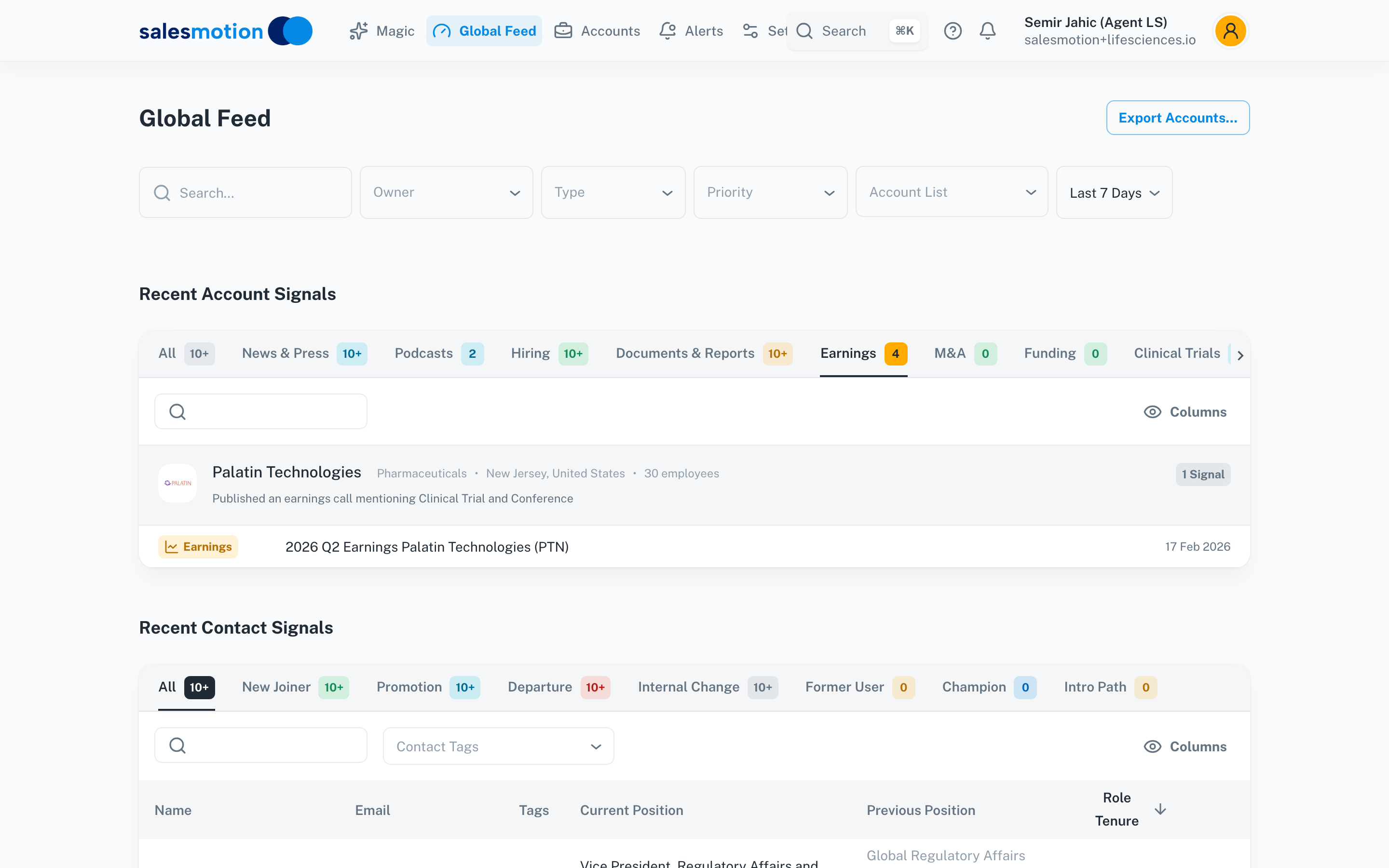 Earnings signals for life sciences accounts, tracked in the same feed as trials and people moves.
What This Means for Life Sciences Sales Teams
If you are a BD or sales leader at a CRO, CDMO, biotech, or pharma commercial team, here is the practical takeaway:
1. Audit your current intelligence stack. Identify which subscriptions deliver genuinely proprietary data you cannot get elsewhere, and which are primarily serving as expensive research interfaces.
2. Separate R&D needs from commercial needs. Your regulatory affairs team may genuinely need Cortellis. Your BD team probably does not need an enterprise data contract to prepare for sales meetings.
3. Evaluate modern alternatives now. The sale has closed and the business now operates as an independent company. A change of ownership is a natural point to review what you renew, and the Clarivate alternatives page compares the options.
4. Test it on your own accounts. Check whether a platform like Salesmotion covers the account intelligence your commercial team uses day to day, at a published price from $85/month. The life sciences sales intelligence guide lists what to test.
Key Takeaways
- Clarivate sold its $390M Life Sciences & Healthcare division to Altaris LLC for $600M; the sale closed on 6 October 2026
- The LS&HC business declined 6.9% YoY in 2025; Clarivate said it will use the proceeds to reduce debt
- GenAI-native platforms are gaining traction in life sciences
- The key question for commercial teams: which subscriptions buy proprietary data vs. an interface to public information?
- New entrants like Salesmotion offer self-serve account intelligence with published pricing from $85/month; Cytel cut research time by 50% after consolidating 5 tools
- A change of ownership is a natural moment to review which subscriptions you renew
Related Pages
- Sales Intelligence for Clinical Research (CROs)
- Citeline Alternatives: alternatives in the pharma intelligence category
- Citeline vs Salesmotion: head-to-head comparison for biotech and pharma BD teams
- How to Sell to Pharmaceutical Companies: navigating the pharma buying committee
Sources
- Clarivate Reports Fourth Quarter and Full Year 2025 Results, Clarivate press release
- Altaris to Acquire Clarivate's Life Sciences and Healthcare Business, Altaris, 6 July 2026
- Clarivate completes sale of Life Sciences & Healthcare segment, Clarivate press release filed with the SEC, 6 October 2026
- Clarivate Explores Sale of Life Sciences & Healthcare Business, Research Information
- Why Clarivate Stock Is Skyrocketing Today, The Motley Fool
- The Breakup of Clarivate, David Worlock, industry analyst
Frequently Asked Questions
What did Clarivate sell?
Clarivate sold its entire Life Sciences & Healthcare division to Altaris LLC. It includes Cortellis (drug pipeline and regulatory intelligence), DRG Fusion (real-world data analytics), BioWorld (biotech news), Cortellis Drug Discovery Intelligence and MetaCore, and its consulting practice. The division generated $389.8M in 2025 revenue.
Who bought Clarivate's LS&HC business?
Altaris LLC, a healthcare-focused private equity firm. The $600 million sale was announced on 6 July 2026 and completed on 6 October 2026.
Do the former Clarivate LS&HC products continue to work after the sale?
Yes. Altaris said the business would operate as an independent company under its ownership after closing, and the Cortellis and DRG portfolios continue. For questions about roadmap, pricing, or support under the new ownership, ask your account team.
How does Salesmotion compare to Clarivate for life sciences?
Salesmotion and Cortellis/DRG serve different needs. The former Clarivate Life Sciences & Healthcare business, owned by Altaris since October 2026, provides proprietary internally curated databases for R&D and regulatory teams. Salesmotion provides AI-powered account intelligence, buying signals, and meeting prep for BD and sales teams. Salesmotion actively scans and consolidates clinical trial data globally from ClinicalTrials.gov and public registries, while Cortellis adds proprietary internally curated metadata and analyst annotations on top. For daily BD and selling workflows, Salesmotion delivers account intelligence from 1,000+ public sources. Salesmotion publishes its price: from $85/month for individuals, with custom team pricing. Cortellis and DRG are quoted per organization. See the full Clarivate vs Salesmotion comparison.
Is this a sign that legacy data providers are in trouble?
Not necessarily across the board, but the trend is clear. Clarivate's LS&HC revenue declined while the broader GenAI in life sciences market is growing rapidly. Companies with genuinely proprietary, hard-to-replicate data (patient-level claims, unique regulatory filings) have durable moats. Companies whose primary value is curating and organizing publicly available information face increasing competition from AI-native platforms that do it faster and cheaper.