
Comparison
Apollo offers an all-in-one prospecting and engagement platform. Lusha delivers fast contact reveals with a simple Chrome extension. This comparison helps you decide which tool matches your workflow and budget.
| Feature | Apollo.io | Lusha |
|---|---|---|
| Approach | All-in-one prospecting + engagement | Contact data with fast Chrome extension |
| Database Size | 270M+ contacts | 100M+ business profiles |
| Engagement Tools | Built-in sequencing, dialer, AI writer | No native engagement tools |
| Free Plan | 10,000 emails/month | 50 email credits/month |
| Ease of Use | Moderate — full platform to learn | Very simple — Chrome extension focus |
| Best For | Teams running full outbound campaigns | Individual reps on LinkedIn |
Apollo.io is an all-in-one sales intelligence and engagement platform that has rapidly grown to become one of the most popular prospecting tools for B2B sales teams. The platform combines a database of over 270 million contacts with built-in email sequencing, a dialer, and AI-powered personalization tools.
Apollo's core strength is its integrated approach — reps can search for prospects, verify emails, build lists, and launch outreach sequences without leaving the platform. This eliminates the need for separate prospecting and engagement tools, reducing costs and workflow complexity.
Apollo has differentiated itself through transparent pricing, a generous free tier (10,000 emails/month), and rapid feature development including AI email writing and buying intent signals. It is particularly popular with startups, SMBs, and individual contributors who need an affordable, full-featured prospecting stack.
Best for: SMBs and startups that want an all-in-one prospecting and engagement platform at an affordable price point
G2 rating: 4.7/5
Pricing: Free: 10,000 emails/month. Basic: $49/user/month. Professional: $79/user/month. Organization: $119/user/month (min 3 users). Annual discounts available.
Lusha is a B2B contact data platform designed for speed and simplicity. It provides access to over 100 million business profiles through a lightweight Chrome extension, web app, and API. Founded in Israel, Lusha has grown to serve over 1 million users globally.
Lusha's Chrome extension is its flagship product — it allows reps to reveal contact information directly on LinkedIn profiles with a single click. The platform is known for its ease of use, requiring minimal setup or training. It also offers bulk enrichment, list building, and API access for CRM integration.
Lusha has expanded beyond basic contact data to include buyer intent (Lusha Intent) and prospecting features, but its core value proposition remains fast, accurate contact reveals for individual prospectors. Its ISO 27701 certification and GDPR compliance make it popular with privacy-conscious organizations.
Best for: Individual reps and small teams that need a simple, fast Chrome extension for revealing B2B contact information on LinkedIn
G2 rating: 4.3/5
Pricing: Free: 50 email credits/month. Pro: $49/user/month. Premium: $79/user/month. Scale: custom pricing for larger teams.
How Apollo.io and Lusha stack up across key capabilities.
| Feature | Apollo.io | Lusha |
|---|---|---|
| Contact Database | 270M+ contacts, community-enriched | 100M+ profiles, verified data |
| Email Verification | Real-time email verification | Built-in email verification |
| Phone Numbers | Available, moderate accuracy | Available, moderate accuracy |
| Chrome Extension | Full-featured LinkedIn extension | Fast, lightweight one-click reveals |
| Email Sequences | Built-in multi-step sequences | Not available |
| Dialer | Built-in click-to-call dialer | Not available |
| AI Email Writing | AI-powered personalization | Not available |
| Intent Data | Buying intent signals | Lusha Intent (newer product) |
Apollo and Lusha have similar per-user pricing on their paid plans. Apollo's Basic plan costs $49/user/month and Professional is $79/user/month. Lusha's Pro plan is $49/user/month and Premium is $79/user/month. At the individual plan level, costs are nearly identical.
The key pricing difference is in what you get. Apollo's plans include email sequencing, a dialer, and AI writing tools — features that would require additional software (like Salesloft or Outreach) when using Lusha. Factor in a separate engagement tool at $100-150/user/month, and Lusha's total cost of ownership can be significantly higher for teams running outbound campaigns.
Apollo also offers a much more generous free tier — 10,000 emails vs. Lusha's 50 credits. For individual users testing the waters, Apollo's free plan provides far more value. However, if your only need is occasional LinkedIn contact reveals, Lusha's simpler free plan may be all you need.
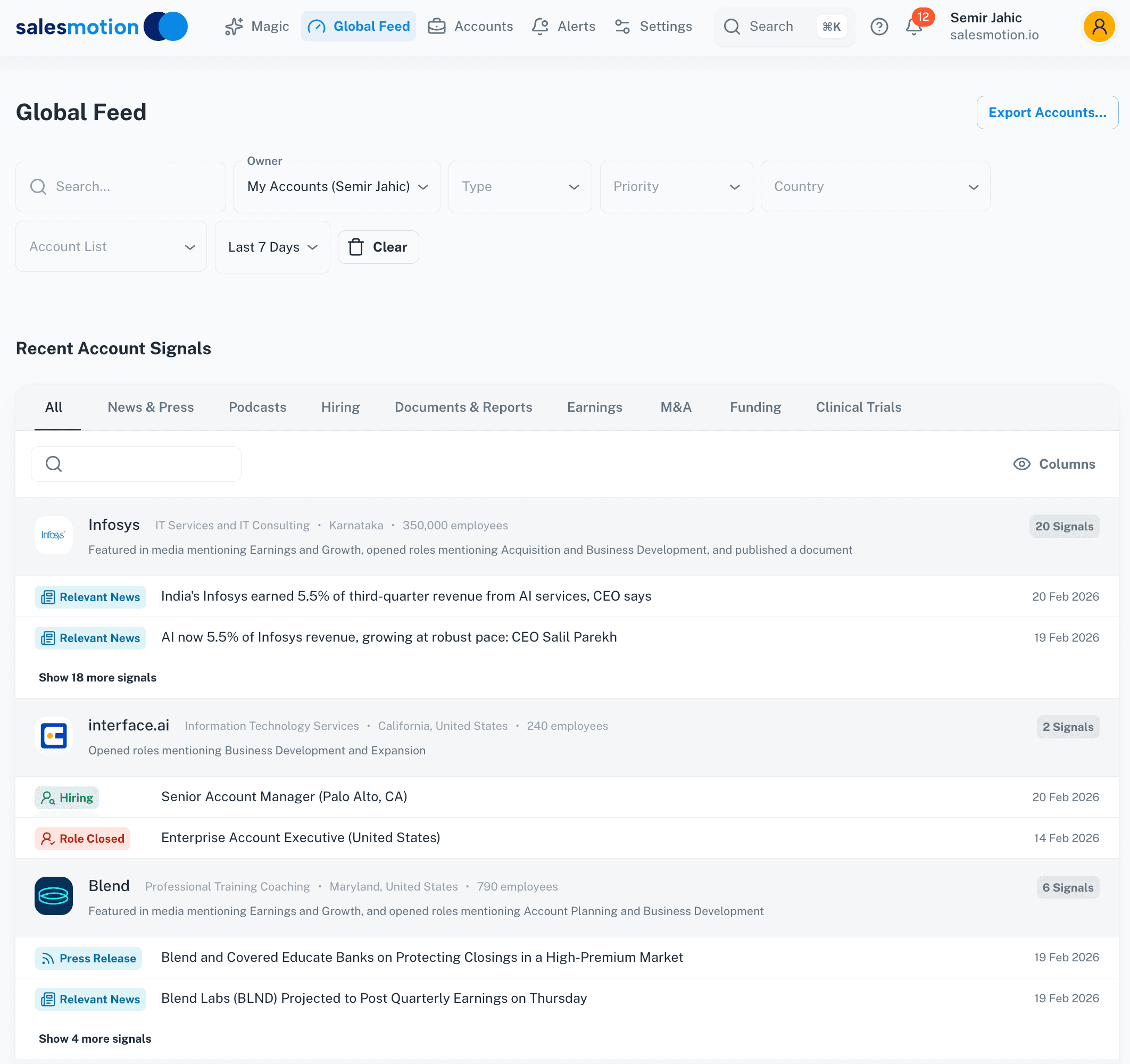
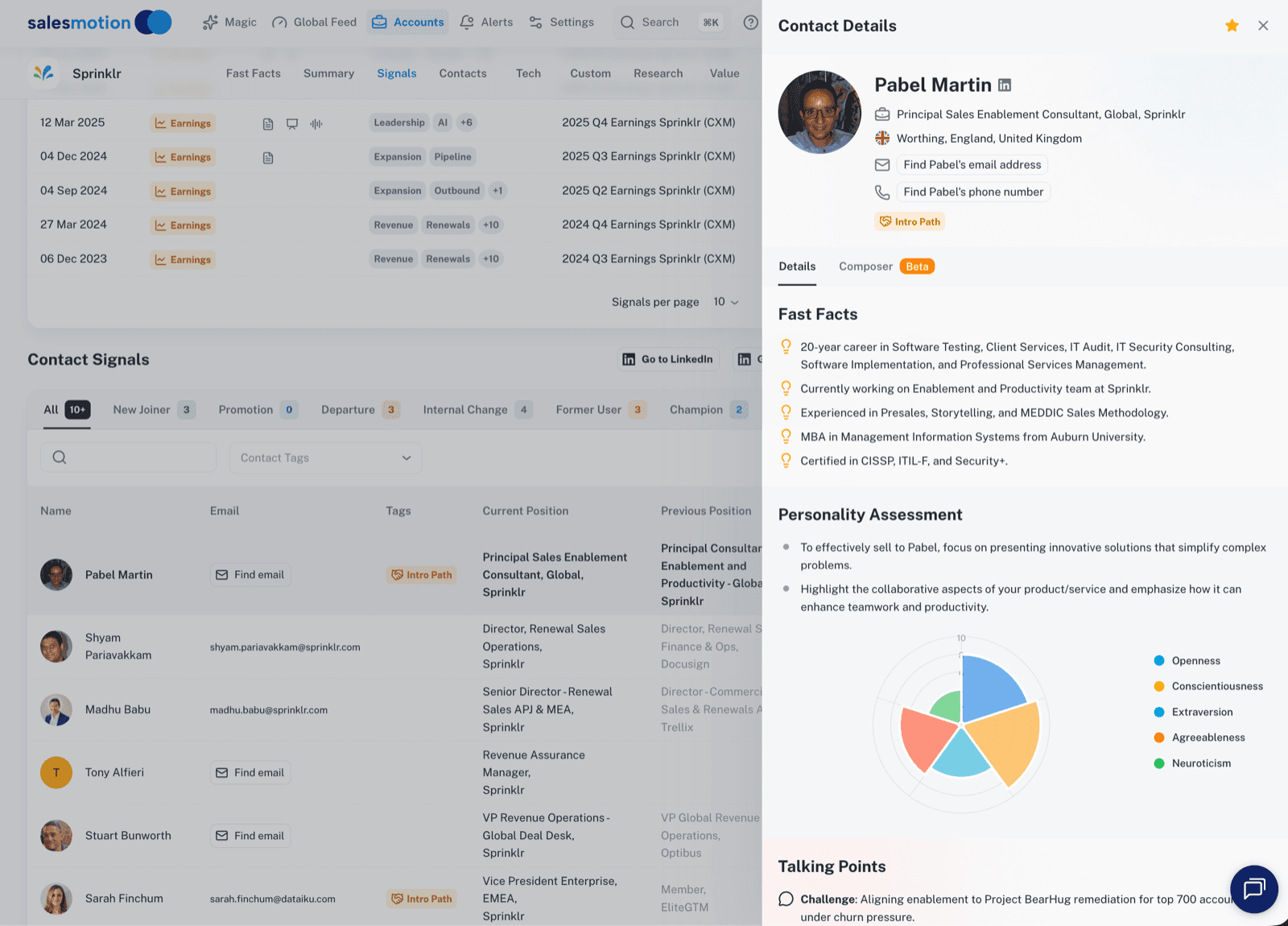
Apollo and Lusha help you find contacts and, in Apollo's case, reach out to them. But both tools focus on the mechanics of prospecting — finding emails, revealing phone numbers, sending sequences. Neither helps you understand the account you are actually selling into.
Without account context, outreach becomes generic. Reps send the same templates to every prospect, missing opportunities to connect their value proposition to what actually matters to the buyer.
Neither Apollo nor Lusha provides deep research on target accounts — earnings insights, strategic priorities, competitive dynamics, or executive initiatives. Reps must research this manually.
While Apollo offers basic intent signals, neither platform monitors real-time events like earnings calls, leadership changes, M&A activity, or facility expansions that create genuine buying triggers.
Apollo's AI writer personalizes based on prospect attributes, not account context. Neither tool generates talking points tied to what is happening inside the buyer's organization right now.
Salesmotion gives your reps the account intelligence they need to book more meetings and close bigger deals.
For teams running outbound campaigns, Apollo is generally better because it includes engagement tools alongside contact data. For individuals who only need quick contact reveals on LinkedIn, Lusha's simplicity can be an advantage. The right choice depends on whether you need a prospecting platform or a data lookup tool.
Lusha can replace Apollo for the contact data portion, but you would lose Apollo's built-in sequencing, dialer, and AI writing. If you already use a separate engagement tool like Outreach or Salesloft, Lusha can work well as a standalone data provider. If you want everything in one place, Apollo is the more complete solution.
Data quality is comparable for emails, with both offering solid verification. Apollo has a larger database (270M+ vs 100M+), which means more coverage. Lusha has ISO 27701 certification for data quality processes. For phone numbers, neither is best-in-class — ZoomInfo and Cognism tend to lead for direct dials.
Yes, Apollo's free plan provides 10,000 emails per month, access to the Chrome extension, and basic sequencing. It is genuinely useful for individual reps getting started with outbound prospecting. The limitations are mainly around advanced features like AI writing and buying intent, which require paid plans.
Salesmotion is not a contact database or engagement tool. It provides deep account intelligence — synthesizing 1,000+ sources into actionable briefs, monitoring real-time buying signals, and generating personalized talking points. Teams often use Salesmotion alongside Apollo or Lusha to pair contact data with account context.
Join the top-performing sales teams using Salesmotion to build more pipeline and close more deals.
Book a demo