Introduction
The sales landscape is evolving, and so are the methods for conducting account research. While basic research is a good starting point, advanced techniques can provide a competitive edge. This blog delves into sophisticated methods and tools for modern account research, empowering sales professionals to achieve greater success.
See Salesmotion in action
Take a self-guided interactive tour — no signup required.
Why Advanced Account Research Matters
In a crowded marketplace, buyers expect personalized interactions. Advanced account research allows you to:
- Stand out with unique, tailored messaging.
- Predict needs based on behavioral patterns.
- Shorten sales cycles by focusing on high-value opportunities.
Advanced Techniques for Account Research
- Behavioral Analysis
- Use intent data to track online behavior, such as downloads, clicks, or search queries. Tools like Bombora or Demandbase can help.
- Analyze social media activity to identify interests, challenges, or buying signals.
- Technology Stacking
- Investigate the technologies your target company uses with tools like BuiltWith or Datanyze.
- Tailor your pitch to show how your solution integrates with their existing stack.
- Competitive Benchmarking
- Study competitors to identify gaps in their offerings.
- Highlight how your solution offers a superior value proposition.
- Deep Dive on Decision-Makers
- Use LinkedIn Sales Navigator to find detailed information about stakeholders, including past roles and shared connections.
- Check interviews, webinars, or articles featuring them to understand their priorities.
- Financial and Strategic Analysis
- Analyze financial reports for insights into a company’s spending priorities.
- Monitor news for updates on mergers, acquisitions, or strategic shifts.
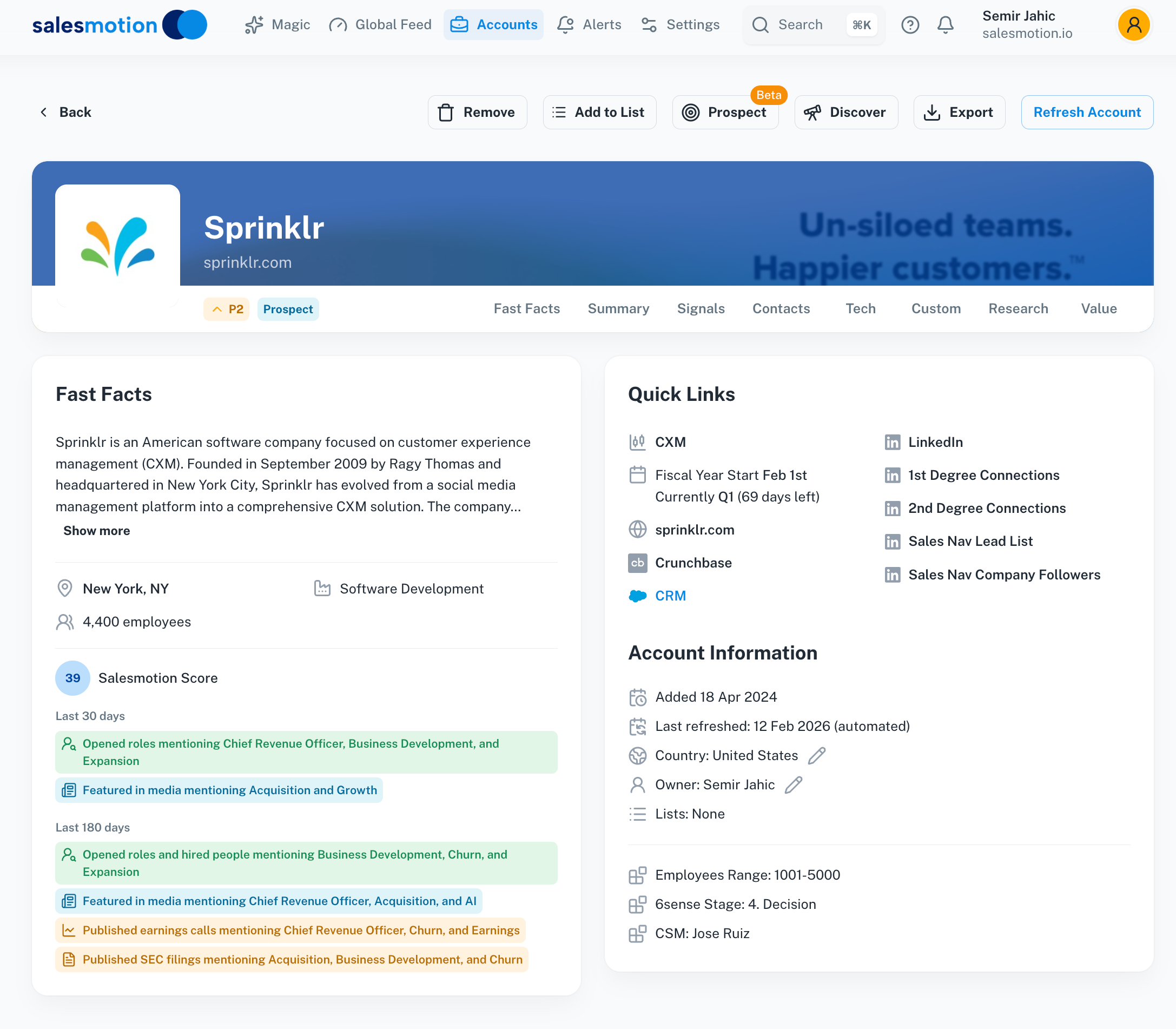 Advanced account research starts with a comprehensive view: Salesmotion's fast facts panel surfaces firmographic data, strategic context, and key signals in one place.
Integrating AI and Automation
- AI-Driven Insights
- Platforms like Salesforce Einstein or Gong.io analyze conversations to provide actionable insights.
- AI tools can predict which accounts are most likely to convert based on historical data.
- Automating Research
- Automate repetitive tasks with tools like Apollo.io or Outreach.io.
- Schedule alerts for news or social media updates about target accounts.
Crafting a Data-Driven Strategy
Once you have gathered advanced insights:
- Segment Your Accounts
- Categorize accounts based on potential value, urgency, and fit.
- Develop Account Plans
- Create tailored action plans, complete with milestones and stakeholder engagement strategies. Our account planning guide walks through this step by step.
- Refine Messaging
- Use insights to craft compelling narratives that address specific pain points.

“We're saving about 6 hours per week per seller on account research alone. That's time they can reinvest in actually selling.”
Derek Rosen
Director, Strategic Accounts, Guild Education
Key Takeaways
- Advanced account research goes beyond basic firmographics to include behavioral analysis, technology stacking, competitive benchmarking, and deep-dive financial analysis.
- Intent data tools like Bombora and Demandbase reveal online behavior patterns and buying signals that help prioritize high-value opportunities.
- Understanding a prospect's technology stack lets you tailor your pitch to show specific integration advantages and displacement opportunities.
- AI-driven platforms like Salesforce Einstein automate repetitive research tasks and predict which accounts are most likely to convert based on historical data.
- Segmenting accounts by potential value, urgency, and fit, then developing tailored action plans for each segment, turns raw research into a focused data-driven strategy.
Conclusion
Advanced account research is no longer optional for modern sales teams. By leveraging behavioral insights, technology data, and AI prospecting tools, you can create personalized, impactful strategies that drive success. Embrace these techniques to outpace competitors and win the trust of your prospects.
Frequently Asked Questions
What makes advanced account research different from basic research?
Basic research covers surface-level firmographics like company size, industry, and revenue. Advanced research layers in behavioral analysis, technology stack audits, competitive benchmarking, and financial statement analysis. These deeper techniques reveal timing signals, integration opportunities, and strategic pain points that basic research misses.
How do I use technology stack data in my sales approach?
Tools like BuiltWith or Datanyze reveal what platforms a prospect currently uses. If they run a competitor's software, you can position your solution as a direct replacement with clear advantages. If they use complementary technology, you can demonstrate seamless integration. Both scenarios provide a specific, credible reason to engage.
How much time should sales reps spend on advanced research per account?
The time investment should match the account's tier and deal potential. For high-value strategic accounts, dedicating one to two hours of deep research is justified. For mid-tier accounts, 30 minutes of focused research is usually sufficient. AI tools can reduce this time by 50 percent or more by automating data collection.
Can small sales teams benefit from advanced account research techniques?
Yes. Small teams benefit the most from precision targeting because they cannot afford to waste effort on poor-fit accounts. Even without enterprise-level tools, teams can use free resources like LinkedIn Sales Navigator, company press releases, and financial reports to gather actionable intelligence on their highest-priority prospects.
“This is my singular place that very simply summarizes a company's top initiatives, strategies and connects them to my solution. Something I would spend hours researching manually, now it's automated.”
Derek Rosen
Director, Strategic Accounts, Guild Education