Your rep opens a call thread at 8:15 a.m., sees a prospect's latest quarter was solid, and assumes the budget conversation can wait. By lunchtime, procurement has already paused new spend, and the sequence is now late. Earnings call transcripts help revenue teams catch that kind of shift while it is still visible, not after the pipeline goes cold. They are especially useful because analysts often find the most revealing detail in the Q&A, not the polished opening remarks.
If you need a practical way to turn those calls into outreach, the workflow around them matters as much as the transcript itself. For teams that want a simple way to connect transcript reading with account signals and outreach tasks, this guide on earnings call insights for sales reps shows how the pieces fit together.
Introduction
A missed signal in an earnings call transcript usually starts small. A rep skims one paragraph, skips the Q&A, and moves on because the account still looks healthy. By the time the language shift shows up in pipeline notes, the buying committee may already be changing direction.
Revenue teams do not need more reading, they need better timing. Earnings call transcripts give you the language executives use when they talk about demand, pressure, confidence, and caution. They also give you a written record you can search, compare, and share instead of relying on memory or secondhand notes.
The practical value is simple. A transcript can show you when leadership sounds cautious about spending, when a product line gets more attention, or when an answer leaves more open than it closes. If you want to turn those clues into outreach, this guide on earnings call insights for sales reps shows how to connect transcript reading to account signals and next-step tasks.
This guide focuses on that handoff from information to action. You will see how to read transcripts, spot useful shifts, and build them into automated sales workflows with clear playbooks and integration ideas, so your team can act while the signal is still fresh.
See Salesmotion in action
Take a self-guided interactive tour — no signup required.
Understanding the Key Concepts
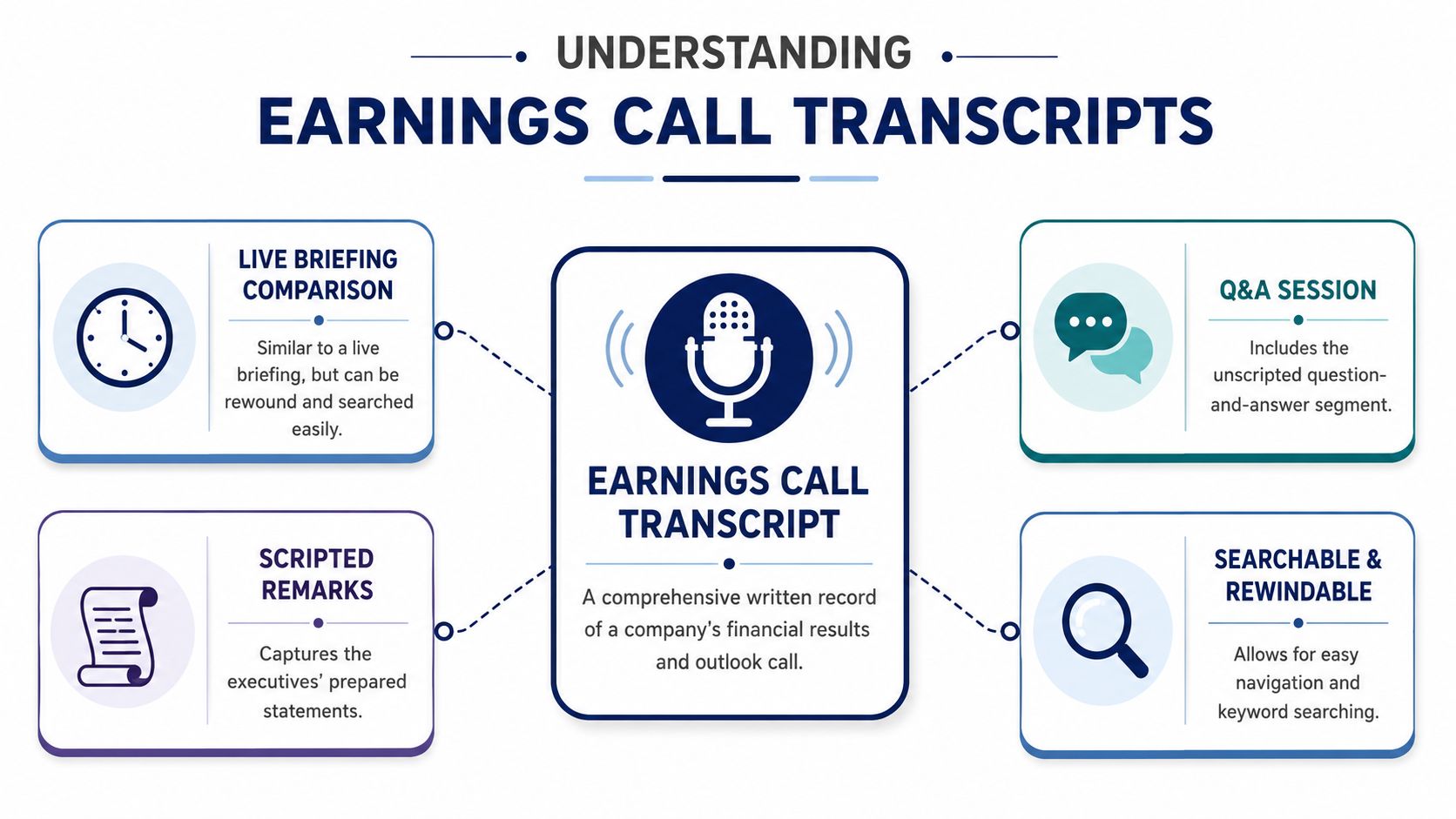
An earnings call transcript is the written record of a live company briefing. It lets you review the same call more than once, search for specific language, and compare how management speaks across quarters. Unlike a short summary, the transcript shows what executives chose to say and how they answered investor questions.
The two parts that matter most
The first part is prepared remarks. These are the scripted statements where leadership explains results, strategy, and guidance. For a rep, these remarks show the story the company wants external audiences to hear.
The second part is Q&A. Analysts use this section to press on margin pressure, competition, spending plans, or guidance changes, and that often makes it the richest source of signal. A careful reader treats Q&A like the unscripted layer of the call, where priorities become easier to spot.
Practical rule: Read the prepared remarks first, then read the Q&A as if you are checking for what management avoided saying directly.
Why the structure matters
When a transcript is split into those two pieces, it becomes easier to separate message from tension. Prepared remarks show how the company wants to be seen. Q&A shows where outside pressure is still landing, which is often where the most useful signal appears.
That split also makes transcripts easier to fold into sales workflows. A rep does not need to memorize a long call. The rep needs to know whether the company sounded steady, evasive, defensive, or newly cautious, then use that reading to shape outreach. Once you start using those two layers, the transcript becomes a working account brief instead of a passive record.

“The moment we turned on Salesmotion, it became essential. No more hours on LinkedIn or Google to figure out who we're talking to. It's just there, served up to you, so it's always 'go time.'”
Adam Wainwright
Head of Revenue, Cacheflow
Why Earnings Call Transcripts Matter for Revenue Teams
A rep hears a customer on an earnings call say the company is shifting toward cost control, then sees the same account stall on a renewal. The connection is clear. Transcript language can give revenue teams the reason behind the move before it shows up in pipeline notes or missed meetings. Earnings calls center on revenue, EPS, margins, cash flow, and guidance, so they are one of the cleanest places to see where management is putting its attention API Ninjas transcript endpoint notes.
The primary use case is not just research
A transcript can show that a customer is moving into a more cautious phase before the budget freeze appears in CRM history. It can also show a company leaning on a new strategic theme, which gives a rep a direct opening for a message tied to that theme. That is why transcript-driven outreach often feels more relevant than broad industry personalization, because it is grounded in the company's own wording.
The signal gets stronger when wording is tied to likely behavior. If leadership spends more time on cost control, operational discipline, or selective investment, the outreach angle should change with it. Instead of leading with expansion, a rep might open with risk reduction, efficiency, or a project that helps the buyer defend spend.
Why this beats static account criteria
Firmographics tell you who the account is. Earnings call transcripts tell you what the account is thinking now. That difference matters because static criteria can still be accurate and still arrive too late.
An account can remain a fit on paper while its leadership team becomes more conservative about discretionary spend. A rep who sees that early can shift the conversation toward proof, payback, or near-term priorities. A rep who misses it keeps sending the same message and then has to explain why replies slow down.
One practical implication is simple. Transcripts belong in the same group as other live account signals, not as background reading. If your team already reacts to funding, hiring, or executive moves, transcript language should sit beside those triggers because it helps explain the “why now” behind the account's next move. For teams building a repeatable workflow, a guide to using sec filings for sales prospecting can help frame how transcripts fit alongside other account signals.
Sourcing and Accessing Earnings Call Transcripts
A rep hears that a target account just finished its earnings call. The question is whether the transcript lands in time to shape the next outreach step, or whether the team reads it after the market has already moved on. That timing matters because transcripts are most useful when they feed live account decisions, not just retrospective research.
Common source types
| Source | Speed | Cost | Access Method |
|---|---|---|---|
| Company investor-relations pages | Varies by company | Usually free | Web page or press room archive |
| Financial research databases | Fast for searchable archives | Often paid | Platform search and filters |
| API providers | Fast enough for automation | Subscription or usage-based | API request and webhook-style workflows |
Each source serves a different job. A rep doing account prep before a meeting may only need an archive. A RevOps team that wants alerts pushed into Slack or a CRM usually needs a source that can connect into automation without extra manual work.
Choosing the right access method
Start with coverage and speed, then judge how easily the source fits your process. A transcript that arrives late is less helpful than one that arrives in a format your team can search, store, and route quickly. Many teams use company archives for depth and automated sources for freshness.
The same discipline applies to SEC-based monitoring, which is why this guide to SEC filings for sales prospecting fits well alongside transcript research. SEC filings show formal disclosures. Transcripts add the conversational layer, where you can hear tone, emphasis, and careful wording that filings often smooth over.
The practical setup is straightforward. Watch for a new transcript, store it in a searchable system, and notify the right rep when the account matters. If a platform gives you alerts, search, and download access, you can move from finding the transcript to acting on it without a long delay.
“Automatic account profile detail I can use to manage my territory. Using Salesmotion AI to generate value statements per persona, account, etc. Using Salesmotion to give me a starting point based on new hires, or news alerts is critical.”
Adam Wainwright
Head of Revenue, Cacheflow
Analyzing Transcripts for Actionable Sales Signals
A transcript becomes useful when you treat it like a field report, not a summary sheet. Start with two passes. Read the prepared remarks first to see how leadership frames performance and priorities. Then move into Q&A to look for tension, evasions, and repetition, because that is where the strongest sales signals usually surface, as explained in NowNews guidance on analyzing transcripts.
Pass 1, read the prepared remarks for posture
The opening script usually shows what management wants investors to believe. Listen for what they emphasize, what they leave out, and whether they frame the quarter as steady, transitional, or under pressure. If the language shifts away from crisp numeric confidence and toward softer, more careful wording, that matters.
Keep this pass simple. Tag mentions of demand, margin, pipeline, spending discipline, and strategic priorities, then note whether the tone feels stable or defensive. A short memo to the rep is enough if it captures the company's current posture in plain language.
Pass 2, interrogate the Q&A for hidden friction
Q&A is where analysts force specificity. That is where you often catch metric substitution, which happens when a speaker leans on one measure instead of answering with the metric the question asked for, or repeated deflections when the same topic keeps coming back. Those patterns deserve attention because they often show up before guidance changes.
A few warning signs are especially useful in sales workflows:
- Repeated deflections: The same question comes back, but management still avoids a direct answer.
- Metric substitution: The speaker answers with a different metric than the one the analyst asked about.
- Guidance language softens: Numeric confidence gives way to more qualitative framing.
- Q&A shortens noticeably: Fewer questions can mean fewer areas management wants to unpack.
If three or more of those show up in one call, it is smart to re-evaluate the account posture before you send the next sequence.
For teams that want to turn transcript review into pipeline logic, this guide on using earnings calls for pipeline generation is a useful companion.
Outreach Playbooks Based on Transcript Insights
A transcript only becomes useful when it changes the next message. The cleanest outreach playbooks start with the signal, then move to a short, specific hook, and finally end with one low-friction action. That structure keeps the email or call from sounding like generic market commentary.
Budget cue playbook
When management sounds cautious about spending, the outreach angle should respect that caution. Open with the company's own language, then connect your offer to efficiency, priority protection, or risk reduction.
A simple email pattern looks like this, keeping the message short enough to be readable:
- Subject line: Quick follow-up on your latest call
- Opening hook: Reference the budget discipline or cost-control theme that came through in the transcript.
- Why now: Tie your message to a specific operational need that supports the company's stated posture.
- Next step: Ask for a brief comparison, not a full demo.
Strategic pivot playbook
When leadership shifts emphasis, the transcript gives you a cleaner reason to reopen a conversation. Maybe the company is leaning harder into a new product area, a new region, or a different operating priority. Your job is to mirror that pivot without sounding like you just copied investor commentary.
Use the transcript to frame a value hypothesis. If the company is talking more about a new initiative, position your message around helping the team support that move. If the language is changing quarter over quarter, that's often your signal to update the account plan rather than recycle the previous one.
Competitive vulnerability playbook
The strongest competitive hooks often come from what management avoids. Analysts and practitioners recommend tracking omissions and deflected questions across quarters because those patterns can drive high-value outreach hooks LinkedIn analyst note on transcript omissions. If the company won't name a competitor directly, or keeps dodging the same topic, that silence can be worth more than a polished statement.
A useful call opener is direct and brief. Mention the repeated omission, then offer a perspective on how peers are handling the same pressure. Don't over-explain it. Let the transcript signal do the work.
For teams building this into sequences, this Salesmotion page on using earnings calls for sales is a practical reference point. One option in that category is Salesmotion, which monitors earnings, funding, press releases, hiring, and other account triggers and routes context into Slack, email, or CRM.
Automating Integration of Transcript Workflows
Manual reading works when coverage is small. It breaks down when your team follows many accounts and needs a fast handoff from transcript to rep action. Automated workflows solve that by turning new transcripts into alerts, summaries, and routing steps before a rep has time to lose the thread.
Manual versus automated
Manual workflows depend on a rep checking a source, reading a transcript, deciding whether it matters, and then writing a message. That's slow, inconsistent, and easy to miss when calls stack up. Automated workflows pull the transcript, extract the relevant signal, and push it where action already happens.
The best setup usually includes three pieces. First, a source that posts quickly. Second, a parser that tags guidance shifts, tone changes, or Q&A friction. Third, a delivery layer that sends the result to the right channel with a clear next step.
What to automate first
Start with alerts on the accounts you already care about most. If a transcript shows narrowing guidance ranges or language shifts, route it to the owner with a short explanation of why it matters AlphaStreet guidance on reading transcripts. That keeps the alert from becoming just another noisy notification.
A practical stack often uses API polling or event-based triggers, then posts the output to Slack or CRM. Keep the payload small. A rep should see the account name, the signal, the quote or summary, and the suggested follow-up, all without clicking through five tools.
Conclusion and Next Steps
Earnings call transcripts work best when you treat them like live account signals, not archival reading. Source them quickly, segment them properly, extract the right cues, personalize outreach, and automate the handoff. If you want a simple pilot, start with a small account list, one transcript source, and one alert path into Slack or CRM.
The goal is not to analyze everything. It's to catch the few transcript shifts that change the next conversation and give your reps a credible reason to reach out now.
A CTA for Salesmotion is to set up a small transcript-driven pilot on a focused account list, connect the alerts to your CRM or Slack, and test whether those signals help your team start better conversations within the next two weeks.