The best competitive intelligence tools for sales teams are Klue for battlecards and win-loss analysis, Crayon for automated competitor tracking, and Kompyte for tracking and battlecards sold in three named plans. AlphaSense, Gong, Similarweb, Meltwater, ZoomInfo and Owler each add one specific input: filings and analyst research, what buyers say on calls, digital market data, media coverage, company data, and free company alerts. None of the three dedicated platforms publishes a price, so plan on a quote from each.
TL;DR: Pick Klue if product marketing runs a competitive program and sellers need battlecards and win-loss insight inside the CRM, Slack or Teams. Pick Crayon if the main job is automated monitoring of competitors with AI analysis on a schedule. Pick Kompyte if you want competitor tracking and battlecards in one product with named plans and no charge for onboarding. All three quote on request. For research on public competitors, AlphaSense offers a free trial and per-seat options.
| Top pick | Best for | Starting price |
|---|---|---|
| Klue | Competitive enablement and win-loss for sales teams | Custom, quote-only |
| Crayon | Automated competitor monitoring with AI analysis | Custom, quote-only |
| Kompyte | Competitor tracking and battlecards in one plan | Does not publish pricing |
Looking for competitive intelligence software?
Most competitive intel tools track competitors. Salesmotion tracks the buying signals at your accounts.
Earnings calls, leadership changes, hiring patterns, M&A — every account, every day. From $85/mo.
Why this matters now: seven in ten teams say at least half their opportunities are competitive, and the average competitive-readiness score in Crayon's report is 6.3 out of 10 (Crayon, State of Competitive Intelligence). Competition is the norm, preparation is middling, and the gap between the two is where deals get lost.
Why Trust This Guide?
Every price and product fact in this guide was checked against the vendor's own website on 10 October 2026. Where a vendor publishes no price, the guide says so and does not estimate. Where a figure comes from a third party, the third party is named in the same sentence.
Salesmotion publishes this guide. Competitive intelligence is not Salesmotion's category, so it has no numbered slot in the list. It appears once, in "Where Salesmotion Fits" after the nine reviews, with a plain description of what it adds alongside these tools.
The first-party angle comes from our own conversations. We sat in 55 sales and customer calls between August and October 2026. In 22 of them the buyer wanted to be told what changed at their accounts instead of going to look.
"I'm looking more for surveillance on my accounts to pick up the stuff that I might miss." Regional sales manager, cybersecurity
That is a different job from tracking a competitor, and it shapes how this guide is organized: the list covers tools that tell you about your rivals, and the section after it covers what tells you about your accounts.
The order of the list is based on fit for a B2B sales team that loses deals to named competitors. Platforms built specifically for competitive enablement come first. Tools from neighbouring categories that supply one competitive input follow, ordered by how directly a seller can use the output.
See competitive intelligence in action
Salesmotion tracks competitor moves, leadership changes, and strategic shifts at every account in your territory — from 1,000+ sources, updated in real time.
Why Competitive Intelligence Matters for Sales Teams
Competitive intelligence is no longer a quarterly report from product marketing. It is an operational capability that separates winning sales teams from the rest. Three forces are driving this shift.
First, deal cycles are getting more competitive. Buyers evaluate more vendors at once, and they arrive on discovery calls already holding comparison data from review sites, analyst reports, and peer conversations. Reps who cannot explain clear differentiation in the first meeting lose momentum fast.
Second, the data landscape has grown. Competitors signal their strategy through buying signals and other public information: earnings call language, job postings, product announcements, pricing changes, patent filings, and leadership moves. The problem is not a lack of information. It is the time required to find it, make sense of it, and act on it.
Third, AI has compressed response times. The dedicated platforms in this guide now ship AI that collects and summarizes competitor activity on a schedule and acts as a deal assistant for sellers. Teams that still rely on manual searches and shared spreadsheets are competing against reps who have that help built into their day.
The market reflects the demand. Fortune Business Insights values the broader sales intelligence market at $4.85 billion in 2025.

“Automatic account profile detail I can use to manage my territory. Using Salesmotion AI to generate value statements per persona, account, etc. Using Salesmotion to give me a starting point based on new hires, or news alerts is critical.”
Adam Wainwright
Head of Revenue, Cacheflow
Comparison Table: 9 Best Competitive Intelligence Tools
Before the detailed reviews, here is a side-by-side view of all nine tools.
| Tool | Best for | Standout capability | Pricing | Free plan or trial |
|---|---|---|---|---|
| Klue | Competitive enablement and win-loss | Compete Agent and a Win-Loss Suite | Custom, quote-only | None listed |
| Crayon | Automated competitor monitoring | Crayon AI and scheduled Sparks | Custom, quote-only | None listed |
| Kompyte (by Semrush) | Tracking and battlecards in one plan | Automatic tracking across hundreds of sources | Does not publish pricing | Ask sales |
| AlphaSense | Research on public competitors | Generative Search across 500M+ documents | Custom; annual subscriptions | Free trial |
| Gong | Competitive insight from customer calls | Analysis of captured customer interactions | Custom (per-user licence + platform fee) | None listed |
| Similarweb | Digital market benchmarking | Web Intelligence | Does not publish pricing | Ask sales |
| Meltwater | Competitor media and social coverage | Real-time alerts with spike detection | Custom; 12-month minimum | No self-serve trial; guided demo |
| ZoomInfo | Company data on competitive accounts | 500M+ contacts and 100M+ companies | Custom, consumption-based | ZoomInfo Lite free tier |
| Owler | Free company and competitor alerts | 45M+ competitive relationships | Free Community plan; Pro and Max above it | Free Community plan |
G2 also sits in this space as a source of buyer reviews and comparison pages.
The 9 Best Competitive Intelligence Tools for Sales
1. Klue
What it is: Klue describes itself as "the AI platform for Competitive Intelligence & Win-Loss" and reports more than 250,000 users. It gathers intelligence about competitors, turns it into content sellers can use in a deal, and runs a win-loss program alongside it.
Best for: Product marketing and sales enablement teams that run a formal competitive program and need sellers to use it during live deals.
What it is strong at: Klue combines competitive enablement and win-loss in one platform. Compete Agent is billed as "your AI research analyst and deal assistant." Deal Support covers competitive deals across the pipeline, and Auto Insights sits alongside it. The Win-Loss Suite includes human expert interviews, an AI Interviewer, and a Win & Loss Story Agent that generates stories from CRM data and call recordings the moment a deal closes. Klue acquired Ignition in September 2025 to extend its compete and win-loss programs with agentic AI.
Delivery is a clear strength. Its integrations page lists Salesforce, HubSpot and MS Dynamics for CRM, Slack, Teams and email for communication, Gong and Chorus for call recording, Highspot, Seismic, Showpad and SharePoint for enablement, and Claude, Glean and ChatGPT for AI assistants. Sellers get the answer in the tool they already have open.
Pricing: Klue does not publish list pricing; its pricing page is demo-gated.
Choose it if: you have several active competitors, someone owns the competitive program, and you want battlecards and win-loss evidence delivered inside the CRM and chat tools your reps use. Klue is built for competitive enablement and win-loss; it is not an account-research or prospecting tool. For a wider view, see our Klue alternatives guide.
2. Crayon
What it is: Crayon is a competitive intelligence platform built around automation. Its headline promise is "Drive More Competitive Wins with Automated Insights," and its modules are named for the workflow: Crayon AI, Aggregate, Organize, Publish, Enable and Measure.
Best for: Competitive intelligence and product marketing teams that need to watch many competitors without assigning a person to each one.
What it is strong at: Automated monitoring with AI analysis on top. Crayon AI mines intel, creates content, and equips reps with talk tracks and sales plays. Sparks, Crayon's AI feature, can run automatically on a weekly or monthly schedule, so a recurring competitor summary arrives without anyone asking for it. Crayon also offers an Insights API, described as a way to "build the compete app only your company needs, on the same data layer that runs Crayon."
Distribution is broad. Crayon lists more than 20 integrations, including Salesforce, HubSpot and FreshSales for CRM, Slack and Microsoft Teams for communication, Highspot, Seismic, Showpad, Guru, Notion and Confluence for enablement, and Gong and Chorus for conversation intelligence.
Pricing: Crayon does not publish list pricing; its pricing page states pricing is tailored to the needs of your competitive intelligence program, regardless of how many assets you create or how many stakeholders need access.
Choose it if: your competitors change their websites, pricing and messaging often, and you want that tracked and summarized automatically, with pricing that does not depend on how many people read the output. Crayon is built to track competitors, not to research the accounts you sell into. For a wider view, see our Crayon alternatives guide.
3. Kompyte (by Semrush)
What it is: Kompyte is a competitive intelligence product branded "Kompyte by Semrush." Semrush has owned Kompyte since 2022, and Semrush itself became part of Adobe in April 2026.
Best for: Teams that want competitor tracking and sales battlecards from one product with a defined set of plans.
What it is strong at: Kompyte says it "automatically tracks your competitors' updates across hundreds of sources and millions of data points," and it publishes battlecards "that live where your sales teams work." The packaging is easy to understand before a sales call: three named plans (Essentials, Professional and Unlimited), sold on annual terms, with no charge for onboarding or ongoing support.
Pricing: Kompyte does not publish pricing. Its plans page lists Essentials, Professional and Unlimited without prices, states that Kompyte offers annual plans, and says there is no charge for onboarding or ongoing support.
Choose it if: you want automated tracking and battlecards together, you prefer named plans to a fully bespoke quote, and included onboarding and support matter to your budget.
4. AlphaSense
What it is: AlphaSense calls itself "the AI platform redefining market intelligence for business and finance." It aggregates more than 500 million documents from premium private and public sources, including regulatory filings, earnings call transcripts, company presentations, equity research from more than 1,000 sell-side and independent firms, news and trade journals, and expert call transcripts.
Best for: Strategy, competitive intelligence and enterprise sales teams whose competitors and customers are public companies, where the answer sits in a filing, a transcript or an analyst note.
What it is strong at: Depth of source material and research-grade AI on top of it. Generative Search answers questions across the library. Deep Research is described as "an AI agent that functions like a team of highly-skilled analysts." Workflow Agents automate multi-step research, Monitoring keeps a watch running, and Enterprise Intelligence brings a company's internal documents into the same search. AlphaSense says it serves more than 7,000 enterprise customers, including 90% of the S&P 100, and lists competitive intelligence, market intelligence and corporate strategy among the functions it serves.
Pricing: AlphaSense does not publish list pricing; its pricing page says it sells annual subscriptions ranging from enterprise packages to per-seat options, and offers a free trial.
Choose it if: you compete against public companies and want to know how they describe their strategy, threats and priorities in their own words. The free trial and per-seat options make it one of the easier tools on this list to test before committing.
5. Gong
What it is: Gong describes its product as the Gong Revenue AI OS. It captures customer interactions and builds engagement, forecasting, enablement and agents on top of them, and it reports more than 5,000 customers.
Best for: Sales teams that want competitive insight drawn from their own deals: what buyers say about alternatives, and what was said in the deals that were won.
What it is strong at: First-party evidence. Gong's competitive insight comes from your own customer conversations, which makes it a natural source for win-loss review and coaching. Because Gong appears in both Klue's and Crayon's integration lists, the conversation record can also feed a dedicated competitive platform.
Pricing: Gong does not publish list pricing; its pricing page confirms licences are priced per user with a platform fee based on the number of users supported, and that integrations are included.
Choose it if: you already run Gong, or plan to, and want the competitive picture to start from recorded buyer conversations. Pair it with a monitoring platform when you also need to follow what competitors announce.
6. Similarweb
What it is: Similarweb is a digital market intelligence company. Its product line covers Web Intelligence, AI Search Intelligence, App Intelligence, Retail Intelligence, Sales Intelligence and Stock Intelligence.
Best for: Revenue and marketing leaders who want to benchmark a competitor's digital presence against their own.
What it is strong at: Breadth of digital data in one vendor. Web Intelligence and AI Search Intelligence cover a competitor's presence on the web and in AI search. Sales Intelligence is positioned "for B2B sales teams, who want to find new prospects," which gives Similarweb a product aimed directly at sellers as well as analysts.
Pricing: Similarweb does not publish pricing. Its pricing page lists "Similarweb for Entrepreneurs" and "Similarweb for Business," with business packages sold through sales.
Choose it if: the competitive question is about digital reach and market share, and you want it answered with data instead of anecdote. It works well alongside a dedicated competitive platform.
7. Meltwater
What it is: Meltwater is a media, social and consumer intelligence platform. The capabilities on its pricing page are Media Intelligence, social listening, AI Visibility Tracking, Media Relations and Influencer Marketing, on what it calls a Unified Intelligence Platform with Mira AI and API and MCP integrations.
Best for: Communications teams and sales leaders who want to follow how competitors are covered in the press and discussed on social channels.
What it is strong at: Coverage and alerting across earned media, social, broadcast and digital monitoring, with real-time alerts and spike detection. Mira Companion provides AI summaries, search help and reporting inside Media Intelligence, and API integrations carry the data into BI platforms and dashboards. Meltwater also owns Owler, which appears at number nine.
Pricing: Meltwater does not publish list pricing; its pricing FAQ states most partnerships run on annual agreements with a minimum contract length of 12 months, and that it does not offer a self-serve free trial. The page lists four packages (Starter, Pro, Enterprise and Agency), all quoted through sales, and offers a free guided demo on request.
Choose it if: the competitive signal you care about is public narrative: launches, coverage, share of voice and sentiment. It is built first for PR and communications teams, so agree who owns it before sales relies on it.
8. ZoomInfo
What it is: ZoomInfo is a go-to-market data platform with verified data on more than 500 million contacts and 100 million companies. On top of the data it sells ZoomInfo Copilot, GTM Workspace, GTM Studio and API and MCP access.
Best for: Sales teams that want competitive context attached to the same records they prospect from.
What it is strong at: Company profiles, org charts and technographics show who is at an account and which technologies it already runs, which is the starting point for a displacement play. Copilot assembles contacts, org charts, account history and company updates in seconds, and it connects to Salesforce, HubSpot, Outreach, Salesloft and Gong.
Pricing: ZoomInfo does not publish list pricing; its own pricing page states that no specific dollar amounts are published because pricing is consumption-based. Vendr reports a median contract of $33,500 a year based on 1,576 purchases, with a range of $7,233–$156,053. ZoomInfo Lite is a permanent free tier with 10 credits a month.
Choose it if: you already buy ZoomInfo for contact data and want to use its company data to find accounts running a competitor's product. Dedicated competitive platforms remain the place for battlecards and win-loss.
9. Owler
What it is: Owler provides company and industry insights that, in its own words, "make it easy to find competitors, leads, and up-to-date news." It is part of Meltwater. Its site cites 20M+ company profiles, 150M+ verified contacts, 45M+ competitive relationships and 500K monthly contributions.
Best for: Individual reps and small teams that need company news and competitor alerts without a procurement process.
What it is strong at: A free way to start. Owler Community is free and lets you follow up to 5 companies. Owler Pro lets you follow an unlimited number of companies, and the range also includes Owler Max, an API, a Chrome extension and Owler AI.
Pricing: Owler Community is free and follows up to 5 companies. Owler Pro and Owler Max sit above it; ask Owler for current prices.
Choose it if: you want a daily read on a handful of competitors or key accounts and are not ready to fund a competitive program. It pairs with a dedicated platform once you need battlecards and win-loss analysis.

“The account and contact signals are key for reaching out at important times, and the value-add messaging it creates unique to every contact helps save time and efficiency.”
Daniel Pitman
Mid-Market Account Executive, Black Swan Data
Where Salesmotion Fits
Competitive intelligence tells you about your rivals. Salesmotion tells you what changed at your accounts. It is an account intelligence platform, which is why it has no numbered slot above, and why teams run it alongside a competitive tool instead of in place of one.
Salesmotion has three AI agents. The Signal Agent monitors 1,000+ public sources for 50+ signal types at the accounts you track: leadership changes, hiring, earnings commentary, funding and strategic initiatives. The Research Agent turns that into a cited account brief. The Outreach Agent drafts outreach from the research for a rep to review.
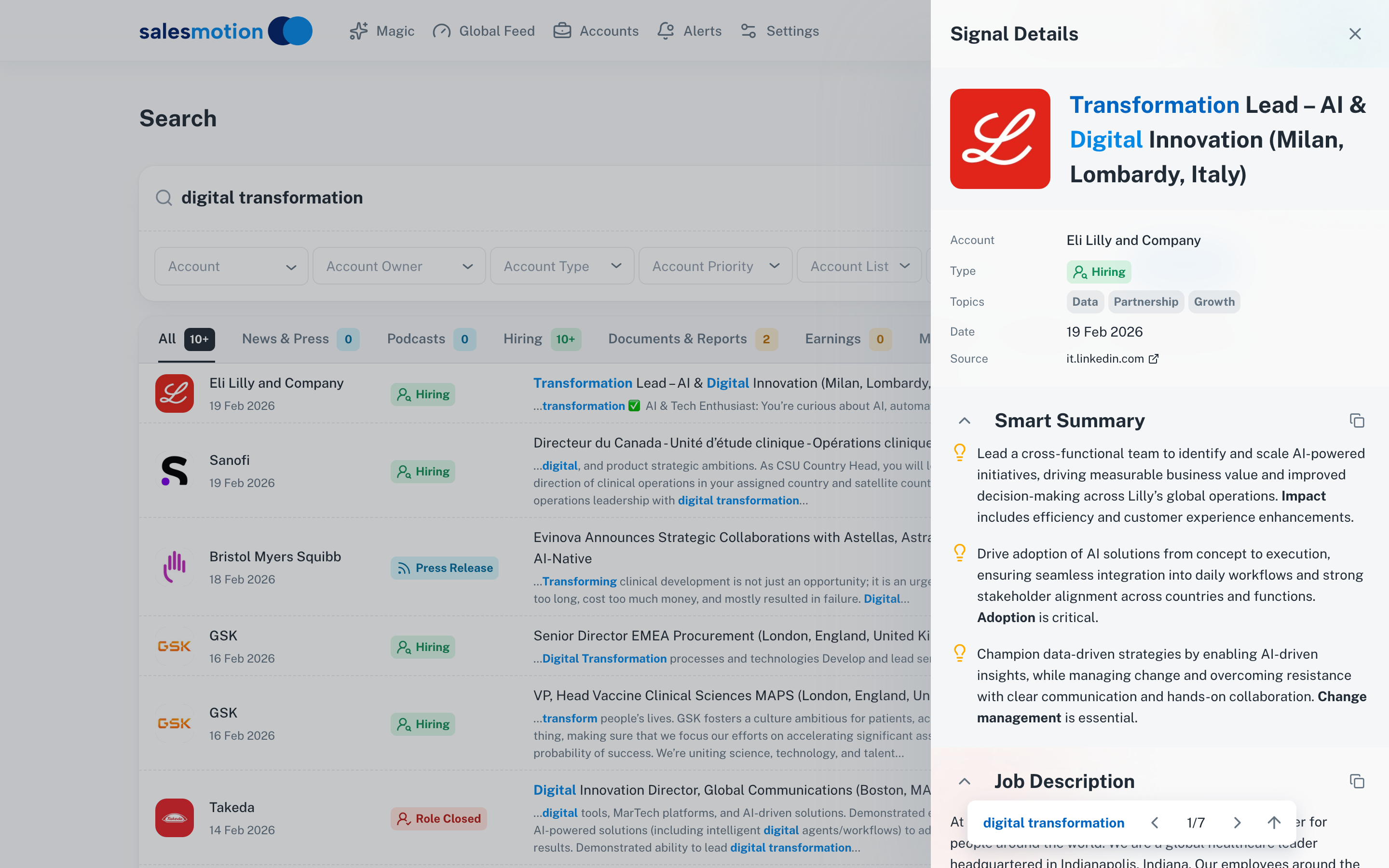 Salesmotion lets you search any keyword across all accounts and all data sources, including news, earnings calls, job ads and press releases, with full source attribution.
The connection to competitive selling is timing and context. A battlecard tells a rep how to position against a rival. An account signal tells the rep which account just hired a new executive, announced a consolidation program, or named a priority on an earnings call, so the positioning arrives when it matters. Searching a competitor's name across your accounts shows where that competitor is being mentioned in news, job ads and press releases.
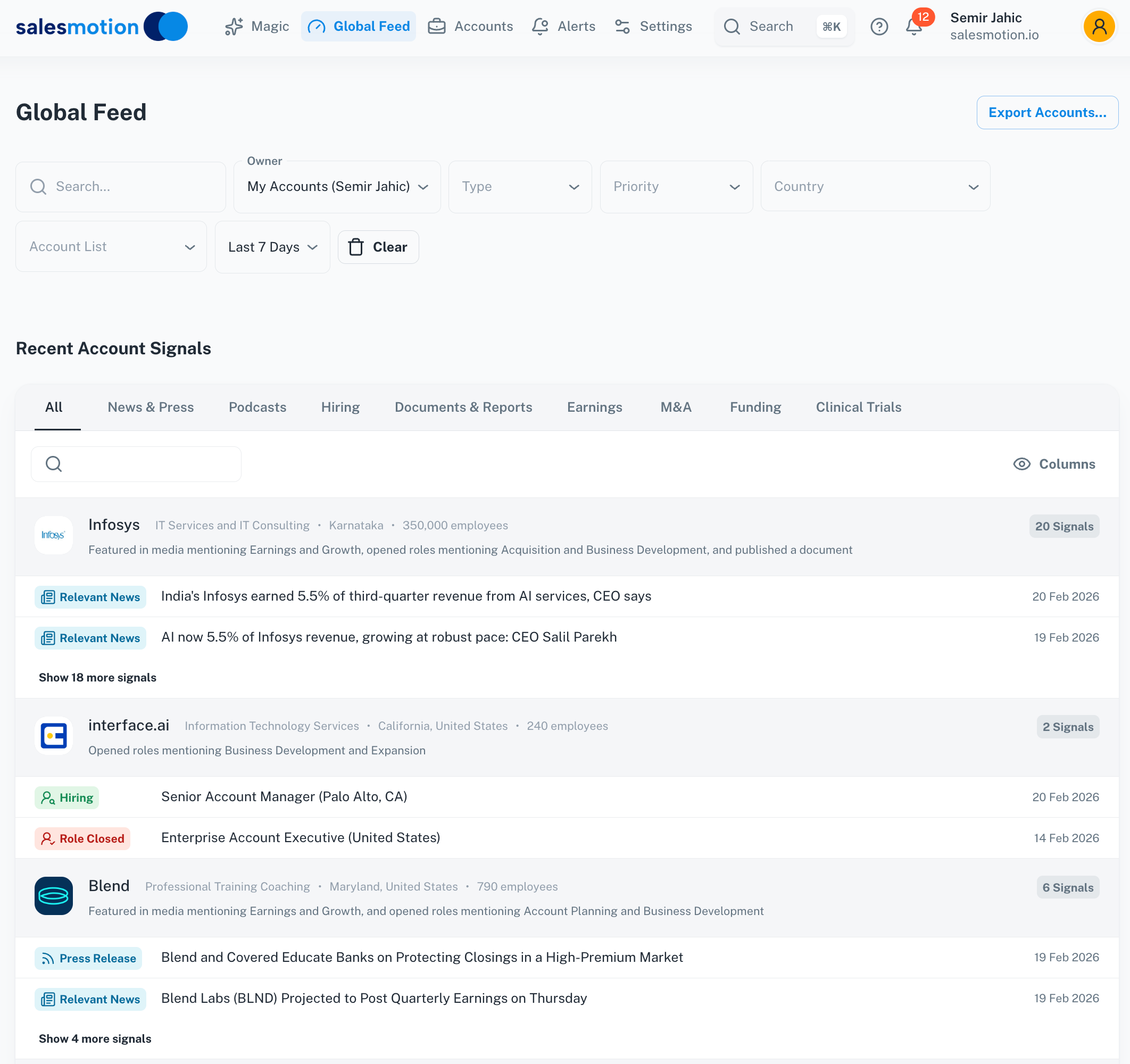 Salesmotion's Global Feed surfaces leadership changes, earnings commentary and hiring patterns across every account in your territory.
Salesmotion has a native Salesforce integration, a HubSpot integration, a REST API and an MCP server for Claude, ChatGPT and other assistants. Pricing is published: $85/mo for individuals on a monthly contract, with custom pricing for teams and enterprise. See the pricing page or try the interactive demo.
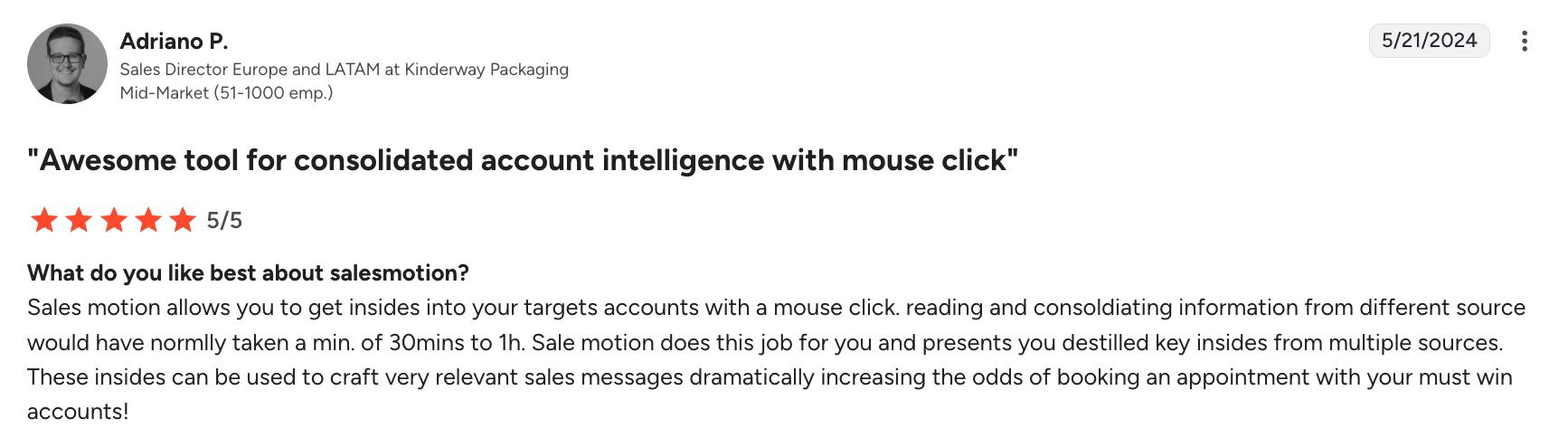 Real G2 review: "Account intelligence at your fingertips." Sales Director, Europe and LATAM.
How to Choose
Start from the situation you are in, not from the feature list.
You have a product marketing owner and five or more active competitors. Shortlist Klue and Crayon. Klue leans toward enablement and win-loss delivered into seller tools. Crayon leans toward automated monitoring and scheduled AI analysis. Ask each for a quote on the same scope.
You want tracking and battlecards without a bespoke program. Look at Kompyte. Named plans and included onboarding and support make the buying process shorter.
Your competitors are public companies. Add AlphaSense for filings, transcripts and analyst research, and use its free trial to test it on your top three rivals.
You already record calls. Use Gong as the first-party source for what buyers say about alternatives, then decide whether you need external monitoring on top.
The question is market share or public narrative. Similarweb answers the digital benchmarking question. Meltwater answers the media and social one.
You have no budget yet. Start with Owler Community for up to 5 companies and ZoomInfo Lite for company lookups, and build the case from there.
Your reps know the competitors but miss the moment. That is an account problem, not a competitor problem. An account intelligence layer such as Salesmotion sits alongside whichever competitive tool you choose.
How to Build a Competitive Intelligence Workflow That Wins Deals
Having the right tools matters less than having the right process. Here is how a competitive intelligence workflow looks when it changes deal outcomes.
Step 1: Continuous monitoring. Set up automated tracking across all major competitors. At minimum, monitor their websites, job postings, news mentions, and social activity. Crayon, Klue and Kompyte automate this at the competitor level. For account-level signals, an account research platform monitors what is happening at your target accounts and surfaces that context as part of daily preparation.
Step 2: Signal-to-action routing. Not every competitor move requires a response. Define which signals trigger which actions. A competitor price change on a product you compete against warrants an immediate battlecard update and a notification to active deal owners. A competitor blog post about a new feature might only need a place in the monthly summary.
Step 3: Pre-call competitive preparation. Before every discovery call and demo, reps check the account brief and the battlecard together. Which alternatives is the buyer likely to consider? Did the account's recent earnings call mention consolidation or cost-cutting? Has a key decision-maker recently joined from another company?
Here is what this looks like in practice with Salesmotion. A target account posts a Director of Revenue Operations role. The platform flags the signal and surfaces context: the company's last earnings call mentioned "sales technology consolidation," and a new executive joined the leadership team last quarter. The rep enters the first meeting knowing the likely pain (too many tools) and the timing (a new leader with a mandate to consolidate). Instead of a generic discovery call, the conversation is consultative from the first minute.
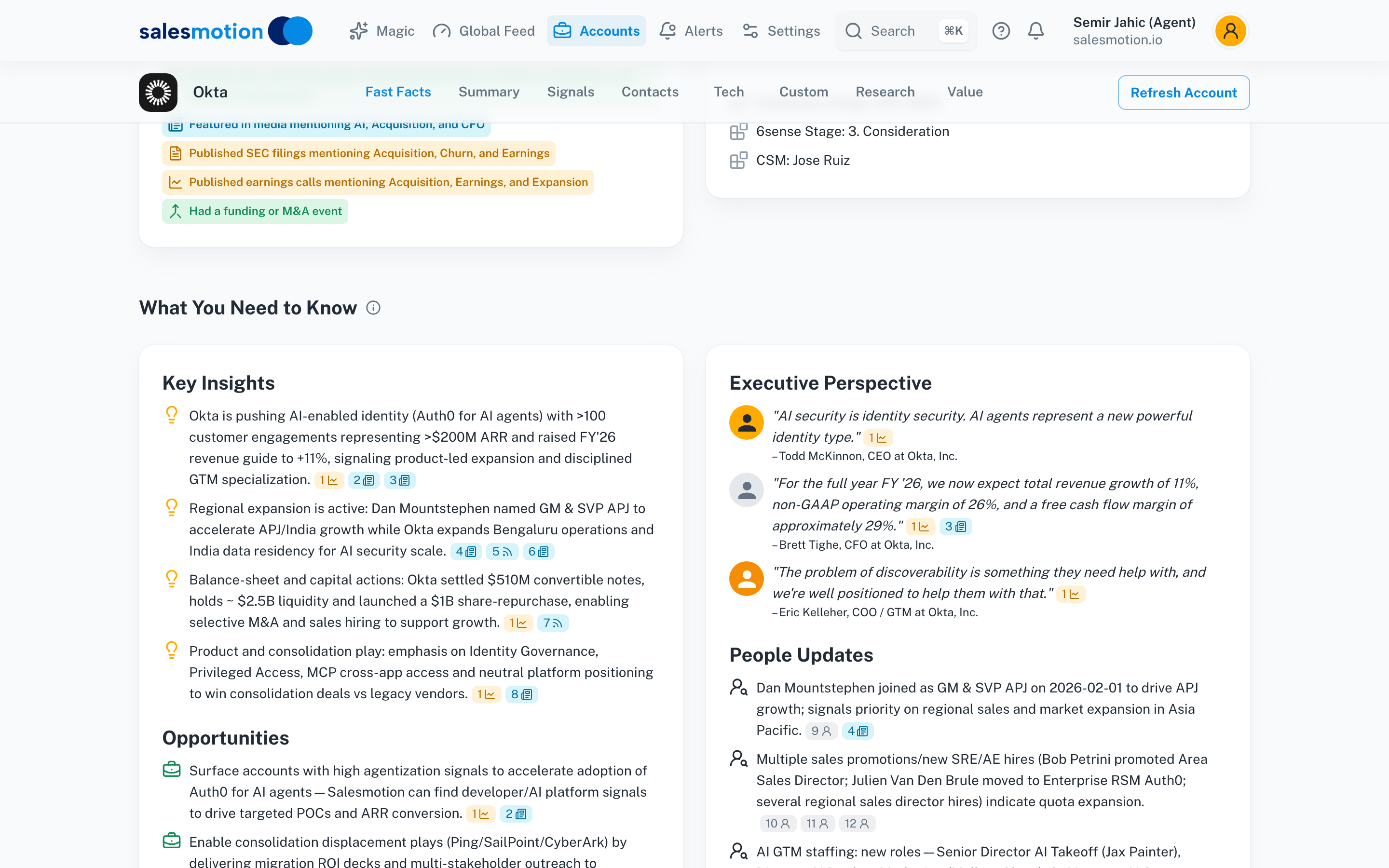 A real account brief in Salesmotion: key insights, executive perspective, people moves, and talking points delivered before every meeting.
Step 4: Win/loss feedback loop. After every competitive deal, capture what worked and what did not. Conversation intelligence holds what buyers said about alternatives. Klue's Win-Loss Suite generates win and loss stories from CRM data and call recordings when a deal closes. Feed these insights back into battlecards and talk tracks so the whole team gets smarter with every deal.
Account-level preparation shows up in results. Frontify saw a 35% improvement in win rates in 12 months with Salesmotion, alongside a 90% reduction in account research time.
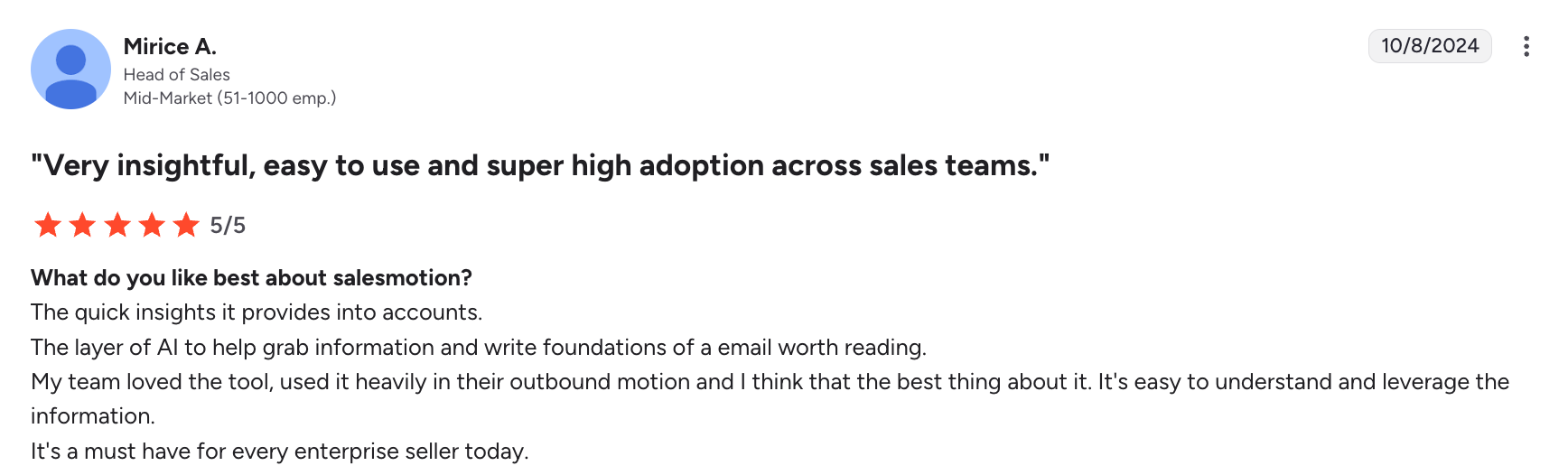 "A force multiplier for sales productivity." Enterprise AE, DACH region.
Key Takeaways
- Seven in ten teams say at least half of their opportunities are competitive, yet reps rate their competitive readiness at only 6.3 out of 10 (Crayon). Closing that preparation gap is the fastest path to higher win rates.
- The three dedicated platforms are Klue (competitive enablement and win-loss), Crayon (automated monitoring with AI analysis) and Kompyte (tracking and battlecards in named plans). None publishes a price.
- AlphaSense, Gong, Similarweb, Meltwater, ZoomInfo and Owler each supply one competitive input: public-company research, buyer conversations, digital benchmarks, media coverage, company data and free alerts.
- Free starting points exist: Owler Community follows up to 5 companies, ZoomInfo Lite includes 10 credits a month, and AlphaSense offers a free trial.
- Competitive intelligence covers your rivals. Account intelligence covers your accounts. The strongest workflow uses both, so the right positioning reaches the right account at the right moment.
- Process matters more than tools. Define which competitive signals trigger which actions, and build pre-call competitive preparation into every rep's routine.
Frequently Asked Questions
What are the best competitive intelligence tools for sales teams?
The best dedicated competitive intelligence tools for sales teams are Klue, Crayon and Kompyte. Klue is strongest for competitive enablement and win-loss delivered inside the CRM and chat tools. Crayon is strongest for automated competitor monitoring with scheduled AI analysis. Kompyte combines tracking and battlecards in three named plans. AlphaSense, Gong, Similarweb, Meltwater, ZoomInfo and Owler add specific inputs such as public-company research, buyer conversations and free company alerts.
What are the best AI-powered competitive intelligence platforms?
Klue, Crayon and AlphaSense have the most developed AI among the tools reviewed here. Klue ships Compete Agent, billed as "your AI research analyst and deal assistant," plus an AI Interviewer for win-loss. Crayon offers Crayon AI and Sparks, which can run on a weekly or monthly schedule. AlphaSense offers Generative Search, Deep Research and Workflow Agents across more than 500 million documents. Meltwater adds Mira AI for media and social intelligence.
How much do competitive intelligence tools cost?
Most competitive intelligence vendors do not publish a price. Klue's pricing page is demo-gated. Crayon says pricing is tailored to the needs of your competitive intelligence program. Kompyte lists three plans (Essentials, Professional and Unlimited) without prices. AlphaSense sells annual subscriptions from enterprise packages to per-seat options. Meltwater quotes four packages with a 12-month minimum. Gong prices licences per user plus a platform fee. The practical way to compare is to give each vendor the same scope and ask for a total cost in writing.
Are there free competitive intelligence tools?
Yes. Owler Community is free and lets you follow up to 5 companies. ZoomInfo Lite is a permanent free tier with 10 credits a month. AlphaSense offers a free trial. The dedicated platforms (Klue, Crayon and Kompyte) are sold through a quote, and Meltwater states that it does not offer a self-serve free trial but will run a free guided demo.
What competitive intelligence features does Meltwater offer?
Meltwater covers the media side of competitive intelligence. Its platform includes Media Intelligence, social listening, AI Visibility Tracking, Media Relations and Influencer Marketing, with real-time alerts and spike detection, Mira AI for summaries and reporting, and API and MCP integrations. It is used to follow how competitors are covered and discussed. Meltwater also owns Owler, which provides company profiles and competitor alerts.
What is the difference between competitive intelligence and sales intelligence?
Sales intelligence is the broader category covering contact data, company information, intent data, and buying signals used to find and engage prospects. Competitive intelligence focuses on understanding competitor activities, positioning, pricing, and strategy. Effective B2B sales teams use both: sales intelligence to identify the right accounts and contacts, competitive intelligence to win against alternatives once a deal is active.
Which competitive intelligence tool is best for Salesforce users?
Klue and Crayon both list Salesforce among their CRM integrations, so battlecards and competitor updates can reach reps inside the CRM. Klue also lists HubSpot and MS Dynamics, and Crayon lists HubSpot and FreshSales. ZoomInfo Copilot connects to Salesforce for company data. For account-level signals, Salesmotion has a native Salesforce integration as part of its account-based selling workflow.
How do competitive intelligence tools improve win rates?
They improve win rates in three ways. First, they help reps prepare stronger positioning before calls, so a competitor mention does not catch them off guard. Second, they shorten the time between a competitor move, such as a pricing change or a launch, and an updated response in the field. Third, win-loss analysis shows which messages worked in real deals, so the next rep starts from evidence. Reps currently rate their competitive readiness at 6.3 out of 10 (Crayon), which is the gap these tools exist to close.