A surprising number tells the story of how much this job has changed. In venture-backed firms, CRO adoption rose from under 10% in 2015 to over 40% by 2023, according to McKinsey's analysis of how CROs are propelling growth. That shift didn't happen because companies wanted another executive title. It happened because disconnected sales, marketing, and customer success teams don't scale cleanly.
The CRO playbook is being rewritten. This role is no longer about managing the sales floor or stepping into deals at quarter end. It's about architecting a predictable, scalable, efficient revenue engine. That means shared metrics, cleaner handoffs, tighter forecasting, and a real system for turning customer and market signals into action.
Modern chief revenue officer responsibilities also look more operational than many teams expect. The job sits between strategy and execution. A CRO has to set direction, but also ensure the CRM, dashboards, handoff rules, account coverage, and renewal motions support that direction.
The best CROs I've seen don't run the business on instinct. They use data, but not passively. They build a revenue system that helps teams move faster with context.
Below are the eight responsibilities that matter most, and the practical way to run each one.
TL;DR: A chief revenue officer owns eight responsibilities: revenue strategy and planning, sales team leadership, pipeline generation and forecasting, revenue operations and systems, CAC and unit economics, account-based marketing and sales alignment, board and investor communication, and customer success and retention. The role works when those eight run as one revenue system with shared data, shared metrics and clean handoffs.
1. Revenue Strategy & Planning
A CRO owns the revenue thesis. Not a slide deck. Not a slogan. The actual set of choices that determines where the company will grow, which segments matter, what motions deserve investment, and what gets deprioritized.
That's why this sits at the top of any serious list of chief revenue officer responsibilities. If the strategy is fuzzy, every downstream metric gets noisy. Teams chase the wrong accounts, marketing builds campaigns for segments sales can't close, and customer success inherits customers that never fit in the first place.
What good planning looks like
McKinsey notes that successful growth companies rely on CROs to build a single revenue engine across lead generation, sales closure, and retention, with centralized data tied to CRM systems and AI tools in a common operating model, as outlined in this perspective on strategic CRO leadership.
That's the key trade-off. Good strategy sounds slower at first because it forces choices. In practice, it speeds execution because everyone is working from the same assumptions.
A practical strategy package usually includes:
- Target market definition: Which segments, geographies, and buyer profiles deserve focus now.
- Revenue motion design: Separate plans for new business, expansion, renewal, and partner-led revenue.
- Risk scenarios: What changes if a competitor moves upmarket, budgets tighten, or buying cycles stretch.
KPIs and common failures
The wrong KPI here is raw top-line ambition detached from execution reality. The right KPIs are shared revenue targets, pipeline quality, retention performance, and segment-level efficiency.
Practical rule: If frontline managers can't explain the strategy in the same language as the board deck, you don't have a strategy. You have a presentation.
What doesn't work is annual planning in isolation. A CRO needs regular business reviews, direct feedback from managers, and real-time account intelligence. Tools like Salesmotion are useful here when they help identify changes in hiring, funding, executive movement, or competitor mentions that may justify a segment shift or a faster push into a market. Strategy should stay stable where it matters and flexible where reality changes.
See Salesmotion in action
Take a self-guided interactive tour — no signup required.
2. Sales Team Leadership & Management
Most CROs don't need to be the best closer in the company. They need to build a team that closes well without executive rescue.
That changes how leadership works. The CRO should focus less on heroic deal intervention and more on management quality, coaching systems, hiring standards, and specialization by motion. A VP of Sales may run the floor day to day. The CRO makes sure the floor is built correctly.
What I tell revenue leaders: if the top 10% of reps get 10% better, that's fine. But what if the other 90% get 10% better? If you're a CRO, that is what you should focus on.
Where leadership actually shows up
Recent Glassdoor data cited by Kixie puts average US CRO compensation at $288,444 annually, which tells you how much accountability sits in the role. That accountability covers far more than sales closers. CROs orchestrate marketing, sales, customer success, and partnerships across the full customer journey, a broader leadership scope discussed in this guide to managing a sales team.
Strong CRO leadership usually shows up in a few visible ways:
- Hiring against the motion: Reps for net-new enterprise are not the same as reps for expansion or velocity sales.
- Coaching managers first: If managers can't inspect deals, coach messaging, and enforce process, rep coaching won't scale.
- Clear advancement paths: Good people stay when they can see how they grow.
KPIs and pitfalls
Ramp time matters. Manager quality matters. Time-to-productivity matters. But one of the easiest mistakes is turning team leadership into scorekeeping. Reps don't improve because they were shown a dashboard. They improve because managers can translate account reality into better behavior.
I've also seen teams overbuild enablement and underbuild specificity. Generic training dies on contact with real buyers. Better practice is to use current accounts and real deal context. If a tool like Salesmotion can produce account briefs from public sources and surface recent stakeholder changes, managers can coach from live situations instead of fictional role-play.
A CRO who only reviews numbers will get better reporting. A CRO who develops managers gets better execution.

“The moment we turned on Salesmotion, it became essential. No more hours on LinkedIn or Google to figure out who we're talking to. It's just there, served up to you, so it's always 'go time.'”
Adam Wainwright
Head of Revenue, Cacheflow
3. Pipeline Generation & Forecasting
A CRO earns credibility on forecast calls. Miss enough of them, and every hiring plan, spend decision, and board conversation gets harder.
Pipeline generation and forecasting are one operating problem, not two separate reports. Teams that want more structure on the front end should start with a clear pipeline generation process. If marketing feeds the funnel with activity that never converts, the forecast is inflated from day one. If sales commits deals based on rep confidence instead of buyer evidence, the quarter slips late and leadership acts too late to recover.
What the responsibility actually covers
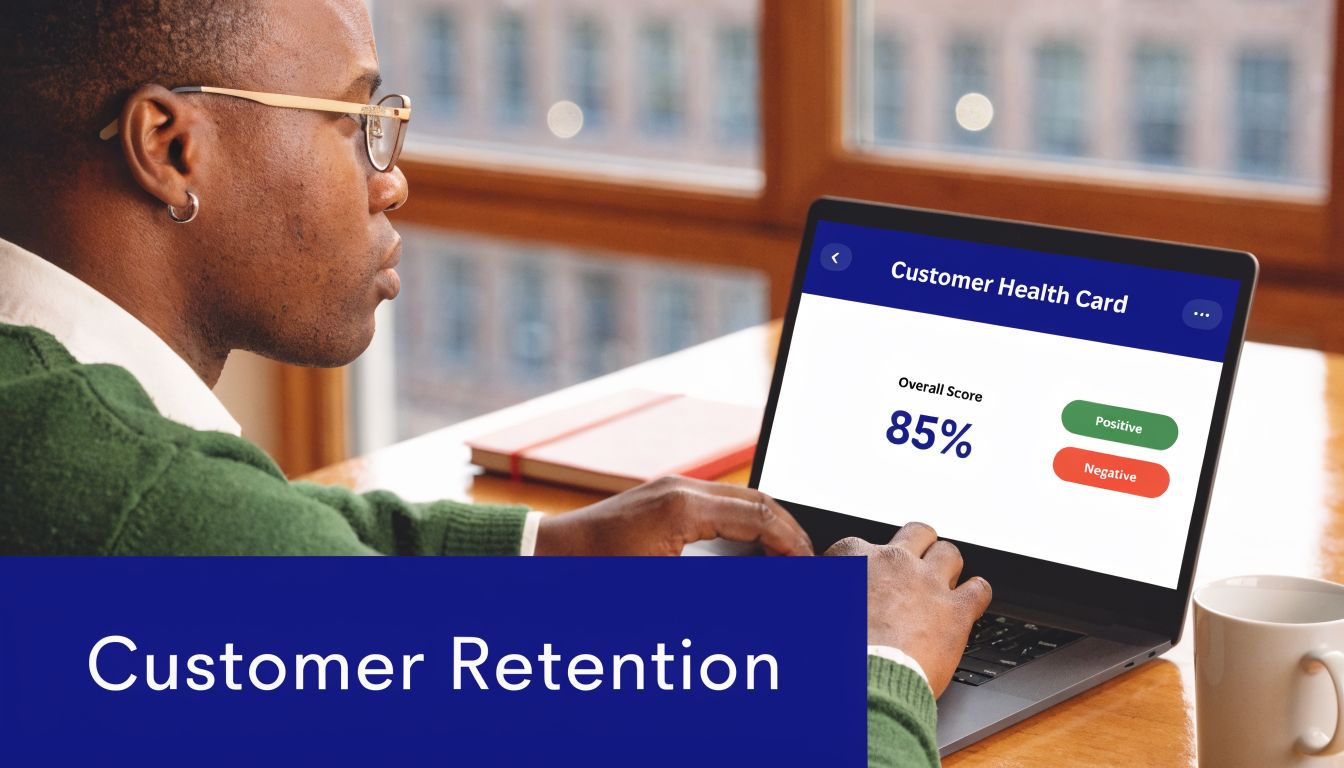
Pipeline generation means creating enough qualified opportunities, in the right segments, at the right conversion rates to support the plan. Forecasting means assigning realistic confidence to that pipeline and updating that view as buyer behavior changes.
Those jobs share the same inputs. Coverage by segment. Stage conversion. Sales cycle length. Deal quality. Source quality. Changes inside target accounts that affect timing or urgency.
Good CROs review pipeline by motion, not as one blended number. New business behaves differently from expansion. Enterprise behaves differently from velocity. Renewals have their own risk pattern. Blend them together and the forecast looks cleaner than it really is.
KPIs that matter
Track the metrics that tell you whether pipeline can turn into revenue, not just whether volume is rising:
- Pipeline coverage by segment: Coverage should be measured against the target for each motion, not one company-wide number.
- Stage conversion rates: Low conversion usually points to poor qualification, weak messaging, or stage definitions that are too loose.
- Pipeline aging: Old pipeline is often forecast pollution.
- Source-to-revenue yield: A channel that fills dashboards but rarely closes should not get protected.
- Commit accuracy: Forecast categories should mean something. If commit is routinely wrong, the issue is inspection discipline, not vocabulary.
Analysts at Revenue Nomad argue that stronger use of analytics improves forecast quality and target attainment in CRO teams, in its discussion of data in the CRO toolkit. The practical takeaway is straightforward. Judgment still matters, but judgment should start from evidence.
What usually breaks
The common failure is treating every open opportunity as equally alive. It is not. Some deals are moving because the buyer has an active initiative, executive sponsorship, and a reason to change now. Others are sitting in CRM because no one wants to close them out.
A RevOps lead at a software firm told us his salespeople open a deal and are still educating the buyer four or five meetings later, because nobody could tell which accounts were ready.
Modern signal capture changes execution. If Salesmotion flags a new CRO hire, a funding event, a strategic expansion, or a competitor mention in an earnings call, reps can reprioritize accounts based on current buying conditions instead of stale notes. That improves pipeline quality and forecast quality at the same time.
There is a trade-off here. More signals can create more noise if the team has no rule for what changes forecast confidence versus what only changes outreach timing. The fix is simple. Define trigger thresholds, tie them to inspection, and make managers explain why a signal changes deal probability.
Teams also use tools like lead generation chatbots to capture more inbound demand, but volume alone does not solve a coverage problem. If qualification standards are weak, chat-driven leads can give the business more meetings and a worse forecast.
For planning discipline, process, and reporting structure that keep these numbers usable across teams, RevOps best practices for revenue teams are worth reviewing. Forecasting gets better when pipeline definitions, handoffs, and inspection rules are consistent.
4. Revenue Operations & Systems Optimization
A CRO doesn't need to personally own every system, but they do own whether the system works. That includes CRM integrity, lead routing, lifecycle definitions, reporting logic, handoffs, and the tech stack decisions that either simplify execution or make reps live in six tabs all day.
Strategy becomes infrastructure. If the operating system is messy, the commercial plan won't survive contact with the field.
The standard to aim for
One of the clearest chief revenue officer responsibilities is creating a single source of truth. McKinsey highlights CRO ownership of centralized data warehouses linked to CRM and AI tools, while Kixie points to RevOps-led oversight of platforms like Salesforce and HubSpot to improve forecasting and process control. In practice, the useful question is simple: can sales, marketing, and customer success look at the same account and trust what they see?
RevOps should sit close to the CRO because process design shapes revenue performance. It isn't a back-office reporting function.
Use systems work to solve specific problems:
- Data governance: Required fields, ownership rules, and stage exit criteria.
- Workflow design: Better handoffs between SDRs, AEs, account managers, and CS.
- Alerting and automation: Proactive notice when pipeline stalls, renewals slip, or account activity spikes.
Teams refining that operating model can borrow useful ideas from Salesmotion's RevOps best practices, especially around workflow design and system accountability. If you're exploring adjacent automation, this overview of lead generation chatbots is also relevant to top-of-funnel process design.
What usually goes wrong
The most common mistake is buying tools to patch process confusion. That never lasts. Tools should reinforce a clean operating model, not compensate for the absence of one.
An enablement and operations leader at a software firm told us how that ends: "we are reducing our tech stack because we've kind of purchased all of these tools in silos."
Field note: Integration friction compounds quietly. One extra manual step in one workflow doesn't look serious. Multiplied across the revenue org, it becomes a tax on execution.
Salesmotion fits best here when it delivers intelligence directly into Slack, CRM, or email instead of forcing reps to hunt for context in another dashboard. Good systems reduce switching costs and raise action quality.
“Automatic account profile detail I can use to manage my territory. Using Salesmotion AI to generate value statements per persona, account, etc. Using Salesmotion to give me a starting point based on new hires, or news alerts is critical.”
Adam Wainwright
Head of Revenue, Cacheflow
5. Customer Acquisition Cost & Unit Economics Management
Revenue growth can destroy value if the company buys it at the wrong price. A CRO owns that math.
CAC management is not a finance side task. It is an operating discipline that decides which segments deserve more coverage, which motions should be cut back, and how fast the company can grow without creating a payback problem later. The job is to manage acquisition efficiency with the same rigor used in forecast reviews.
A useful framework is simple: define the motion, measure its economics, then fix the bottleneck.
For customer acquisition cost and unit economics, that means looking at three distinct buckets:
- New business CAC: Sales and marketing cost required to create and close net-new demand.
- Expansion CAC: Cost to grow existing accounts through upsell or cross-sell.
- Renewal preservation: Cost of keeping revenue in place through retention work, service quality, and account coverage.
Those buckets should never be blended into one average and treated as strategy. A blended CAC number can make the business look healthy while one segment is underwater. Enterprise outbound, partner-led deals, product-led conversion, and expansion revenue each carry different cost structures, sales cycles, and payback periods.
The modern CRO reviews unit economics by segment, channel, and motion. That is how leaders decide where to add headcount, where to pull spend, and where to accept a longer payback because the lifetime value justifies it. Teams that need a clearer method to compare business opportunities using ROI should do that work before shifting budget between programs.
What to measure
The KPI set should stay tight and decision-oriented:
- CAC by segment and motion
- Payback period
- LTV to CAC ratio
- Gross revenue retention and net revenue retention
- Sales efficiency by cohort
- Win rate and average sales cycle by acquisition source
Each metric answers a different management question. CAC shows cost. Payback shows speed. Retention metrics show whether acquired revenue holds. Sales efficiency helps expose whether the issue is targeting, conversion, pricing, or rep productivity.
Where CROs get this wrong
The common mistake is forcing efficiency through broad cuts. That usually reduces capacity before it improves economics.
A better approach is to isolate the failure point. If CAC is rising, the problem may be poor fit in one segment, weak conversion in one stage, or too much rep time spent on accounts with no buying motion. Those are different problems and need different fixes.
Salesmotion is useful here because it helps teams focus on accounts showing real change, intent, or timing signals instead of spreading effort evenly across the market. That improves unit economics in a practical way. Reps spend more time where context exists, managers get cleaner evidence on which motions convert, and the CRO can reallocate budget based on actual efficiency rather than gut feel.
That is the primary responsibility. Protect growth quality, not just growth rate.
6. Account-Based Marketing & Sales Alignment
Many revenue organizations talk a good game, yet they often miss the handoff. Sales says marketing sends noise. Marketing says sales ignores campaigns. Both teams claim to support strategic accounts. Few operate from one account plan.
That's why ABM belongs on any serious list of chief revenue officer responsibilities. It isn't just a marketing program. It's an operating discipline for named accounts.
What alignment looks like in practice
When sales and marketing are misaligned, firms can lose 10% to 15% of potential revenue annually, according to the McKinsey benchmark provided earlier. That's not a messaging problem. It's an execution problem.
An effective CRO fixes it by enforcing shared ownership at the account level. The target list, messaging, timing, and success criteria should be coordinated before activity starts.
A strong ABM operating rhythm usually includes:
- Named-account selection: A focused list that sales and marketing both believe in.
- Joint account plans: Marketing knows the buying group, sales knows the narrative, both know the trigger.
- Shared measurement: Pipeline contribution and revenue impact matter more than isolated lead metrics.
Where AI tools help
ABM fails when personalization becomes manual labor. Reps don't have time to research every account thoroughly, and marketers don't always know what changed inside the account this week.
That's where Salesmotion becomes practical. If the Research Agent builds account briefs from public information and the Signal Agent flags fresh developments, both teams can work from the same context. Marketing can support outreach when timing improves. Sales can reach out with a reason that's specific to the account.
If your ABM motion depends on a few reps doing heroic research, it won't scale. If it depends on a shared system of account intelligence, it might.
What doesn't work is measuring ABM by content production volume or campaign activity. Named-account revenue is the score.
7. Board & Investor Communication
The CRO is often the executive translating commercial complexity into a narrative the board can trust. That means explaining not just what happened, but whether the company understands why it happened and what comes next.
Board communication gets weaker when the CRO treats it as reporting instead of operating discipline. The board doesn't need a tour of CRM fields. It needs confidence that the revenue engine is understood, managed, and improving.
What the board actually wants
By 2023, 68% of Fortune 500 companies in tech and services had CRO equivalents such as Chief Growth Officers, according to the Kixie benchmark. That level of adoption reflects how central revenue leadership has become to executive decision-making.
A board-ready CRO can answer four questions clearly:
- What is the number?
- How reliable is the forecast behind it?
- What changed from last quarter's assumptions?
- Where are the biggest risks and best opportunities now?
The board also expects discipline around long-range visibility. Near-term forecast confidence and long-term revenue design need to connect.
How to present without losing credibility
Good communication starts before the meeting. If your definitions change every quarter, trust erodes fast. If your forecast is routinely detached from account reality, the problem will show up in your board narrative.
Signal-based intelligence can strengthen this work because it gives context for movement inside the pipeline. A deal moved because a buyer team changed, a budget event happened, or a strategic initiative became public. That's more credible than saying the pipeline “improved.”
Salesmotion can support this if it helps revenue teams connect account-level signals to forecasting and executive summaries. The board won't care about the tool itself. They'll care that your explanations are concrete and your decisions look grounded.
8. Customer Success & Retention Strategy
If the CRO only owns new logo growth, the company will keep paying to replace preventable loss. Real revenue leadership includes retention, expansion, and customer health. That's where durable growth shows up.
This is one of the clearest differences between a CRO and a pure sales leader. The CRO has to care what happens after signature, because the revenue model depends on it.
Why retention belongs with revenue leadership
McKinsey's benchmark says companies with a dedicated CRO achieve up to 20% to 30% higher Net Revenue Retention than those without. The reason is straightforward. CROs shift focus from short-term quotas toward longer-term metrics like customer lifetime value and retention quality.
Kixie also notes that customer health scoring, proactive onboarding, and upsell strategies can reduce churn by 15% to 20%. That only happens when success, sales, and operations are working from the same customer picture.
A practical retention playbook includes:
- Health scoring: Shared indicators for risk, adoption, and expansion potential.
- Structured handoffs: Sales should transfer context, not just a closed-won notification.
- Dedicated expansion process: Existing customers deserve a different motion from net-new prospects.
What works and what doesn't
One common failure is burying customer success metrics outside the CRO view. That creates a clean sales story and a messy revenue reality. Another is asking AEs to manage renewals and expansions without a clear motion, compensation logic, or account intelligence.
The better model is proactive. If a customer is hiring, opening offices, changing executives, or signaling strategic expansion, those events can support an upsell conversation. If customer support trends or adoption data are weakening, the team should know before the renewal is in danger.
Salesmotion is relevant here when it helps teams spot expansion triggers inside existing accounts and pair them with current account context. Expansion works best when timing and relevance are visible before the customer asks for something new.
8-Point CRO Responsibilities Comparison
| Initiative | Implementation complexity | Resource requirements | Expected outcomes | Ideal use cases | Key advantages |
|---|---|---|---|---|---|
| Revenue Strategy & Planning | Medium–High, cross-functional alignment and ongoing adjustments | Senior leadership, analytics tools, cross-team coordination, budget planning | Cohesive revenue roadmap, improved forecast accuracy, aligned KPIs | Multi-year growth planning, market expansion, strategic repositioning | Aligns sales/marketing/CS, improves predictability and decision speed |
| Sales Team Leadership & Management | Medium, hiring, training, culture and performance systems | Talent acquisition, managers/coaching time, training programs, coaching frameworks | Higher rep productivity, reduced performance variance, better retention | Building or scaling sales orgs, improving ramp and quota attainment | Direct revenue impact, internal talent development, consistent methodology |
| Pipeline Generation & Forecasting | Medium, process definition, CRM discipline and forecasting models | CRM hygiene, analytics, lead generation channels, data governance | More accurate forecasts, healthier pipeline, faster deal velocity | Predictable revenue targets, investor reporting, pipeline optimization | Visibility into deals, early risk detection, stage-level optimization |
| Revenue Operations & Systems Optimization | High, integrations, automation and change management | RevOps team, tech stack integrations, data governance, implementation cost | Operational efficiency, cleaner data, realtime reporting and automation | Scaling tech stack, improving CRM adoption, reducing manual work | Automates workflows, improves data quality, enables scalable reporting |
| CAC & Unit Economics Management | Medium–High, complex modeling and attribution challenges | Finance/analytics resources, cohort tracking, multi-touch data | Clearer profitability, optimized channel spend, better ROI decisions | Fundraising preparation, pricing optimization, channel rationalization | Improves capital efficiency, guides investment allocation and pricing |
| Account-Based Marketing & Sales Alignment | High, coordination, personalization and account ops | Account research, coordinated campaigns, shared tooling and SLAs | Higher conversion and pipeline contribution from target accounts | Enterprise/NAM accounts, high-value targeted selling, complex deals | Focused ROI, tighter sales-marketing alignment, personalized engagement |
| Board & Investor Communication | Medium, demands forecasting rigor and clear narratives | Accurate reporting, analytics, executive prep time and materials | Increased investor confidence, clearer strategic alignment, funding support | Fundraising, quarterly board updates, major strategic shifts | Builds credibility, enforces discipline, aligns leadership and investors |
| Customer Success & Retention Strategy | Medium, handoffs, health scoring and expansion processes | Customer success team, onboarding frameworks, health analytics, QBRs | Higher NRR, reduced churn, more expansion revenue | SaaS and subscription businesses, emphasis on LTV and retention | Drives high-margin expansion, lowers effective CAC, improves customer value |
From Responsibility to Revenue Engine
The CRO role looks broad on paper because it is broad. But the work gets simpler when you treat these responsibilities as one system instead of eight disconnected jobs.
Revenue strategy sets direction. Sales leadership translates that direction into execution. Pipeline management and forecasting create visibility. RevOps and systems make the model reliable. CAC discipline protects the economics. ABM alignment improves precision. Board communication turns operating truth into executive confidence. Customer success and retention make growth durable.
The common thread is control through clarity. Not control in the micromanagement sense. Control in the sense that the CRO can see where revenue is being created, where it's leaking, and what needs to change next. That's the shift in modern chief revenue officer responsibilities. The role has moved away from reactive management and toward proactive, data-backed orchestration.
That shift also changes what good tooling looks like. The best revenue technology doesn't just add dashboards. It reduces lag between what's happening in the market and what your team does about it. It helps reps prioritize. It helps managers coach from reality. It helps leadership forecast with more confidence because account movement is grounded in visible signals, not rep sentiment alone.
There's also a practical leadership lesson here. A CRO can't personally inspect every deal, rewrite every sequence, and fix every process edge case. The job is to build a system where good decisions happen consistently without executive intervention. That requires tighter definitions, cleaner handoffs, better data hygiene, and a real operating cadence across sales, marketing, customer success, and RevOps.
Some teams can do part of this with process discipline alone. Most need help from tools that make account intelligence usable at scale. Salesmotion is one relevant option when the goal is to turn public signals, account research, and outreach context into daily workflow for reps and managers. That matters because speed without relevance burns pipeline, and relevance without speed gets missed.
If you're hiring for the role, growing into it, or resetting it inside an existing company, use these eight responsibilities as a working standard. Not as a job description. As an operating model. That's what separates a CRO with a title from a CRO running a real revenue engine.
If your team needs better account context, faster signal detection, and more timely outreach, take a look at Salesmotion. It helps revenue teams monitor target accounts, surface real-world buying triggers, and turn that intelligence into action across Slack, email, and CRM.