
Most lists of Koala alternatives were written before the only fact that matters now: Koala is gone. Cursor acquired Koala in July 2025, and Koala announced it would shut down on September 30, 2025. If you were relying on getkoala.com for visitor intent and account qualification, the app no longer loads. This guide is the migration plan: what happened, which jobs you actually need to replace, and eight Koala alternatives with their published pricing.
TL;DR: Koala has shut down. Cursor acquired Koala in July 2025, Koala announced a September 30, 2025 shutdown, and app.getkoala.com no longer loads. The right replacement depends on the job: person-level visitor ID (RB2B), company-level ID on a budget (Leadfeeder, Factors.ai), real-time orchestration (Warmly), a like-for-like platform migration (Common Room), or buying signals across your whole market instead of only your own website traffic.
What Happened to Koala?
Koala was acquired by Cursor, the AI coding company, in July 2025, and Koala announced it would shut down on September 30, 2025. Cursor brought over several of Koala's engineers for its enterprise push and did not plan to integrate the product. TechCrunch covered the acquisition, noting that Koala was nearly four years old, had roughly 30 employees, and counted Vercel, Statsig, and Retool among its customers.
The timing caught customers off guard. Koala had raised a $15M Series A led by CRV, with HubSpot Ventures participating, barely five months before the acquisition. Co-founder Tido Carriero announced the wind-down on LinkedIn, and the team named Common Room its preferred migration partner, with Common Room matching Koala's pricing tiers for equivalent packages during the transition window.
The practical detail matters more than the press coverage: app.getkoala.com no longer loads. Whichever tool you move to, plan to rebuild your ICP filters, scoring rules, and intent setup from scratch rather than importing them.
See Salesmotion on a real account
Book a 15-minute demo and see how your team saves hours on account research.
What Koala Did, and What You Need to Replace
Before you pick a tool, separate the jobs Koala was doing. Most teams used it for three things at once, and few alternatives cover all three equally well.
First, website visitor identification and intent. Koala de-anonymized traffic and scored accounts by product and web engagement. Second, account qualification, surfacing which accounts matched your ICP and were showing buying signals. Third, prioritization inside the rep workflow, telling a rep which account to work next and why.
The mistake most teams make is replacing only the first job. You can bolt on a visitor de-anonymization pixel and still be stuck doing the qualification and prioritization by hand. The better move is to map all three jobs and pick a tool, or a small combination, that covers them without recreating the manual research Koala was supposed to remove. If you want a primer on how the identification layer works before choosing, we wrote a separate guide on how to identify website visitors.

“Salesmotion helps you spot signals from prospect accounts, news items / job hiring alerts etc that indicate that now is a good time to reach out with a well-crafted message.”
Rob Douglas
Director of Sales, icit business intelligence
The 8 Best Koala Alternatives in 2027
Pricing below comes from each vendor's public pricing page. Pricing transparency and vendor independence are scoring criteria here for a reason: Koala customers just learned what it costs when a vendor disappears.
| Tool | Category | Starting price | Best for |
|---|---|---|---|
| Salesmotion | Signal-based account intelligence | $85/mo, self-serve monthly | Teams that want signals for their whole market, not just site visitors |
| Warmly | Visitor ID + orchestration | From $10,000/yr (annual or quarterly) | Mid-market teams automating action on visitor intent |
| RB2B | Person-level visitor ID | Free (150 company-level IDs/mo); from $79/mo | US-focused teams that want named visitors in Slack |
| Factors.ai | Visitor ID + intent + ad attribution | Free trial; Lite $199/mo, Basic $6K/yr | Marketing-led teams running LinkedIn ads |
| Leadfeeder | Company-level visitor ID | Free Lite plan; Discover from €79/mo (annual), as shown on its pricing page | European teams that want simple company-level ID |
| Common Room | AI GTM platform | $2,500/mo, billed annually | Koala's official migration path; larger GTM teams |
| Clay | GTM data and automation | Free, then $185/mo | Builders with a GTM engineer to own workflows |
| Unify | Intent + automated outbound | Free (3 seats); Base $20, Pro $60/seat/mo | Teams that want warm outbound executed for them |
Salesmotion
Salesmotion is our product, so weigh this entry accordingly. The structural difference from visitor identification: a website pixel only sees the accounts that already found you. We monitor 50+ signal types across 1,000+ sources, earnings calls, hiring patterns, leadership changes, funding, product launches, for your entire target market, then build the account research and draft outreach anchored to those signals. The workflow looks like this: a target account posts a VP of Revenue Operations role and mentions a sales transformation initiative on its earnings call. The account gets flagged, the brief updates itself, and the rep walks into discovery with the pain, the stakeholders, and the timing already mapped. Cacheflow cut meeting prep by 60% and tripled average deal size within six months on this motion. Pricing is public: $85/mo for individuals, self-serve monthly with no annual commitment, and custom team pricing with unlimited users on team plans. See full pricing without a sales call. The honest fit: Salesmotion is built for public-source signals across your target market, and RB2B is built for person-level visitor ID. If that is the one job you are hiring for, pair us with a tool like RB2B or pick that instead.
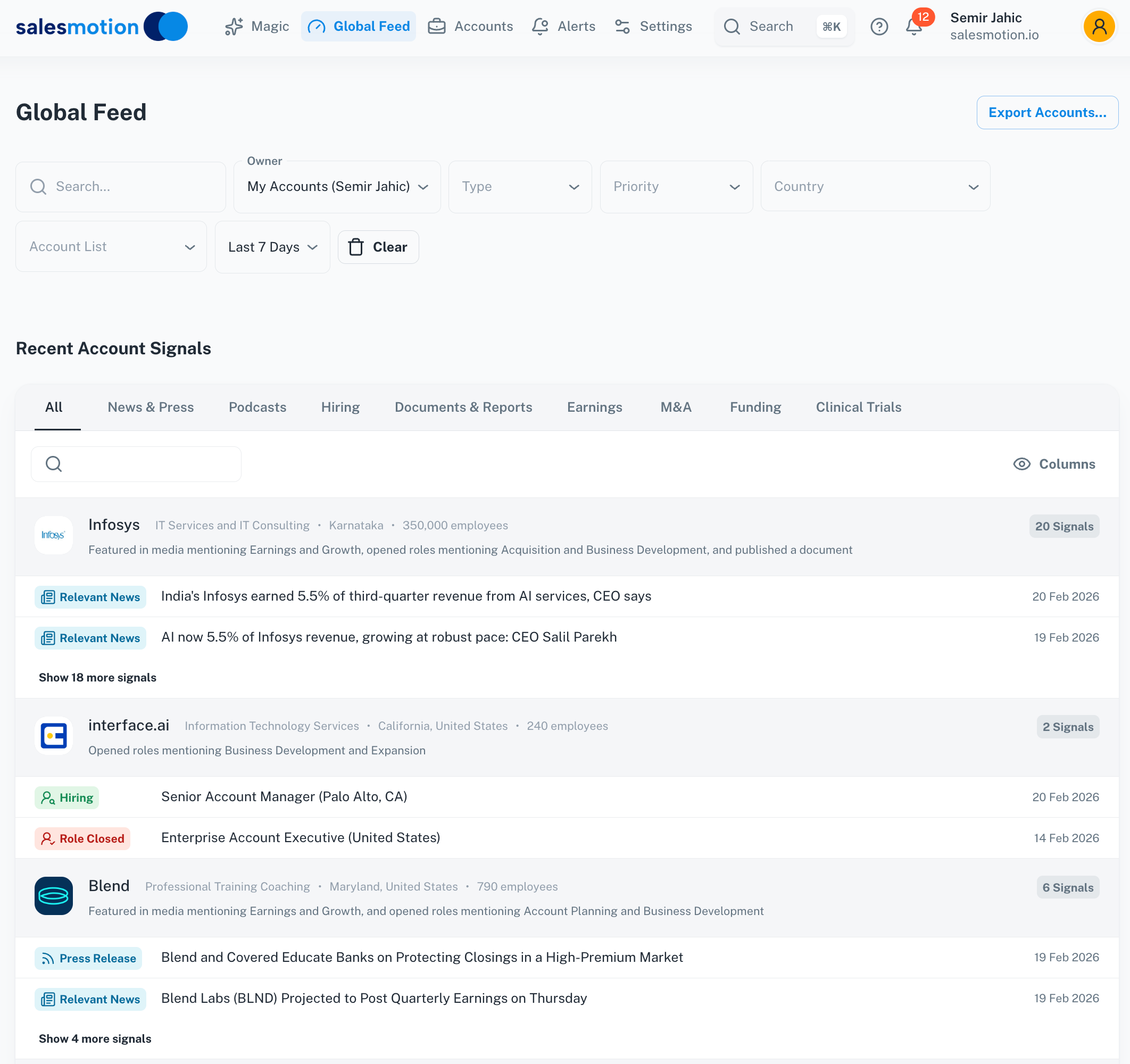 The Global Feed surfaces buying signals across your whole market, not just the accounts that happen to visit your website.
Warmly
Warmly, which HubSpot agreed to acquire in June 2026, is the closest match to Koala's "see who is on the site and act immediately" loop. It de-anonymizes visitors, enriches the matched accounts with contact data, and triggers orchestration in real time: Slack alerts, AI chat, lead routing, and automated outreach the moment a target account hits your pricing page. The pricing page lists no free plan, and there is no monthly option. Warmly publishes annual pricing from $10,000 per year for AI Web-Deanonymization, $20,000 for Inbound Chat and $30,000 for AI Inbound Autopilot; billing is annual or quarterly, and the quarterly option costs materially more ($4,875 per quarter on the entry plan). That is a meaningful step up from Koala's old self-serve tiers. Best for mid-market teams that want visitor intent wired directly into rep workflows. We compared the wider field in our Warmly alternatives guide.
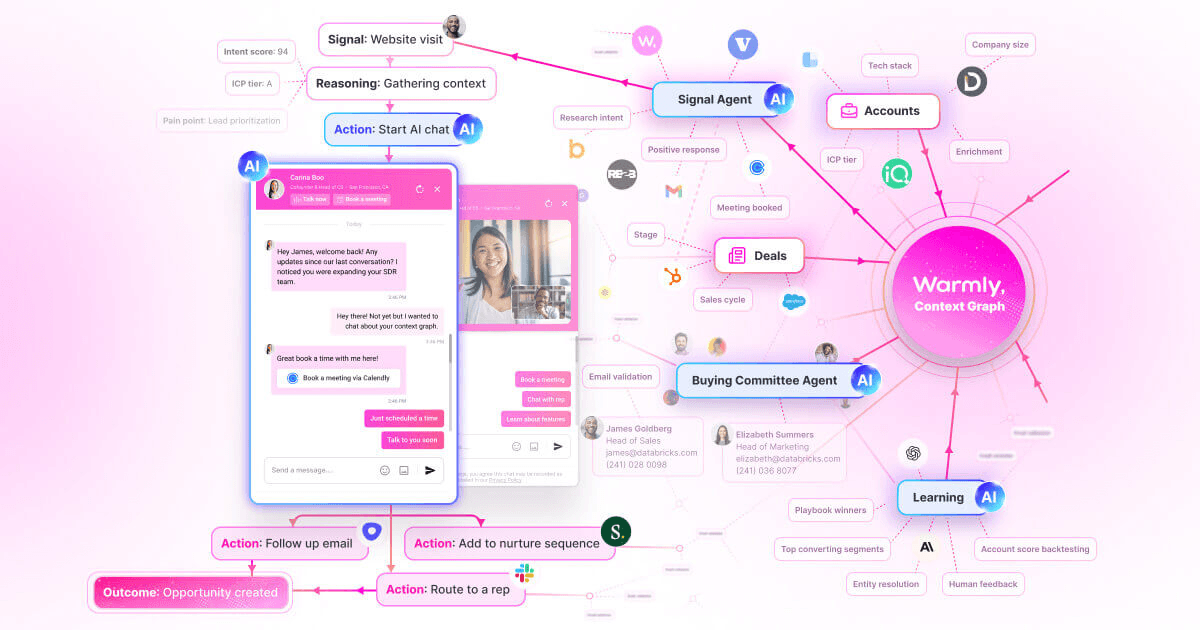 Warmly chains visitor identification to immediate action: chat, alerts, and automated sequences.
RB2B
RB2B does the one thing Koala never did: person-level identification. Instead of telling you "someone from Acme visited," it matches US-based visitors to LinkedIn profiles and pushes name, title, company, and pages viewed to Slack in real time. The free plan covers 150 company-level resolutions a month; person-level identification starts on Starter at $79 per month (300 resolutions), with Pro from $149 per month and PRO+ from $199 per month. RB2B lists contact-level coverage of 15-20% on Starter and Pro and 35-45% on PRO+. Person-level identification is US-only, while company-level identification is global, and Pro and PRO+ add business email addresses and integrations beyond Slack and Teams. Best for US-focused teams that want named visitors in Slack today.
 RB2B identifies individual US visitors, not just companies, and is upfront about the geographic limit.
Factors.ai
Factors.ai pairs visitor identification at company and person level with intent data and LinkedIn ad attribution, which makes it the strongest pick on this list for marketing-led teams. It pulls signals from your website, CRM, G2 activity, and ad platforms into one account view, then pushes audiences back into LinkedIn for targeting. There is a free trial, then Lite at $199 a month (up to 1,500 identified companies a month), Basic at $6K a year, Growth at $20K a year and Enterprise from $30K a year. It holds a 4.5 rating on G2 across 179 reviews as of June 2026. A note for ex-Koala users: Factors.ai describes itself as an AI ABM and attribution platform, so it fits best where marketing owns the account view. Best for B2B marketing teams spending on LinkedIn who want to connect spend, visits, and pipeline.
 Factors.ai consolidates intent, CRM, ad, and first-party signals into a single account view.
Leadfeeder
Leadfeeder, the name Dealfront took for its whole platform on 24 March 2026, is the longest-running tool in this category and the simplest migration if all you need is company-level visitor identification. It shows which companies visited, what they viewed, and pushes that to your CRM. The free Lite plan identifies up to 100 companies a month with 7 days of visitor history. Paid plans are shown in euros on its pricing page: Discover starts at €79 a month billed annually (from €113 on monthly billing) and scales with the number of companies identified. Leadfeeder says its B2B data is collected using Europe's highest data privacy standards, which makes it a natural fit for EU-based teams that RB2B's US-only person-level model leaves out. Visitor identification is company-level; verified emails and phone numbers come with the Activate plan, from €369 a month billed annually. Best for European teams that want dependable company-level ID without an enterprise contract.
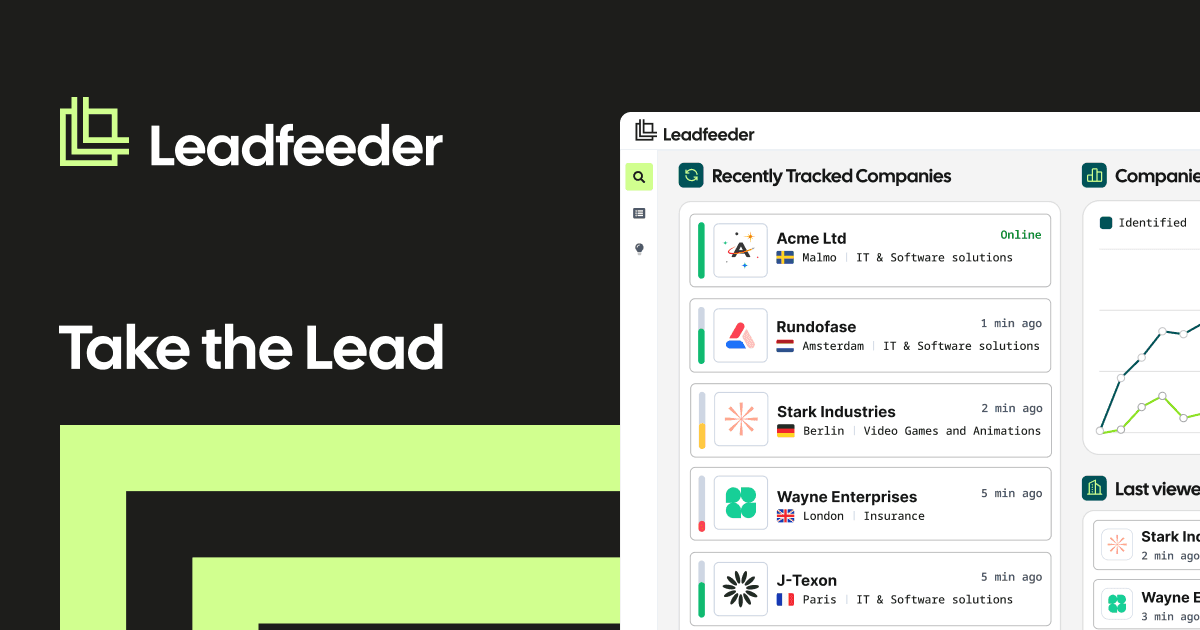 Leadfeeder's feed of identified companies, the simplest like-for-like replacement for Koala's company-level ID.
Common Room
Common Room, owned by Zoom since July 2026, is the official answer to "where do Koala customers go." Koala's founders named it the preferred migration partner, and Common Room matched Koala's pricing tiers for equivalent feature packages during the transition. It is a full AI GTM platform: enrichment, intent signals, community and product activity, and AI agents in one system, and its homepage names customers including Semgrep, Superhuman, Atlassian and Notion. The catch is the entry point: the Essential tier is $2,500 per month billed annually (5 seats, 100k contacts), with Advanced and Enterprise quote-only and no free tier or self-serve trial. If you liked Koala's self-serve simplicity, this is a step up in both capability and commitment. Best for larger GTM teams consolidating several tools into one platform. We broke down the cost structure in our Common Room pricing guide.
 Common Room was named Koala's preferred migration partner and matched Koala's pricing tiers during the transition.
Clay
Clay is the builder's choice. It connects 150+ data providers with AI research agents and lets you compose enrichment, scoring, and signal workflows exactly how you want them, including website intent. Clay introduced new pricing plans in spring 2026: there is still a free plan, the entry Launch plan now costs $185 per month ($167 on annual billing) with a credit allowance, and Growth runs $495 per month with CRM integrations and web intent included. The trade-off has not changed: Clay rewards teams with the time and operator talent to build and maintain workflows. If Koala appealed to you because it worked out of the box, Clay will feel like a project. Best for teams with a dedicated GTM engineer. Our Clay pricing breakdown covers the credit math in detail.
 Clay composes enrichment and signal workflows from 150+ data providers, powerful, but a build-it-yourself motion.
Unify
Unify pairs intent data with execution. It draws on 40+ data sources, including person-level website visitor identification, G2 activity, funding announcements, new hires, and job postings, then runs automated outbound plays through AI agents and managed mailboxes. Unify publishes its pricing: a free forever plan for up to 3 seats, Base at $20 and Pro at $60 per seat per month, then custom Business. Pro includes a 14-day free trial with no credit card. Enrichment is credit-based: email enrichment averages 1 credit per record and phone enrichment averages 4. It is the most "done-for-you" option here: signals in, sequenced emails out. The trade-offs are credit costs that grow with volume and a quoted Business tier above the self-serve plans. Best for teams that want warm outbound executed for them rather than another dashboard to check. For the broader landscape, see our Unify alternatives guide.
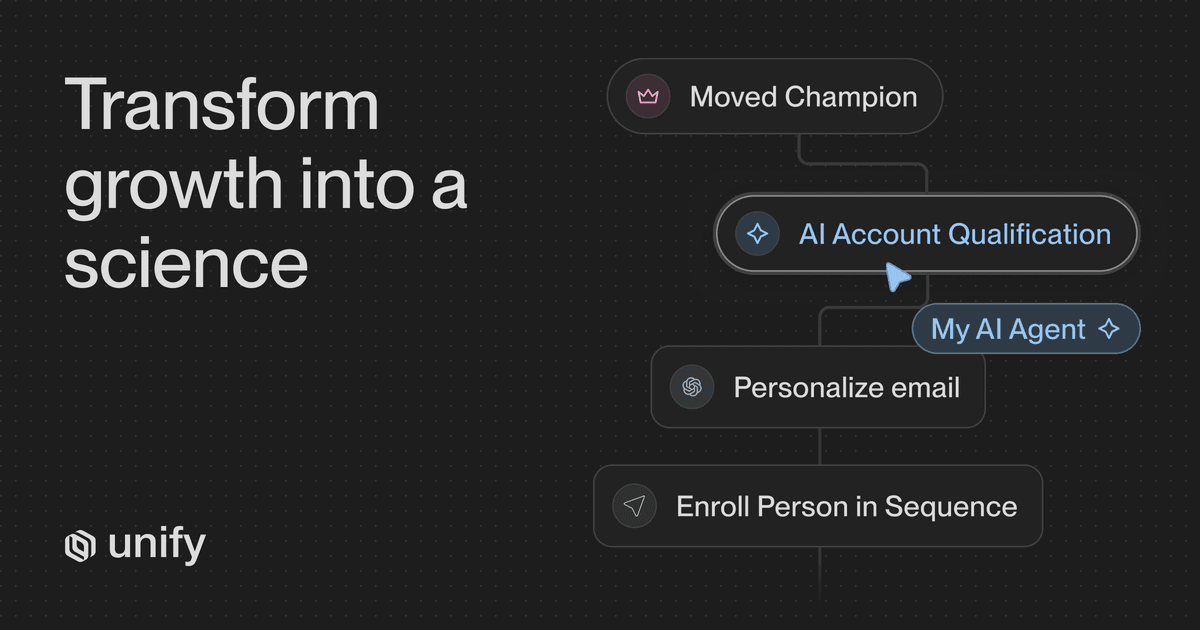 Unify chains intent signals directly into automated outbound plays.
How to Migrate Without Overbuying
The fastest way to a bad migration is chasing the most powerful platform rather than the right one. Use a simple filter based on what Koala actually did for you.
If your priority is restoring a working signal-to-action loop quickly and cheaply, start with the self-serve, publicly priced options and be live this week. If you mainly used Koala for visitor identification, RB2B, Leadfeeder, or Factors.ai replace that job for a fraction of an enterprise contract. If you used Koala as the qualification and prioritization brain for your reps, a pixel alone will not get you there; you need something that scores and researches accounts, not just names them. And if you are an enterprise team consolidating tooling, Common Room and Unify are both credible, though they sit at opposite ends of the commitment scale: Common Room starts at $2,500 a month billed annually, while Unify starts free for three seats and scales per seat from there.
One more lesson the shutdown should teach you: independence matters. When you evaluate a replacement, ask whether the vendor is built to stand alone, whether pricing is public, and whether you can leave month to month. The cost of migrating twice is higher than any monthly price difference.

“The account and contact signals are key for reaching out at important times, and the value-add messaging it creates unique to every contact helps save time and efficiency.”
Daniel Pitman
Mid-Market Account Executive, Black Swan Data
Where Is the Visitor Intent Category Heading?
The Koala shutdown was not an isolated event. Pocus, the other popular product-led sales platform, was acquired by Apollo in March 2026, and HubSpot agreed to acquire Warmly in June 2026. The pattern is clear: visitor and product-intent tools are being bought by larger platforms.
That consolidation raises the bar for buyers. The headline promise across the market has shifted from "we surface signals" to "agents that act on them." The tools worth your money now do not just alert you that an account visited, they qualify the account, research it, and draft the next step. When you replace Koala, replace it with something that closes that loop, and that covers the accounts that never visited your website at all, because those are most of your market.
Key Takeaways
- Koala was acquired by Cursor in July 2025 and announced a September 30, 2025 shutdown. The app no longer loads, so treat the move as a rebuild.
- Map the three jobs Koala did, visitor intent, account qualification, and rep prioritization, before choosing a replacement. Most tools cover one job well, not all three.
- For visitor ID alone: RB2B (person-level, US), Leadfeeder (company-level, free Lite plan), or Factors.ai (free trial, then $199 a month). For orchestration: Warmly. For a like-for-like platform migration: Common Room, Koala's official partner.
- Website pixels only see the accounts that already found you. Signal-based platforms cover the rest of your market, which is where the next deal usually comes from.
- Favor independent vendors with public pricing and monthly terms. Koala shut down after its acquisition; Pocus moved to a waitlist after its own.
Frequently Asked Questions
Is Koala still available?
No. Koala announced it would shut down on September 30, 2025, after Cursor acquired the company in July 2025. app.getkoala.com no longer loads, and TechCrunch reported that Cursor did not plan to integrate the product.
Why did Koala shut down?
Cursor wanted Koala's engineers for its enterprise push, and the product was sunset. The acquisition came about five months after Koala raised a $15M Series A led by CRV with HubSpot Ventures participating.
Can I export my Koala data?
Plan on not being able to. app.getkoala.com no longer loads, so treat your migration as a rebuild: re-create your ICP definitions and intent rules in the new tool rather than waiting on a data import.
What is the best Koala replacement?
It depends on which job you are replacing. For person-level visitor ID in the US, RB2B is the sharpest single-purpose tool. For company-level ID, Leadfeeder has a free Lite plan and Factors.ai has a free trial. Common Room is the official migration partner for a full platform move. And for teams that want buying signals across their entire market rather than only website visitors, that is the job our platform is built for, with self-serve monthly pricing and no annual commitment.
Are there free alternatives to Koala?
Yes. RB2B has a free plan with 150 company-level resolutions a month, Leadfeeder's free Lite plan identifies up to 100 companies a month with 7 days of visitor history, Factors.ai offers a free trial, and Clay offers a free tier with usage limits. Evaluate whether the free tier covers the qualification and prioritization work, not just the raw identification, because that gap is where most migrations stall.