Generic outbound still fails for the same reason it always has. It asks for attention before the buyer has a reason to care. The fix isn't sending more. It's building an account based outreach playbook that starts with timing, account context, and disciplined execution.
TL;DR: An account based outreach playbook that holds up in 2027 runs six steps in order: select, monitor, research, contact, engage, measure. Choose a tight set of accounts on ICP fit and signal density, monitor the few trigger types that matter in your market, turn each trigger into an account brief, identify 3 to 5 relevant contacts per account, sequence outreach across email, LinkedIn, and phone over 4 to 6 weeks, and track meetings and opportunities by signal type.
The commercial case is strong. True ABM programs can produce 208% higher marketing-generated revenue and close deals 67% faster than non-ABM approaches, according to Salesmotion's outbound ABM playbook summary. That changes the conversation. This isn't about polishing copy. It's about moving from activity volume to account progression.
The teams that make this work don't treat signals as a nice-to-have layer on top of old prospecting. They use signals to decide who deserves attention now, what message earns a response, and which stakeholders to involve. If you need a quick grounding in the model, signal based selling provides a clear directive: act when the account gives you a reason, not when your sequence calendar says it's time.
Why Your Old Outreach Playbook Is Broken
Most outreach playbooks are built around rep effort. More dials. More emails. More accounts. More templates. That sounds productive, but it usually creates noise, not pipeline.
The core problem is misalignment. Broad outbound assumes enough volume will eventually hit a buyer with need, urgency, and authority. In enterprise sales, that assumption breaks fast. Buying groups are larger, timing matters more, and a single generic message rarely lands with the people who shape the deal.
Activity doesn't equal relevance
A broken playbook usually has three symptoms:
- Static targeting: Reps work a list because the accounts fit the ICP, even if nothing is happening inside those companies.
- Shallow personalization: Messages swap in a company name and role title, but they don't answer why the account should engage now.
- Single-threaded outreach: Teams latch onto one contact, then wonder why deals stall when the actual buying committee never gets involved.
That model burns time. It also trains buyers to ignore you.
Generic outbound isn't just inefficient. It teaches the market that your team doesn't understand what's changing inside the account.
The modern standard
An effective account based outreach playbook starts with a different question: what changed at this account that makes a conversation relevant today?
That shift matters because account-based discipline ties effort to commercial outcomes. As noted earlier, true ABM programs can drive materially stronger revenue performance and faster deal cycles when compared with non-ABM approaches. The practical implication is straightforward. Stop optimizing for touches in isolation. Start optimizing for coordinated movement inside a defined account.
The rest of the playbook is operational. Choose the right accounts. Monitor for the right signals. Turn each trigger into a usable brief. Find the buying committee. Run coordinated outreach across channels. Measure which triggers create meetings and opportunities.
See Salesmotion in action
Take a self-guided interactive tour — no signup required.
Build a Foundation with Smart Account Selection
Too often, target lists are overbuilt, and the accounts that matter are underworked. That's why the first step isn't "find more companies." It's narrowing the field until reps can execute with depth.
A practical ABM operating model is to start with a small, prioritized set of accounts. One common benchmark is 50 to 100 Tier 1 accounts, with buying committee coverage that includes a primary contact plus at least 3 influencers for deep penetration, as described in ZoomInfo's ABM playbook. If you want to expand coverage later, do it after the motion works. For a broader planning view, ABM at scale is useful because it forces the right conversation about depth versus reach.
Use two filters, not one
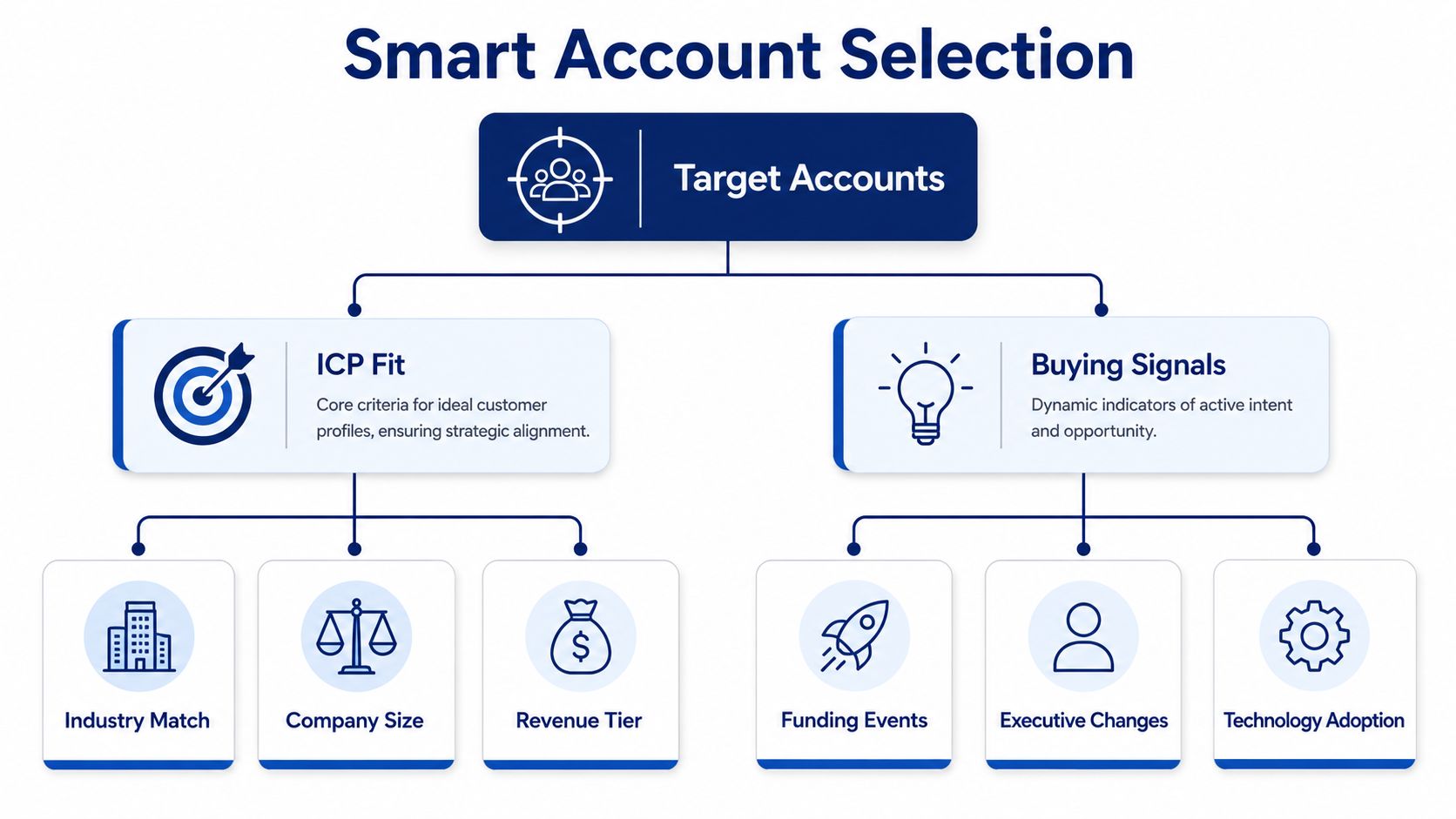
The mistake is relying on ICP fit alone. Good account selection uses two axes:
| Filter | What it answers | What to look for |
|---|---|---|
| ICP fit | Is this the kind of company we should win? | Industry, company size, revenue tier, business model, region, sales motion |
| Signal density | Is this account likely to produce actionable triggers? | Hiring patterns, executive changes, funding activity, expansion moves, visible initiatives |
An account can fit your ICP and still be a poor near-term target if it stays quiet for months. Another account may be slightly less perfect on paper but produce the kind of observable change that makes outreach timely and credible.
Tier accounts by workability
I like a simple working model:
- Tier 1 accounts: High ICP fit and high signal density. These get the most research, the tightest stakeholder mapping, and the highest review standard.
- Tier 2 accounts: Strong fit, moderate signal density. Keep them monitored and activate when the right trigger appears.
- Tier 3 accounts: Decent fit, weak timing. Don't let reps sink prime hours here.
In this situation, leaders need discipline. Reps will always ask for more accounts. What they usually need is a cleaner queue and permission to ignore lower-value noise.
Practical rule: If your team can't name the likely initiative, likely buyer group, and likely trigger path for an account, it probably doesn't belong in the top tier.
What good selection looks like in practice
A strong list isn't just a spreadsheet of logos. It should tell a rep three things immediately:
- Why this company fits
- What types of signals tend to matter there
- Who will likely be involved if a project starts
That gives you a list your team can actively work, not admire.

“There's been a big focus on hyper personalization and relevance in our outbounding efforts. Salesmotion has been a key partner in hitting our significantly increased meeting targets. What stands out is how simple it is. Reps can log in and get valuable account insights within 30 seconds to a minute.”
Joe DeFrance
VP of Sales, Incredible Health
Activate Your 24/7 Signal Monitoring System
Once the account list is clean, the next job is staying close to change. Often, teams falter at this stage. They collect accounts, maybe save a few LinkedIn pages, set loose alerts, and then leave reps to sort through noise.
The issue isn't finding signals anymore. It's prioritizing them. A major ABM challenge is deciding what should win when multiple accounts show activity at once. Current guidance points to the need to score signal quality, recency, and deal proximity because the bottleneck has shifted from signal discovery to building a queue sales can work, according to Demandbase's strategy for working accounts.
Manual monitoring breaks at low scale
Manual monitoring usually looks like this:
- Marketing watches news feeds
- SDRs check job posts and executive moves
- AEs scan LinkedIn before outreach
- Managers ask reps to “stay close” to top accounts
That isn't a system. It's scattered vigilance. It also produces uneven coverage. Some reps catch a useful trigger. Others miss it entirely.
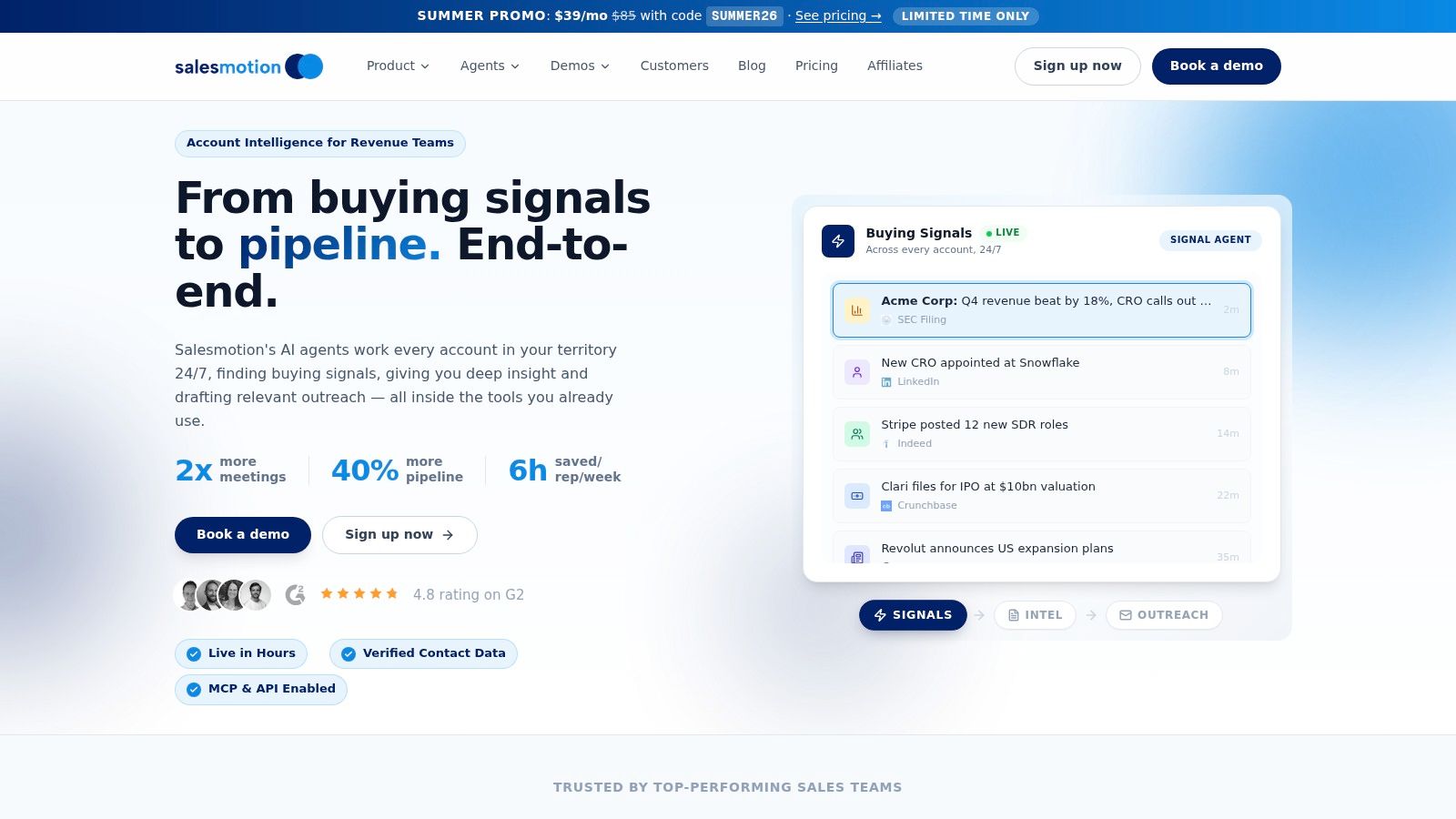
A better model is continuous monitoring across your top account set, with alerts that explain the signal and route it into the workflow. If you want a category view of how teams handle this, real-time account monitoring tools lays out the operating choices well.
What to monitor
You don't need every possible trigger. You need the ones that correlate with meaningful account change in your market.
A practical starter set includes:
- Executive changes: New leaders often reassess vendors, budgets, and priorities.
- Hiring shifts: Job postings can reveal new initiatives, internal gaps, and team expansion.
- Funding or investor updates: These can signal budget availability and strategic acceleration.
- Press releases and launches: Useful when they point to product expansion, market entry, or operational change.
- Org changes: Reorganizations, new teams, and restructures often reshape ownership and urgency.
Prioritize signals before reps see them
Not every signal deserves immediate outreach. A new blog post and a new revenue leader shouldn't carry the same weight.
Use a simple review lens:
| Priority lens | Question |
|---|---|
| Quality | Does this signal connect to a problem your product solves? |
| Recency | Is this fresh enough to support timely outreach? |
| Deal proximity | Does it suggest budget, mandate, or an active initiative? |
That last part matters most. Teams don't need more alerts. They need fewer, sharper alerts with a clear next move.
Turn Signals into Strategy with Automated Research
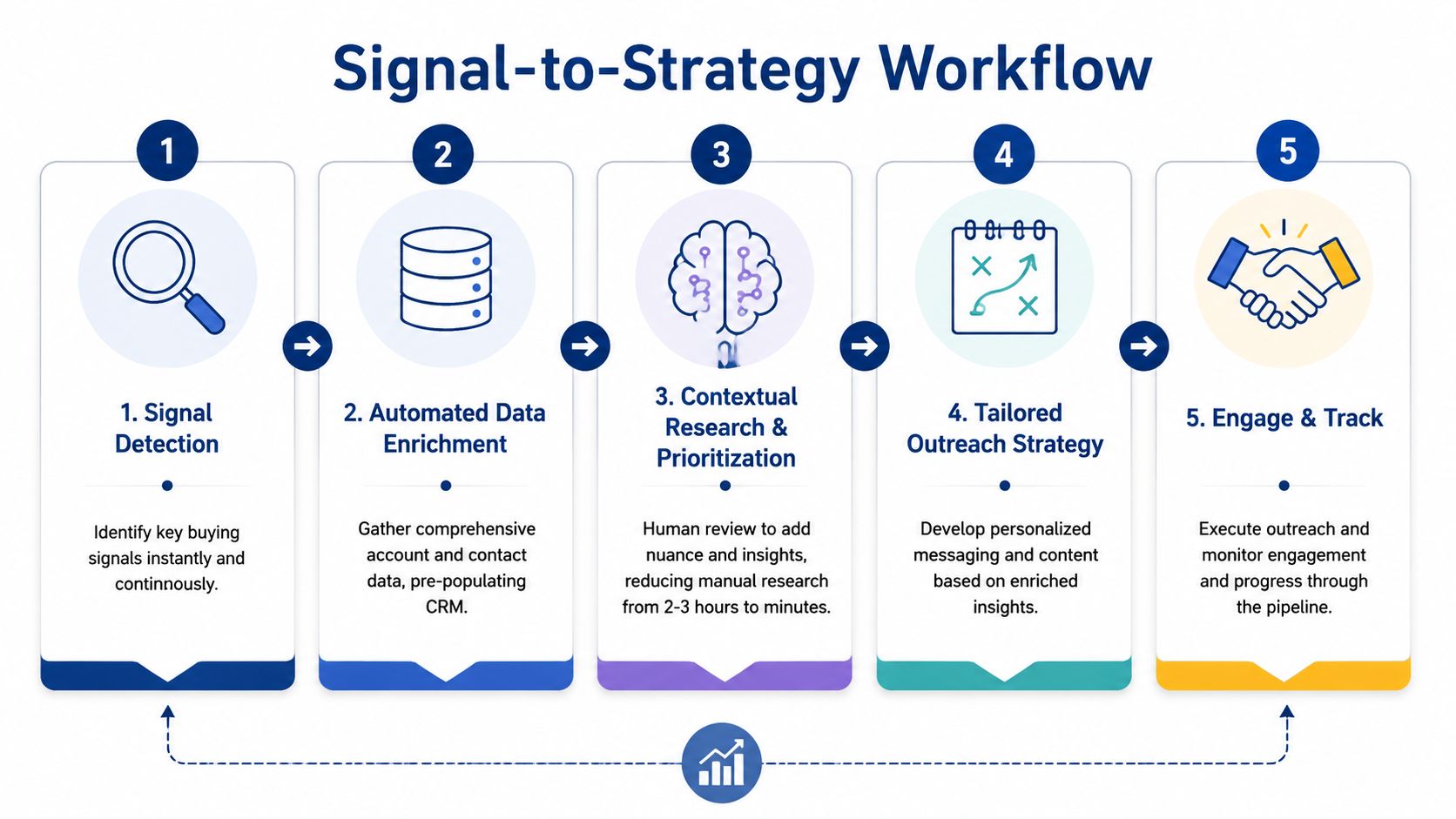
A trigger alone isn't useful until someone translates it into account context. That's where the manual research tax shows up. Reps jump between LinkedIn, press releases, company sites, job boards, earnings commentary, and CRM history trying to answer basic questions: what changed, who cares, and what should I say?
That work is necessary. It just shouldn't be slow.
Build a brief, not a pile of notes
When a signal fires, the output should be a usable account brief. Not raw links. Not screenshots. A brief.
It should answer:
- What happened: the trigger and why it matters
- What initiative it suggests: expansion, cost control, system change, new leadership mandate, hiring push
- Who is likely involved: business owner, technical evaluator, economic buyer, internal champion
- What angle is credible: efficiency, speed, consolidation, ramp time, visibility, risk reduction
- What not to say: generic congratulations, overreaching assumptions, insensitive outreach during negative events
A rep can work from that. A manager can coach from that. RevOps can standardize around it.
Contact identification has to match the likely buying motion
Most outbound still fails because the contact list is too narrow. One person isn't an account strategy.
A practical standard is to identify 3 to 5 relevant contacts per account, based on the likely buying committee. That means building around the actual decision path. If the trigger is hiring, the owner may sit in operations, talent, or a department leader. If the trigger is a leadership change, you may need both the new executive and the people who will implement their mandate.
Good contact identification should include:
- Primary owner: the person most likely accountable for the initiative
- Operational influencer: the person who'll feel the day-to-day pain
- Technical or process stakeholder: the evaluator who may shape feasibility
- Senior sponsor: the leader who can approve or redirect budget
The closed-loop architecture
This is the workflow mature teams aim for:
| Stage | Output |
|---|---|
| Signal | A meaningful trigger from a target account |
| Research | A structured brief with initiative, risks, and talking points |
| Contact enrichment | Relevant stakeholders matched to the likely buying motion |
| AI outreach draft | Channel-specific messaging anchored to the same account context |
| Delivery | Sequence pushed into the engagement platform for rep review and send |
One option in this category is Salesmotion's AI sales research workflow. The platform's stated design is to automate steps like continuous monitoring, research synthesis, and contact finding so reps receive context and draft outreach instead of starting from scratch.
The point of automation isn't replacing judgment. It's removing the low-value work that keeps reps from acting while the signal is still fresh.
What the rep still owns
Even with automation, sellers still need to do three things well:
- Check the fit of the trigger
- Refine the commercial angle
- Adjust the message for the stakeholder
That's the right split. Let systems gather and organize context. Let reps decide how to use it.

“This is my singular place that very simply summarizes a company's top initiatives, strategies and connects them to my solution. Something I would spend hours researching manually, now it's automated.”
Derek Rosen
Director, Strategic Accounts, Guild Education
Execute Value-Driven Multi-Channel Outreach
Once the brief is solid and the stakeholders are mapped, outreach needs coordination. Without proper coordination, many teams slip back into bad habits. They have a good reason to reach out, then waste it with a generic email and a rushed follow-up that says nothing new.
A better motion is anchored, multi-threaded, and patient.
A common ABM practice is to sequence outreach across the buying committee over 4 to 6 weeks, starting with easier-to-reach champions and using those conversations to earn introductions to senior decision-makers, as outlined in UserGems' account-based prospecting guidance. That's the opposite of blasting every stakeholder on the same day.
One signal, different channels
The key is message consistency without channel duplication. Every touch should point back to the same trigger, but the format should fit the medium.
Here's a simple example. Assume a target account has made a key executive hire.
| Channel | Good use of the signal |
|---|---|
| Tie the hire to a likely initiative and offer a specific point of view | |
| Reference the change briefly and open a lighter conversation | |
| Phone | Use the signal as context for why you're calling now, not as a script gimmick |
What doesn't work is sending the same paragraph everywhere.
Start with the easiest path into the account
Lower-level champions often respond earlier because the problem hits them first. That's useful. It gives you language, internal context, and sometimes a route to the person with budget.
A practical pattern looks like this:
- Reach out first to the stakeholder closest to the pain.
- Use that conversation to test your hypothesis about the initiative.
- Ask for perspective on ownership, timing, and who else is involved.
- Then move up with better context, not a colder pitch.
That approach respects the buying process. It also produces better senior outreach because you're no longer guessing.
Senior stakeholders rarely reward the first vendor who shows up. They respond to the one who sounds informed.
Good follow-up versus bad follow-up
Most follow-up is lazy. It repeats the ask, adds no value, and signals that the first message wasn't strong enough.
Bad follow-up:
- Email 2: “Bumping this up in your inbox.”
- Email 3: “Any thoughts?”
- Email 4: “Wanted to circle back.”
Good follow-up adds something new each time:
- Follow-up one: Share a sharper observation tied to the original signal.
- Follow-up two: Introduce a second stakeholder angle, such as implementation or team impact.
- Follow-up three: Offer a concrete next step, like a short teardown, benchmark discussion, or point-of-view note.
- Follow-up four: Ask a routing question if the contact isn't the right owner.
A workable sequence structure
You don't need cleverness. You need progression.
Touch one
Lead with the trigger and your interpretation of why it matters. Keep it specific. The message should prove you understand the business change, not just that you saw a headline.
Touch two
Change the value. Share an observation, a relevant risk, or a common execution issue tied to the same trigger. Don't just restate the first email.
Touch three
Switch channel and narrow the ask. LinkedIn or phone works well here because you're reducing friction, not increasing pressure.
Touch four and beyond
Bring in another stakeholder or another angle from the buying committee. If the original trigger still matters, keep it as the anchor. If the context has shifted, adapt.
The point of sequencing isn't persistence for its own sake. It's helping the account see that your team understands the initiative from more than one seat in the organization.
Measure What Matters and Close the Loop
If you can't tell which signals create meetings and pipeline, your playbook is still a content exercise. Measurement is what turns account based outreach into an operating system.
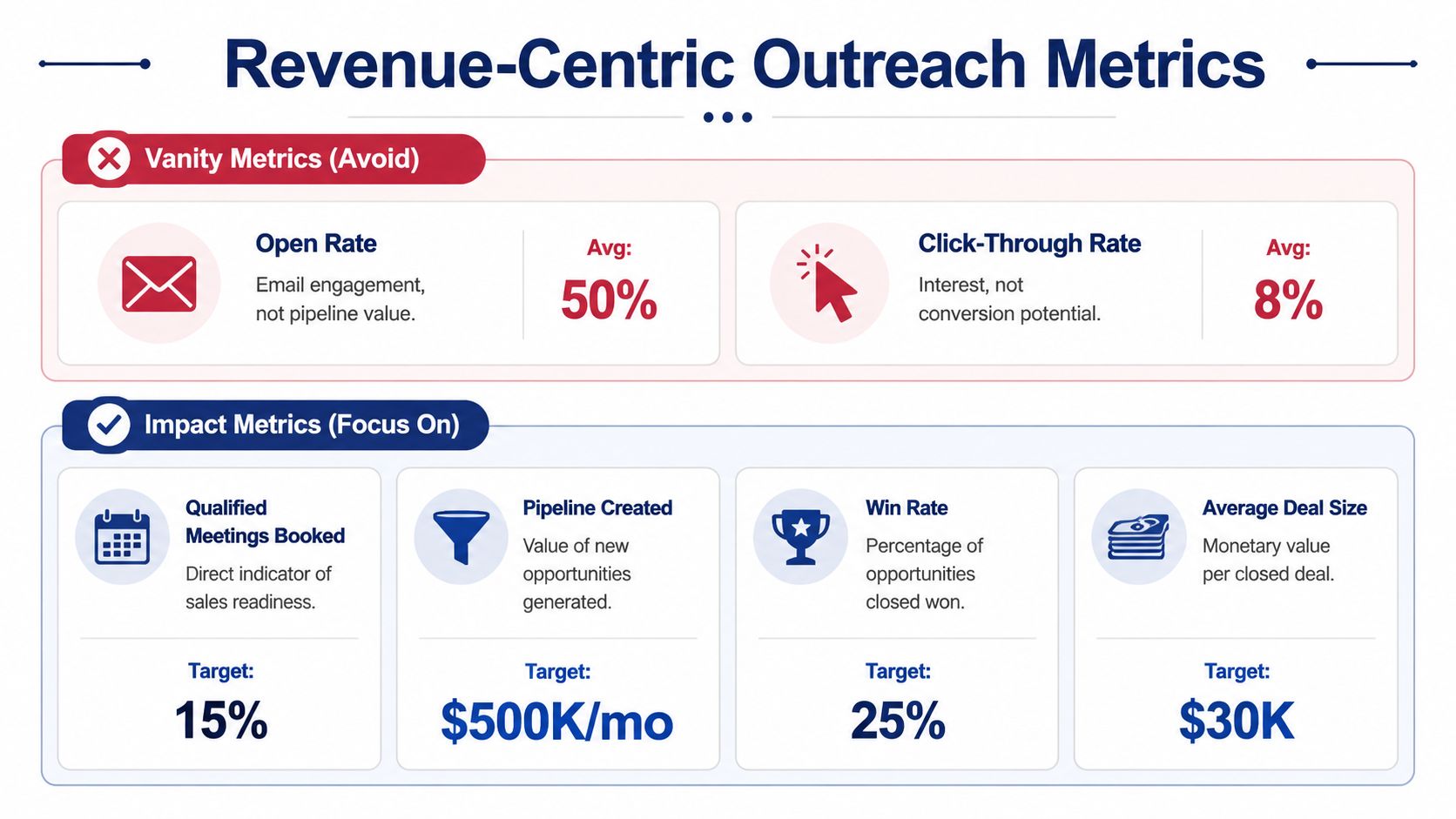
This is also where teams need restraint. Too many dashboards still center on opens, clicks, and raw activity. Those can be useful diagnostics, but they don't tell you whether the signal, the research, and the sequence are creating sales conversations inside target accounts.
The stronger approach is to measure account progression and trigger performance, then feed those results back into selection and prioritization. Governance matters too. As teams use more AI-generated messaging, credible programs rely on human review for Tier 1 accounts, rules for message reuse, and explicit suppression for negative signals like layoffs, according to Launch Leads' guidance on account-based outreach.
What to track
Focus on metrics that answer real operating questions.
| Metric | What it tells you |
|---|---|
| Response rate by signal type | Which triggers actually earn engagement |
| Meetings booked per trigger | Which signals convert into conversations |
| Opportunities created from target accounts | Whether your account selection is producing pipeline |
| Stakeholder coverage | Whether you're penetrating the buying committee or staying single-threaded |
| Time from signal to first touch | Whether your team acts while relevance is still high |
What to do with the data
Measurement should change behavior.
If one signal type drives strong responses but weak meetings, the message may be good while the commercial angle is weak. If meetings happen but opportunities stall, you may be getting in with the wrong stakeholder or too early in the initiative. If Tier 1 accounts engage only when human-reviewed messages go out, don't automate first-touch there.
Governance isn't optional
Automation creates scale. It also creates risk.
Set rules for:
- Tier 1 review: Require a human check before send.
- Message reuse: Prevent the same angle from being sprayed across similar accounts.
- Negative signals: Suppress or delay outreach around layoffs, restructures, and sensitive transitions.
- Ownership controls: Make sure two reps don't hit the same account with disconnected messages.
That discipline protects credibility. It also makes the data cleaner because you're not mixing good process with careless sends.
A strong outreach engine doesn't just know when to send. It knows when to hold back.
Your Signal-Driven Playbook on a Page
A good playbook should be simple enough to run in a team meeting and specific enough to drive daily behavior. The model is straightforward: select, monitor, research, contact, engage, measure.
What makes the motion work isn't complexity. It's the handoff between each step. If account selection is weak, monitoring creates noise. If research is shallow, outreach turns generic. If measurement stops at email metrics, the team never learns which triggers produce pipeline.
The operating checklist
Use this as the baseline motion for your team.
Select accounts
Choose a focused set of target accounts based on ICP fit and signal density. Keep the top tier tight enough that sellers can work accounts with depth, not just awareness.
Monitor continuously
Track the few trigger types that consistently matter in your market. Route them into a queue that reflects urgency and commercial relevance, not just freshness.
Build the brief
When a trigger fires, convert it into an account view. Define the likely initiative, the likely stakeholders, the angle that earns attention, and the risks that make outreach tone-deaf.
Find the buying committee
Don't stop at one contact. Identify the people most likely to own, influence, evaluate, and sponsor the initiative.
Run coordinated outreach
Use the same signal across email, LinkedIn, and phone, but adapt the message to the channel. Add value on follow-up. Move across stakeholders over time instead of hitting everyone at once.
Measure and refine
Track responses, meetings, and opportunities by signal type. Then cut weak triggers, improve weak sequences, and tighten your account tiers.
What usually breaks first
In real teams, the first failure point is rarely copy. It's usually one of these:
- Too many accounts
- Too many signals
- Too little stakeholder coverage
- No review standard for important accounts
- No feedback loop from meetings and pipeline back to targeting
Fix those first. Most messaging problems are downstream of poor account discipline.
The modern version of this playbook
The old model depended on reps doing everything manually. Watch accounts. Research changes. Find contacts. Draft messages. Push them into sequencing tools. That creates delay, inconsistency, and missed timing.
The modern version uses a closed-loop workflow where signal monitoring, research, contact enrichment, AI draft creation, and delivery into the engagement platform happen as one motion. That's the difference between having a signal strategy and putting one into practice.
If you want to operationalize this workflow, Salesmotion is built around that signal-to-action motion. It automates account monitoring, research synthesis, contact discovery, and AI-drafted outreach so reps can review and act inside their existing workflow instead of assembling everything manually.