Enterprise pipeline generation has shifted away from volume-based outbound and toward precision. The teams consistently building qualified pipeline in 2026 are not sending more emails or buying bigger contact lists. They are layering account intelligence, buying signals, and workflow automation to reach the right accounts at the right moment with the right message. The challenge is that no single tool does everything, and the landscape spans signal monitoring, prospecting databases, conversation intelligence, engagement platforms, and revenue forecasting. This guide compares nine pipeline generation tools purpose-built for enterprise B2B sales, with honest assessments of what each does well and where it falls short.
Looking for pipeline generation tools?
Pipeline generation tools sell volume. Salesmotion sells precision — the right account, the right moment, the right message.
AI agents that work every account 24/7 so your reps know who to target, why now, and what to send. From $85/mo.
TL;DR: The best pipeline generation stack for enterprise teams combines signal-driven account intelligence with a prospecting database and an engagement platform. No single tool covers every stage. Start with the tool that addresses your biggest bottleneck, whether that is identifying ready-to-buy accounts, enriching contacts, automating outreach, or forecasting pipeline health.
What Pipeline Generation Tools Actually Do
Pipeline generation tools create and accelerate qualified sales opportunities across every stage of the funnel. While CRMs track what has already happened, pipeline generation tools focus on what should happen next: which accounts to target, which contacts to engage, what to say, and when to say it.
Enterprise teams typically need coverage across five pipeline generation functions:
| Function | What It Does | Example Tools |
|---|---|---|
| Signal monitoring | Detects buying triggers like leadership changes, funding, hiring, and earnings | 6sense, ZoomInfo, and others |
| Prospecting and enrichment | Provides verified contact data and firmographic details | ZoomInfo, Apollo.io, Clay |
| Engagement automation | Orchestrates multi-channel outreach sequences | Outreach, Apollo.io |
| Conversation intelligence | Records, transcribes, and analyzes sales calls for deal insights | Gong |
| Revenue forecasting | Predicts pipeline outcomes and flags at-risk deals | Clari |
The tools in this guide span all five functions. Most enterprise teams run two to four of them together, and the right combination depends on whether your bottleneck is finding the right accounts, reaching them, or managing the deals you have already created.
See Salesmotion on a real account
Book a 15-minute demo and see how your team saves hours on account research.
1. Salesmotion
Category: AI-powered account intelligence and buying signal monitoring
Salesmotion deploys three AI agents that work together to generate pipeline from existing account lists. The Signal Agent monitors over 1,000 public sources around the clock for buying triggers: leadership changes, earnings calls, SEC filings, hiring surges, funding events, clinical trials, podcast mentions, and competitive signals. The Research Agent synthesizes 42+ sources per account into SWOT-style briefs that give reps everything they need to start a conversation. The Outreach Agent turns those signals and research into personalized messaging pushed directly into Lemlist.
The platform is built for AEs and SDRs managing large portfolios of named accounts who need to know which accounts to prioritize each week, not teams doing high-volume spray-and-pray prospecting. Enterprise teams report cutting account research time by 80% and finding signals they previously missed entirely.
Best for: Enterprise sales teams running account-based selling motions with defined target account lists.
Pricing: From $85/month for individual plans; custom pricing for team plans with unlimited users. Monthly contracts, no annual lock-in.
Proven results: Analytic Partners cut research from 3 hours to 15 minutes and grew qualified pipeline 40% YoY. Frontify achieved 42% sales velocity improvement. Guild Education saves 6 hours per seller per week.
Limitation: Designed for account-based teams, not high-volume outbound across millions of unnamed contacts.
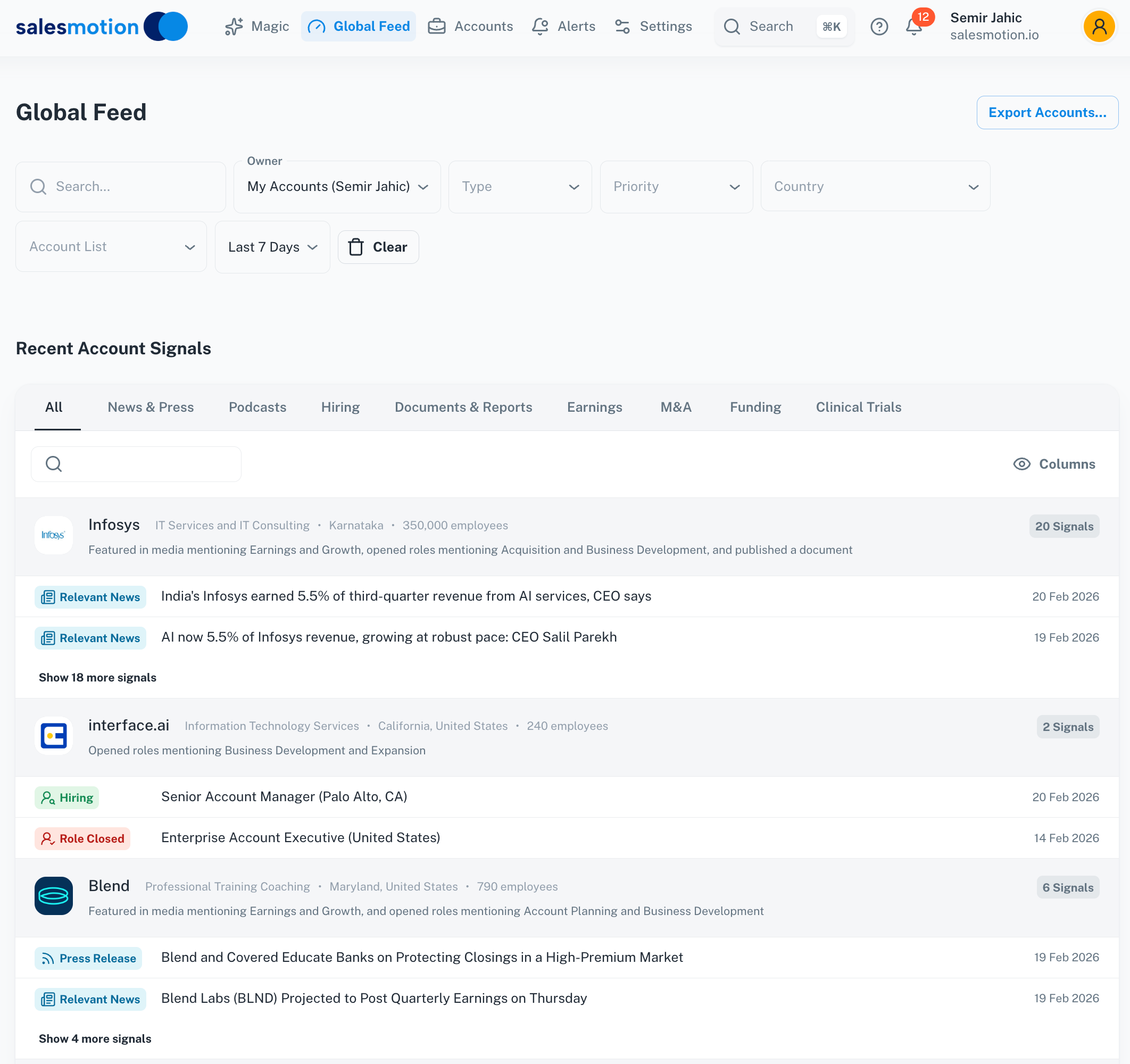 The Global Feed surfaces buying signals from 1,000+ sources across your entire account portfolio in real time.

“We're saving about 6 hours per week per seller on account research alone. That's time they can reinvest in actually selling.”
Derek Rosen
Director, Strategic Accounts, Guild Education
2. ZoomInfo
Category: Enterprise B2B contact database and intent signals
ZoomInfo is the largest B2B contact and company database on the market, with over 420 million contacts and 145 million company records. It is a Forrester and Gartner leader in the sales intelligence category. Beyond raw contact data, ZoomInfo provides intent signals, website visitor tracking, and workflow automation across its Sales, Marketing, and Operations products, plus its Copilot assistant and GTM Studio.
For pipeline generation, ZoomInfo's primary value is identifying net-new contacts at target accounts and enriching existing CRM records with verified emails, direct dials, and org charts. Its intent data, powered by Bidstream and review site activity, helps teams prioritize accounts showing research behavior around relevant topics. The platform also includes conversation intelligence (Chorus, acquired in 2021) and engagement automation tools.
Best for: Large sales organizations that need a comprehensive contact database with intent signals and want a single vendor for data, engagement, and conversation intelligence.
Pricing: ZoomInfo does not publish pricing; its own pricing page says it lists no dollar amounts because pricing is consumption-based. Vendr reports an average contract value of $33,500 across 1,012 anonymized deals.
Limitation: Intent data is topic-level (not account-specific buying behavior), and contact accuracy varies by region. Best coverage is North America. Some teams find the platform expensive relative to alternatives like Apollo.io for pure prospecting use cases.
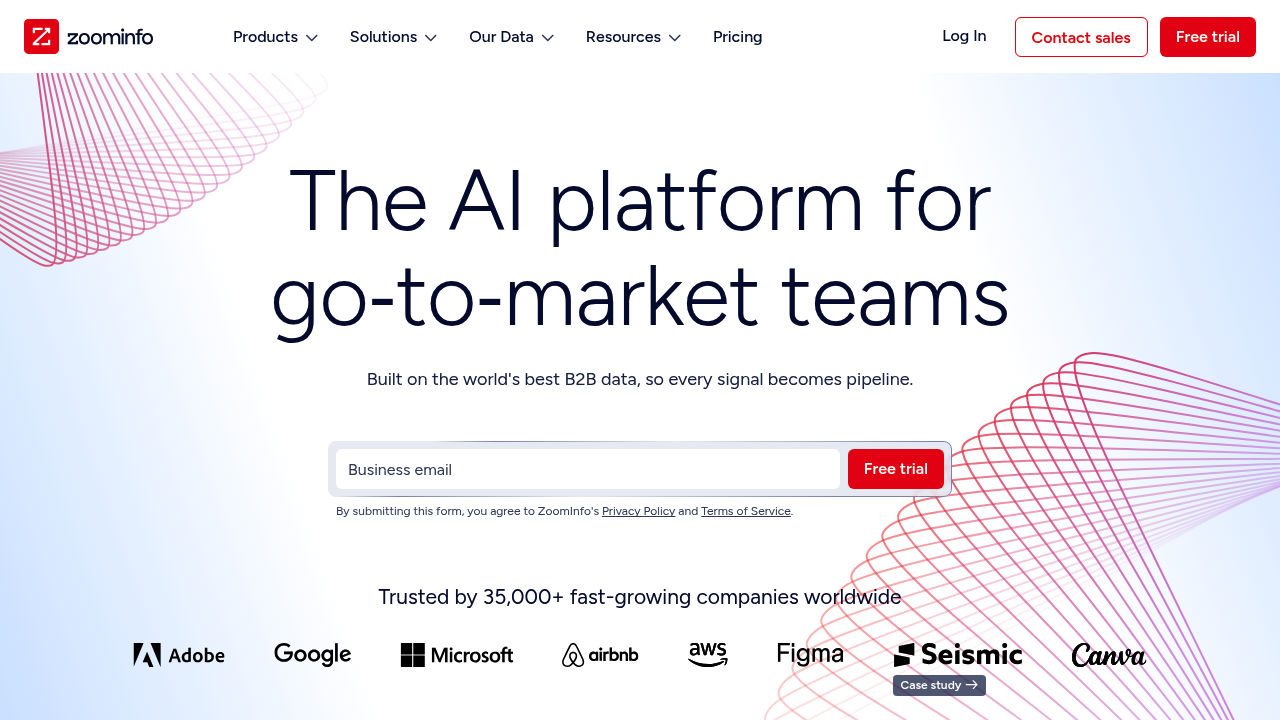 ZoomInfo provides the largest B2B contact database alongside intent signals and engagement tools.
3. 6sense
Category: Predictive ABM and intent-based pipeline generation
6sense applies AI and predictive analytics to account-based marketing and sales. The platform ingests first-party and third-party intent signals to score accounts by buying stage (awareness, consideration, decision, purchase) and predicts which accounts are most likely to convert. It also identifies anonymous website visitors at the account level and orchestrates advertising campaigns to in-market accounts.
For pipeline generation, 6sense's value lies in its ability to surface "dark funnel" activity, meaning the research prospects do before they ever fill out a form or respond to outreach. Sales teams use 6sense to prioritize accounts that are actively researching relevant topics, even if no one at the account has engaged directly. The platform integrates with CRMs, marketing automation tools, and sales engagement platforms.
Best for: Enterprise ABM programs with dedicated revenue operations teams that can manage the platform's complexity and want to align marketing and sales around shared account-level buying signals.
Pricing: 6sense does not publish pricing. Vendr reports a median annual contract of $62,440 across 381 purchases, with a range of $11,566 to $175,022. Contracts are annual.
Limitation: Requires significant ops resources to implement and maintain. Intent data is modeled (not deterministic), which means some "in-market" signals will be false positives. The platform is more marketing-oriented than sales-oriented, and reps often struggle to extract daily actionable insights without ops support.
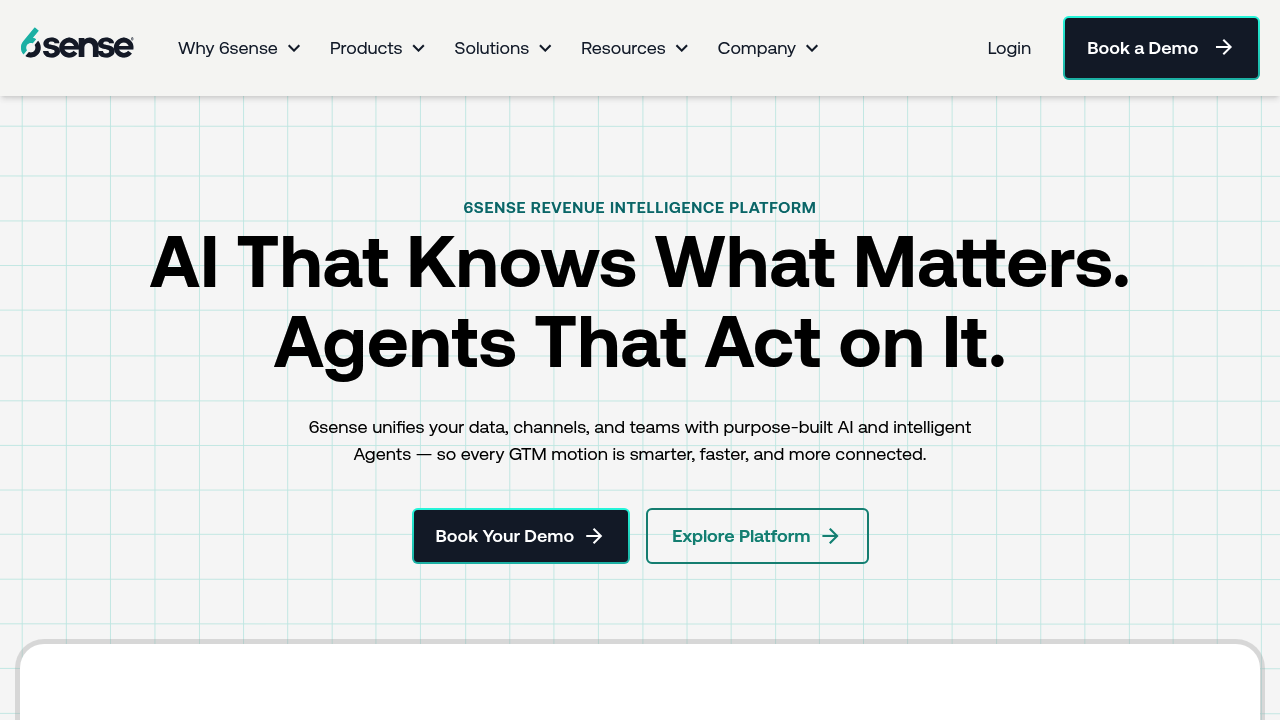 6sense predicts account buying stages using AI models trained on first-party and third-party intent data.

“The talking points are gold. If they're in Salesmotion, I know they're being discussed inside that business. That makes it easy to spark a real conversation, which is 90 percent of the battle.”
Andrew Giordano
VP of Global Commercial Operations, Analytic Partners
4. Apollo.io
Category: All-in-one prospecting, sequencing, and dialer
Apollo.io combines a 230 million+ contact database with email sequencing, a built-in dialer, and basic intent signals in a single platform. It has become the go-to prospecting tool for startups and mid-market teams looking for a budget-friendly alternative to ZoomInfo. The platform lets reps search for contacts by role, industry, company size, technology stack, and dozens of other filters, then add them directly to multi-step outreach sequences without leaving the app.
For pipeline generation, Apollo's strength is speed-to-action. A rep can identify a target account, find the right contacts, enroll them in a sequence, and start calling, all within minutes. The platform also offers AI-assisted email writing, A/B testing, and analytics dashboards. Apollo has invested heavily in data quality over the past two years, and its coverage now rivals ZoomInfo's in many segments.
Best for: SDR teams and early-stage sales organizations that need prospecting, sequencing, and calling in one affordable platform. Also works well as a secondary data source alongside a primary intelligence tool.
Pricing: Free plan available with 900 credits a year. On annual billing, paid plans are $49/user/month (Basic), $79 (Professional), and $119 (Organization, 3-user minimum), each adding more credits, integrations, and features.
Limitation: Contact data accuracy, while improving, still trails ZoomInfo for executive-level contacts at large enterprises. Intent data is less sophisticated than dedicated intent providers. Not designed for complex ABM orchestration.
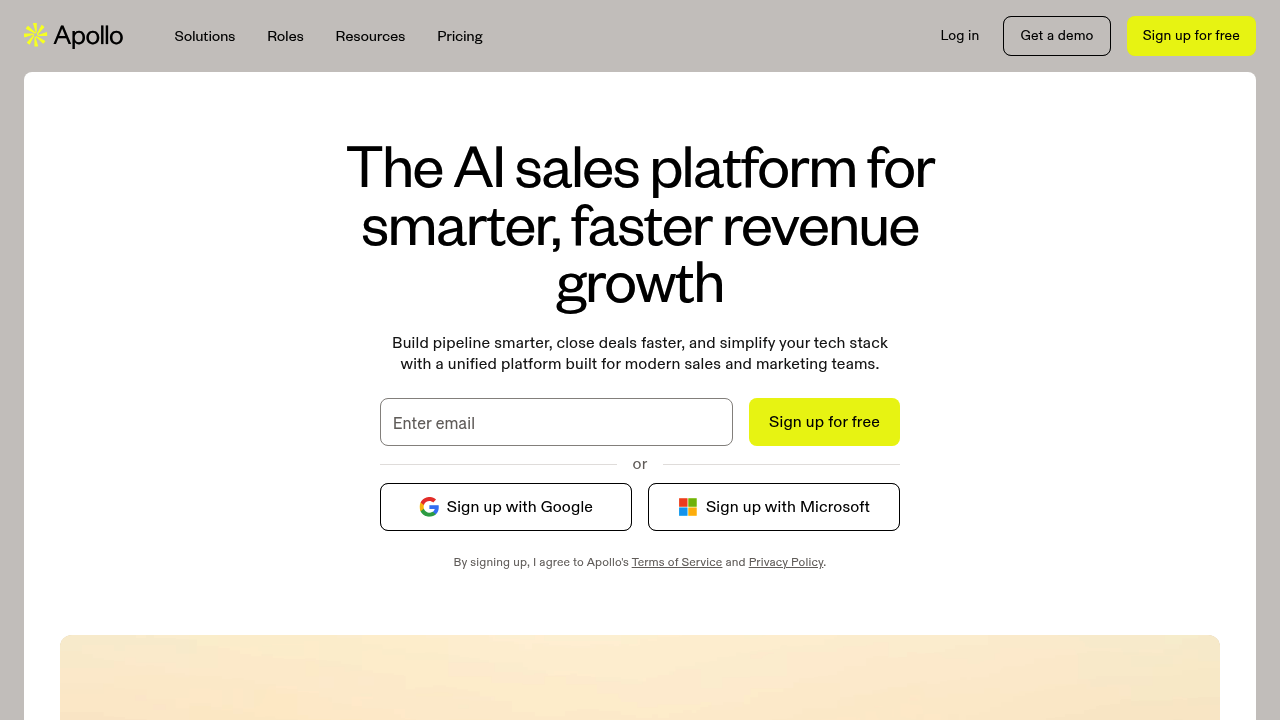 Apollo.io combines a large contact database with sequencing, a dialer, and AI email writing in a single interface.
5. Demandbase
Category: Account-based marketing and sales intelligence platform
Demandbase is a full ABM platform that combines account identification, intent data, advertising orchestration, and sales intelligence. The platform identifies anonymous website visitors at the account level, tracks intent signals across the web, and lets marketing teams run targeted ad campaigns to in-market accounts. On the sales side, Demandbase provides account insights, engagement scoring, and CRM integrations.
For pipeline generation, Demandbase sits at the intersection of marketing and sales. Marketing teams use it to drive awareness and engagement at target accounts through advertising and content. Sales teams use the intent and engagement data to prioritize outreach. The platform works best when both teams are aligned on a shared account list and coordinating their motions through the same system.
Best for: Enterprise organizations with mature ABM programs and dedicated marketing ops teams that want to unify advertising, intent data, and sales intelligence on one platform.
Pricing: Demandbase does not publish pricing; its pricing page describes a platform fee plus a flat fee per user. Vendr reports a median annual contract of $68,591 across 185 purchases, with a range of $24,000 to $164,265.
Limitation: The platform's value is weighted toward marketing use cases. Sales teams often find the daily workflow experience less intuitive than purpose-built sales intelligence tools. Implementation requires significant ops involvement, and realizing full value takes months.
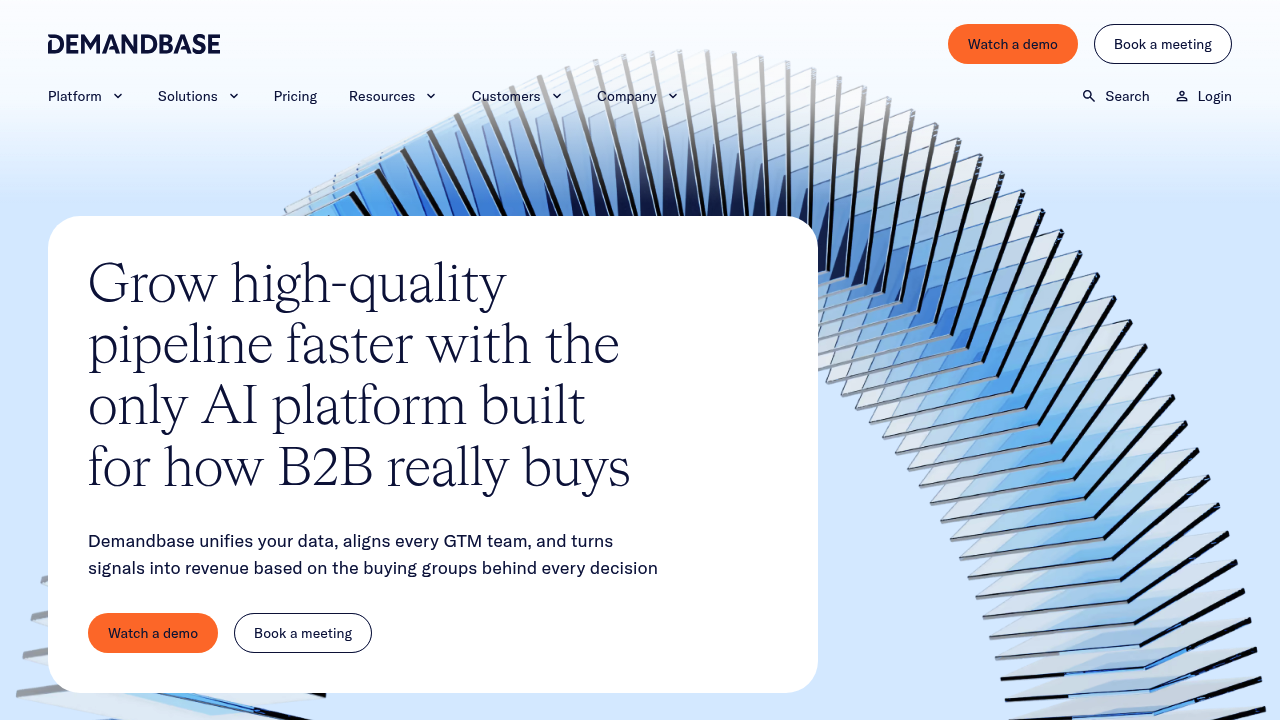 Demandbase unifies account identification, intent data, advertising, and sales intelligence for coordinated ABM programs.
6. Gong
Category: Revenue intelligence and conversation analytics
Gong records, transcribes, and analyzes sales calls, demos, and meetings to surface deal insights that would otherwise stay locked in individual conversations. The platform uses AI to identify winning behaviors, flag deal risks, track competitor mentions, and provide coaching recommendations. Gong also aggregates conversation data across the entire sales team to reveal pipeline trends and forecast accuracy.
For pipeline generation, Gong's contribution is indirect but powerful. By analyzing what top performers say differently, what objections stall deals, and which topics correlate with closed-won outcomes, teams can refine their messaging and improve conversion rates at every stage. Gong's deal intelligence features also help managers identify pipeline at risk before it slips, effectively preserving pipeline that has already been generated.
Best for: Sales organizations with high call volumes that want to improve rep performance through conversation analytics, deal intelligence, and AI-powered coaching. Particularly valuable for teams selling complex enterprise deals with long sales cycles.
Pricing: Not published. Gong's pricing page states that licences are priced per user with a platform fee based on the number of users supported, and that integrations are included.
Limitation: Gong does not generate pipeline directly. It analyzes and improves existing pipeline motion. Teams still need prospecting, signal monitoring, and engagement tools alongside it. Some organizations face adoption challenges if reps are uncomfortable with call recording.
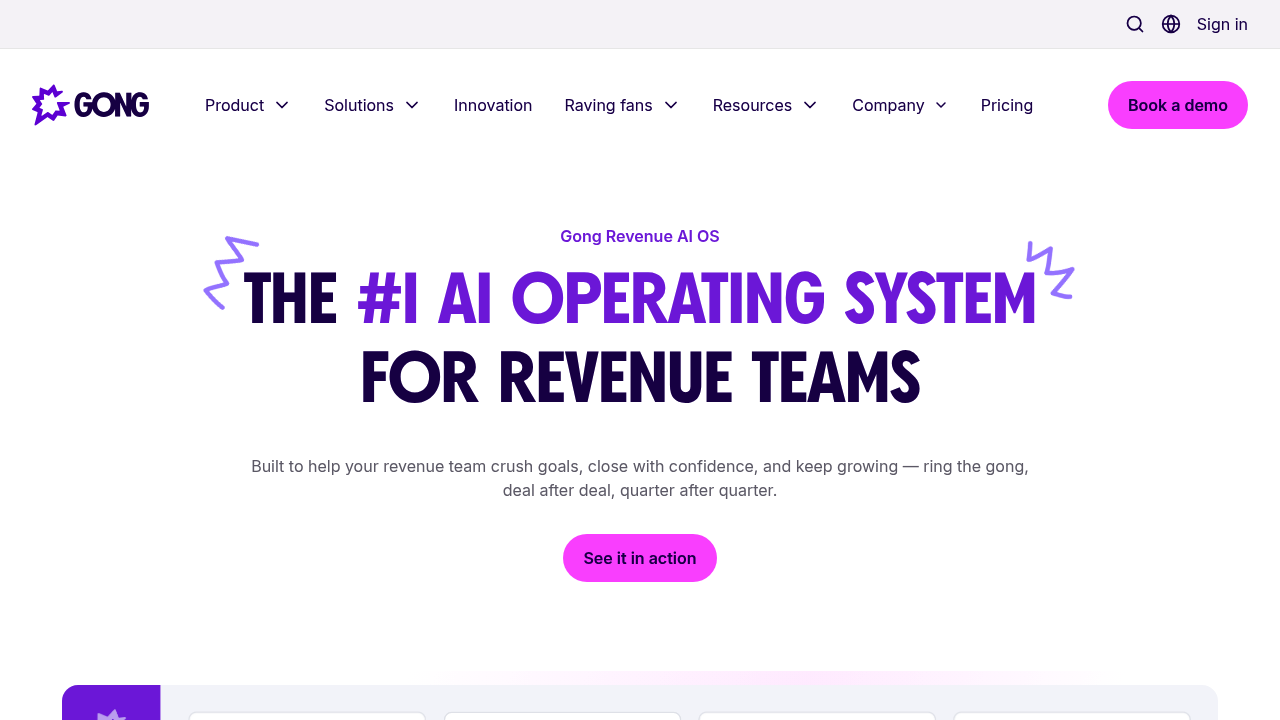 Gong analyzes sales conversations to surface deal risks, winning behaviors, and coaching opportunities across the team.
7. Clay
Category: Data enrichment and workflow automation
Clay is a data enrichment and workflow platform that connects over 150 data providers through a spreadsheet-like interface. Its signature feature is waterfall enrichment: Clay queries multiple data providers in sequence for each contact or company record, moving to the next source if the first returns no result. This approach maximizes data coverage while minimizing cost, since you only pay for the credits that return useful data.
For pipeline generation, Clay is the connective tissue between data sources and outreach tools. Teams use it to build targeted prospect lists by combining firmographic filters, intent signals, hiring data, technographic information, and custom signals from any API. Clay can then push enriched records into CRMs, sequencers, or other downstream tools. The platform's flexibility makes it popular with growth teams that want to build custom pipeline generation workflows.
Best for: Revenue operations teams and technical growth teams that want granular control over their data enrichment and prospecting workflows. Ideal for teams that have outgrown basic prospecting tools and want to combine multiple data sources programmatically.
Pricing: Free plan available. Clay retired its Starter, Explorer, and Pro tiers in March 2026; the current paid plans are Launch at $185/month and Growth at $495/month (roughly $167 and $446 on annual billing), with Enterprise custom-quoted. Credits are consumed based on enrichment actions.
Limitation: Clay's power comes with complexity. Building effective workflows requires some technical ability and an understanding of the data sources being combined. The platform is not a plug-and-play solution for individual reps. It works best when ops teams build workflows that reps consume downstream.
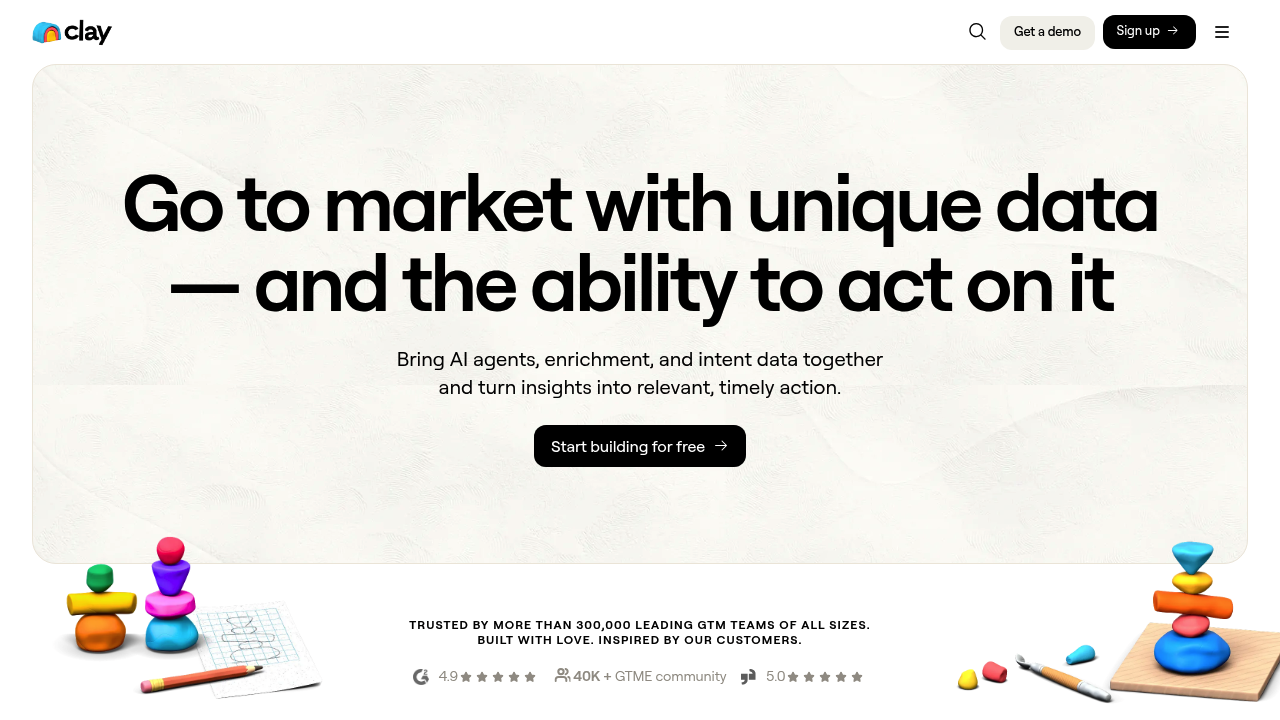 Clay connects 150+ data providers through waterfall enrichment, maximizing coverage while minimizing per-record cost.
8. Outreach
Category: Sales engagement and multi-channel cadence automation
Outreach is the leading sales engagement platform for enterprise teams. It automates multi-channel outreach sequences (email, phone, LinkedIn, SMS) and provides AI-powered analytics on what works. The platform manages the entire outreach workflow: sequence creation, task management, email tracking, meeting scheduling, and performance reporting. Outreach also includes deal management and forecasting features through its acquisition of pipeline visibility tools.
For pipeline generation, Outreach is the execution layer. After identifying target accounts and contacts through intelligence tools, Outreach orchestrates the actual touchpoints. Its strength is structured, repeatable outreach at scale with enough personalization controls to avoid the "mass email" feel. The platform's AI features now include suggested actions, email optimization, and automated meeting scheduling.
Best for: Enterprise SDR and AE teams running structured outbound programs with multi-touch, multi-channel sequences. Works best when paired with an account intelligence or prospecting tool that feeds it qualified targets.
Pricing: Not published. Outreach sells four tiers — Amplify Essentials, Core, Plus, and Pro — differentiated by AI credit allotments (10,000 to 100,000), and describes the model as per-user pricing with no platform fees.
Limitation: Outreach excels at execution but does not tell you which accounts to target or when to engage. It needs an upstream signal or intelligence layer to be effective. Some teams report that the platform's complexity requires dedicated admin support, particularly for sequence optimization and reporting configuration.
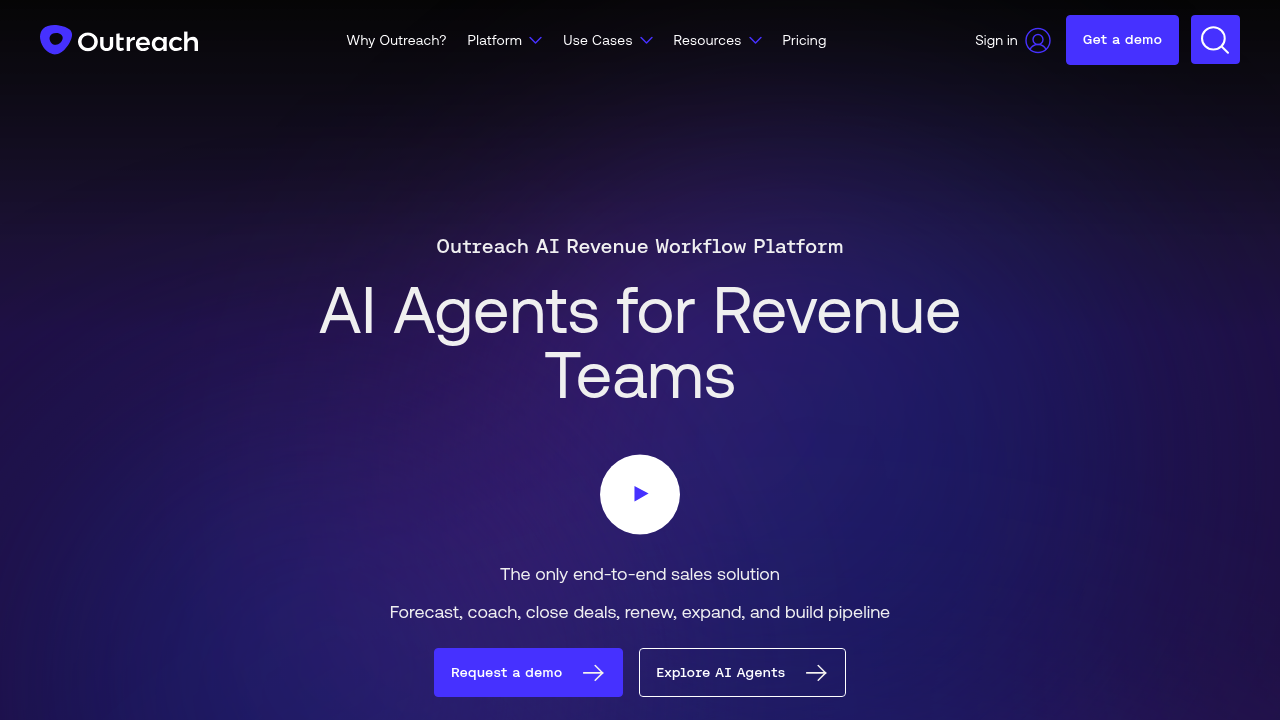 Outreach orchestrates multi-channel sequences across email, phone, LinkedIn, and SMS with AI-powered optimization.
9. Clari
Category: Pipeline management and revenue forecasting
Clari provides revenue operations teams with pipeline visibility, forecasting, and deal risk scoring. The platform ingests data from CRMs, email, calendar, and engagement tools to build a comprehensive picture of pipeline health. Its AI models predict which deals will close, which are at risk, and where pipeline gaps exist relative to quota.
For pipeline generation, Clari's contribution is strategic. By showing where pipeline is strong, where it is thin, and which segments need attention, Clari helps sales leaders direct pipeline generation efforts to the right areas. Its deal inspection features also help prevent pipeline leakage by flagging deals with declining engagement, missing stakeholders, or stalled timelines. In effect, Clari helps teams generate more pipeline by preserving what they have and focusing new generation on gaps.
Best for: Revenue operations leaders and CROs at mid-market and enterprise organizations who need accurate forecasting, pipeline visibility, and deal risk scoring. Particularly valuable in organizations with complex sales cycles and multiple pipeline sources.
Pricing: Not published publicly. Enterprise pricing is based on seat count and modules. Annual contracts are standard. Clari has expanded its product suite through acquisitions (Groove for engagement, Wingman for conversation intelligence), and pricing varies by bundle.
Limitation: Clari is a pipeline management and forecasting tool, not a pipeline generation tool in the direct sense. It does not source contacts, monitor buying signals, or automate outreach. It optimizes and protects existing pipeline, which makes it a complement to, not a replacement for, the generation tools listed above.
How to Choose the Right Pipeline Generation Tool
Choosing the right tool starts with identifying your biggest pipeline bottleneck. Here is a decision framework based on common enterprise scenarios:
If your problem is "we don't know which accounts to prioritize": Start with a signal monitoring tool that surfaces buying signals for enterprise sales and tells reps exactly which accounts are entering a buying window. This is the highest-leverage investment for account-based teams because it makes every downstream activity more effective.
If your problem is "we don't have enough contacts": Start with a prospecting database. ZoomInfo or Apollo.io will give your team verified contact data at scale. Then layer in an intelligence or signal tool to prioritize those contacts.
If your problem is "we have the data but reps aren't using it": Start with an engagement platform. Outreach structures the execution so reps follow a consistent, multi-channel approach instead of ad hoc outreach.
If your problem is "deals keep slipping and forecasts are wrong": Start with pipeline management. Clari will give you visibility into deal health and help prevent pipeline leakage.
If your problem is "we need to orchestrate ABM across marketing and sales": Look at 6sense or Demandbase for unified ABM orchestration with shared account-level intent data.
For most enterprise teams, the ideal outbound sales stack includes three layers: a signal and intelligence tool (for knowing where and when to engage), a data enrichment or prospecting tool (for verified contacts), and an engagement platform (for structured execution). Adding conversation intelligence and forecasting on top creates a complete pipeline generation system.
What Is Driving Pipeline Generation in 2026
The most significant shift in enterprise pipeline generation over the past 18 months is the move from activity-based to signal-based engagement. Instead of measuring success by emails sent, calls made, or meetings booked, the best teams now track signal-to-meeting conversion: how effectively they turn buying triggers into qualified conversations.
This shift has three implications for tool selection:
Signal depth matters more than signal volume. Tools that surface hundreds of generic intent topics are less valuable than tools that provide specific, actionable context. An earnings call quote mentioning your category is worth more than a third-party intent score. A leadership change at a target account with a new CRO who used your product at their last company is worth more than a Bidstream signal showing "someone at this IP range visited a related website."
Integration is the differentiator. The tools that win in 2026 are not necessarily the ones with the most features. They are the ones that push the right information into the systems reps already use (CRM, Slack, email, engagement platforms) at the right moment. A signal that sits in a dashboard nobody checks is worthless. A signal that shows up in a Slack channel with a suggested action is pipeline.
Personalization at scale requires automation. Writing a truly personalized email based on an earnings call mention or a leadership change takes 15 to 20 minutes of research per contact. Multiplied across hundreds of accounts, it is impossible without AI-powered research and messaging tools. The platforms that automate this research-to-outreach workflow are seeing the fastest adoption among enterprise teams.
The best pipeline generation teams in 2026 are not using more tools. They are using fewer tools, more intentionally, with signal-driven workflows that connect intelligence to action.
Key Takeaways
- No single tool covers every pipeline generation function. Enterprise teams typically need two to four tools spanning signal monitoring, prospecting, engagement, and pipeline management.
- Start with your biggest bottleneck. If reps do not know which accounts to prioritize, adding more contacts or automating outreach will not help. Fix the intelligence layer first.
- Signal-based engagement is replacing volume-based outbound. The teams building the most qualified pipeline are tracking buying triggers and timing their outreach to moments of relevance, not blasting sequences to static lists.
- Integration determines tool value. A tool that pushes insights into CRM, Slack, and email at the right moment beats a tool with better data that reps have to log into separately.
- Layer tools, don't stack duplicates. Combine an account intelligence platform with a prospecting database and an engagement tool. Avoid paying for overlapping capabilities across three vendors.
Frequently Asked Questions
How many pipeline generation tools does an enterprise team need?
Most enterprise teams run two to four pipeline generation tools. A common stack includes a signal or intelligence platform for account prioritization, a contact database for prospecting, and an engagement platform for outreach execution. Larger organizations add conversation intelligence (Gong) and forecasting (Clari) on top. The key is avoiding redundancy: each tool should serve a distinct function in the pipeline generation workflow rather than duplicating capabilities you already have.
What is signal-based pipeline generation?
Signal-based pipeline generation uses real-time buying triggers to determine when and how to engage target accounts. Instead of running the same outreach cadence against a static list, signal-based teams monitor events like leadership changes, earnings announcements, hiring surges, funding rounds, and competitive mentions to time their outreach to moments of relevance. This approach typically produces higher response rates and more qualified meetings because the outreach is anchored to something the prospect actually cares about. For a deeper look at signal types and their impact, see buying signals for enterprise sales.
Which tool is best for account-based sales teams?
For teams running account-based selling motions with defined target account lists, the most important tool is one that provides deep account intelligence and buying signal coverage. Look for platforms purpose-built for this use case that synthesize research and signals across named accounts so reps know exactly where to focus. Teams running full ABM programs that span marketing and sales may also benefit from 6sense or Demandbase for cross-functional orchestration. The best approach is to pair an account intelligence tool with an engagement platform like Outreach for structured execution.
How do I measure ROI on pipeline generation tools?
Track four metrics: signal-to-meeting conversion rate (how often a buying signal leads to a qualified meeting), pipeline sourced or influenced by the tool (measured in CRM), time saved per rep per week on research and prospecting, and pipeline velocity improvement (how much faster deals move from creation to close). Most enterprise teams also monitor cost-per-meeting and compare it to pre-tool baselines. The clearest ROI signal is pipeline generated per rep. If reps are generating more qualified pipeline with the same or less effort, the tools are working.