
A mid-market technology company paid for ZoomInfo for two years, never properly utilized it, and got no measurable ROI. They are not unusual. Across dozens of conversations with revenue leaders this year, one pattern keeps surfacing: teams are spending $15,000 to $60,000 a year on sales intelligence platforms they barely use, producing data that is only 50% accurate on average according to independent testing. The enterprise tools are too expensive. The budget tools are too shallow. And most teams are stuck in between, paying for features they do not need while missing the intelligence that would actually help them sell.
TL;DR: ZoomInfo starts at $14,995/year per user. 6sense averages $55,000/year with mandatory multi-year contracts. For teams of 5-50 reps, both are overkill. The sales intelligence market has three tiers: enterprise ($50K+), mid-market ($5-15K), and budget ($1-5K). Most teams get the best ROI in the mid-market tier, where account intelligence platforms offer unlimited users for under $1,000/month, no per-seat fees, and no annual lock-in. The budget tier saves money but delivers 50% data accuracy, which costs more in wasted rep time than it saves in subscription fees.
The Three-Tier Pricing Reality Nobody Talks About
The sales intelligence market is not a spectrum. It is three distinct tiers, each designed for a different buyer, and the wrong tier will either bleed you dry or waste your reps' time.
Enterprise tier ($50,000+/year): ZoomInfo, 6sense, Demandbase. These platforms are built for organizations with 100+ sellers, dedicated RevOps teams, and the infrastructure to operationalize complex intent data. ZoomInfo starts at $14,995/year for a single user on its Professional plan, and enterprise contracts routinely exceed $30,000. 6sense averages $55,000/year with 12-24 month commitments and 4-8 week implementation cycles. These tools are powerful, but they require dedicated administrators, long onboarding, and significant change management to drive adoption.
Mid-market tier ($5,000-$15,000/year): Salesmotion, Cognism, Lead411. This tier gives you deep account intelligence without the enterprise overhead. Pricing starts at $85/month for individuals and $990/month for teams with unlimited users, no annual contracts, and no credit-based pricing. The focus shifts from contact volume to account context: buying signals, earnings analysis, competitive intelligence, and AI-generated research.
Budget tier ($1,000-$5,000/year): Apollo, Lusha, Kaspr. The entry point for teams that need basic contact data. Apollo starts at $49/user/month with a generous free tier. Lusha costs $36/user/month. These platforms solve the "who to call" problem but offer little on the "why to call" or "when to call" front.
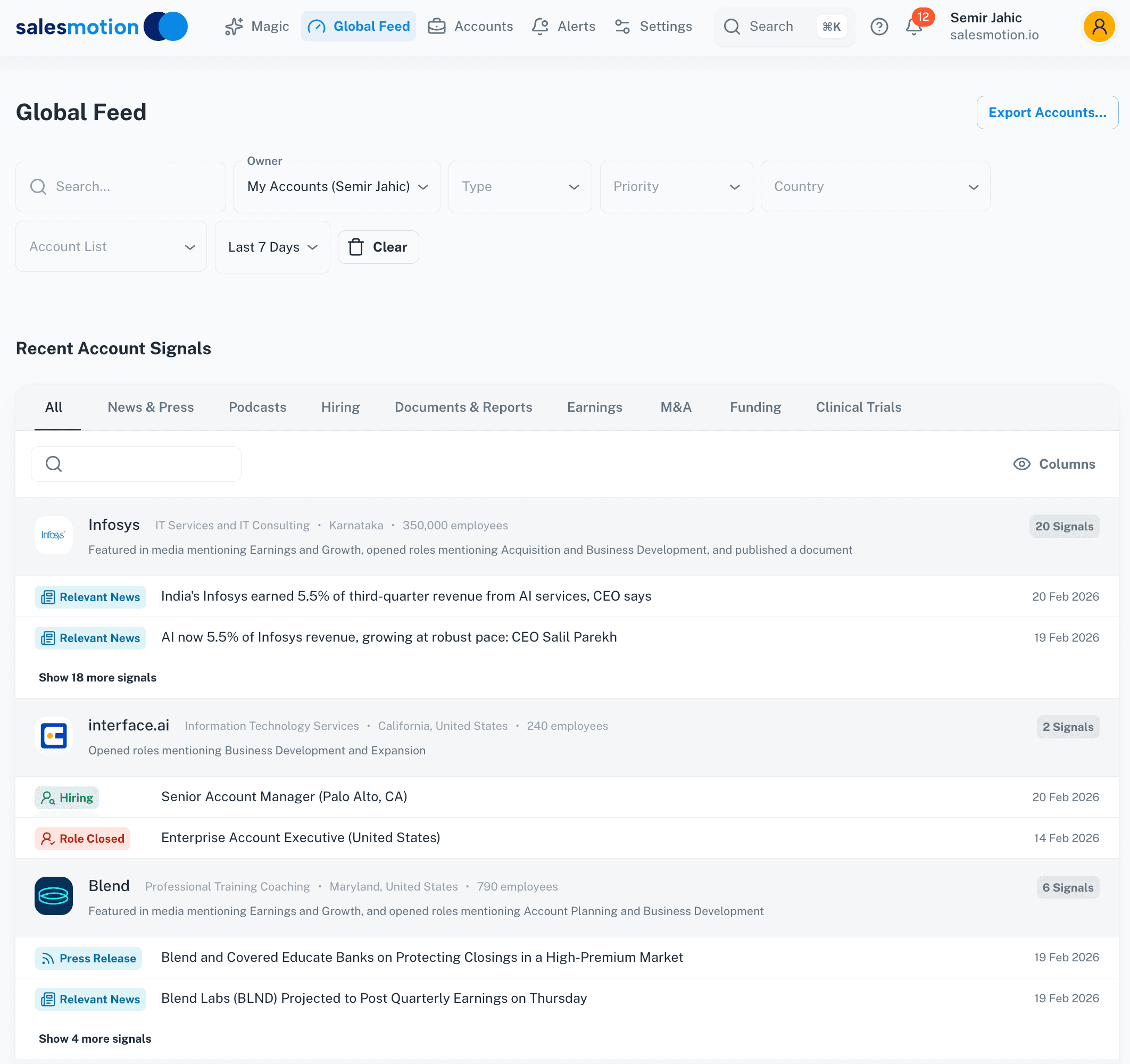
Account scoring based on real-time signal activity helps reps prioritize the accounts most likely to convert, replacing the guesswork of static lead lists.
The mistake most teams make is defaulting to the enterprise tier because it is the category leader, or dropping to the budget tier because of sticker shock. Both create problems.
What $60,000 Actually Buys You (And What It Doesn't)
A global services company with over 100,000 employees recently told us they were moving off 6sense. Not because the tool was bad, but because they could not justify the cost relative to what their sales team actually used.
This is more common than vendors admit. According to industry research, 67% of purchased sales tool features go unused. Companies spend an average of $1,200 per rep per year on sales technology, but over half of sellers cannot quantify the ROI.
Here is what enterprise tier tools typically deliver:
| Capability | ZoomInfo | 6sense | What Most Teams Actually Use |
|---|---|---|---|
| Contact database | 600M+ profiles | Limited | Yes, daily |
| Intent data | First-party + Bombora | Proprietary predictive | Rarely, too opaque |
| Account intelligence | Basic firmographics | AI-scored segments | Occasionally |
| Sequencing/outreach | Engage add-on | Orchestration workflows | Some reps |
| Buying signals | Job changes, funding | Anonymous web visits | Inconsistently |
| CRM integration | Deep Salesforce sync | Complex setup required | If IT configured it |
| Price (typical team) | $25,000-$60,000/yr | $55,000-$130,000/yr | Painful to justify |
The pattern we hear repeatedly: teams buy for the database but ignore the intent data because it feels like a black box. They use the basic contact lookup daily but never operationalize the advanced features that justified the price. The tool becomes an expensive phone book.
“The Business Development team gets 80 to 90 percent of what they need in 15 minutes. That is a complete shift in how our reps work.”
Andrew Giordano
VP of Global Commercial Operations, Analytic Partners
The Real Cost of Cheap Data
Dropping to the budget tier seems like the rational move. Apollo at $49/user/month feels like a bargain compared to ZoomInfo at $15,000/year. But the savings are often illusory.
A medical device startup we spoke with tried three separate data providers, each positioned as an affordable alternative. The result: approximately 50% of the data was inaccurate. That means half the emails their reps sent bounced or reached the wrong person, and half the phone numbers went to voicemail or disconnected lines.
The math on bad data is brutal. If a rep sends 20 emails per day and half bounce, they have wasted half their outbound capacity. But the damage goes further: email bounce rates above 2% actively harm sender reputation, which means the emails that do reach valid recipients increasingly land in spam. The rep is not just unproductive. They are making it harder for the entire team to get through.
B2B contact data decays at roughly 2.1% per month. Over a year, that compounds to about 22.5% of your database becoming unreliable. Budget tools that refresh infrequently compound this problem because the data was already marginal when it was entered.
The punchline: inexpensive tools with 50% accuracy are not cheaper. They are a hidden cost center that burns rep time, damages email deliverability, and erodes credibility with prospects who receive obviously wrong information.
What the Mid-Market Tier Gets Right
The mid-market tier exists because the enterprise tier solves problems most teams do not have, and the budget tier solves the wrong problem entirely.
Most sales teams with 5-50 reps do not need 600 million contact profiles. They need deep intelligence on the 500-2,000 accounts they are actually working. They do not need anonymous website visitor intent data (which only 29% of sales professionals trust as accurate). They need concrete, verifiable buying signals: leadership changes, earnings call insights, hiring surges, product launches, funding rounds.
Real-time buying signals across your territory: leadership changes, earnings events, hiring surges, and competitive moves, surfaced the moment they happen.
This is the fundamental difference between a contact database and an account intelligence platform. One tells you who to call. The other tells you why to call them right now, and what to say when they pick up.
Analytic Partners, an analytics firm with over 1,000 employees, saw reps go from spending hours toggling between research tools to getting 80-90% of what they need in 15 minutes. They did not need more contacts. They needed better context on the accounts they were already targeting.
Cytel, a clinical research firm with 2,000+ employees, consolidated five separate research tools into one platform and cut account research time by 50%. They were paying for ZoomInfo, Crunchbase, and three other tools. The consolidation was not just cheaper. It was faster, because reps stopped losing time to context-switching between five different interfaces.
See Salesmotion on a real account
Book a 15-minute demo and see how your team saves hours on account research.
How to Evaluate Without Getting Burned Again
If you have been through a painful ZoomInfo or 6sense contract, you are understandably skeptical of the next vendor's pitch. Here is a practical framework for evaluating alternatives.
Ask about pricing model, not just price. Per-seat pricing scales linearly with your team. Per-account pricing scales with your territory. Credit-based pricing creates unpredictable costs. Monthly contracts let you leave if it does not work. Annual contracts lock you in. Account intelligence platforms that use per-account pricing with unlimited users on team plans let you roll it out to your entire team without multiplying your cost.
Test with your actual data. Any vendor can demo with cherry-picked accounts. Ask to see intelligence on 5-10 of your real target accounts during the evaluation. If the data is thin or stale, you have your answer.
Measure time to first value. Enterprise platforms take 4-8 weeks to implement. That is 4-8 weeks of paying for a tool nobody is using. If your team cannot get a useful insight within the first day, the implementation cost will eat into your ROI.
Check what happens when you need help. Ask about support model. Some vendors assign a CSM who checks in quarterly. Others respond in hours. This matters more than features when your team hits a wall.
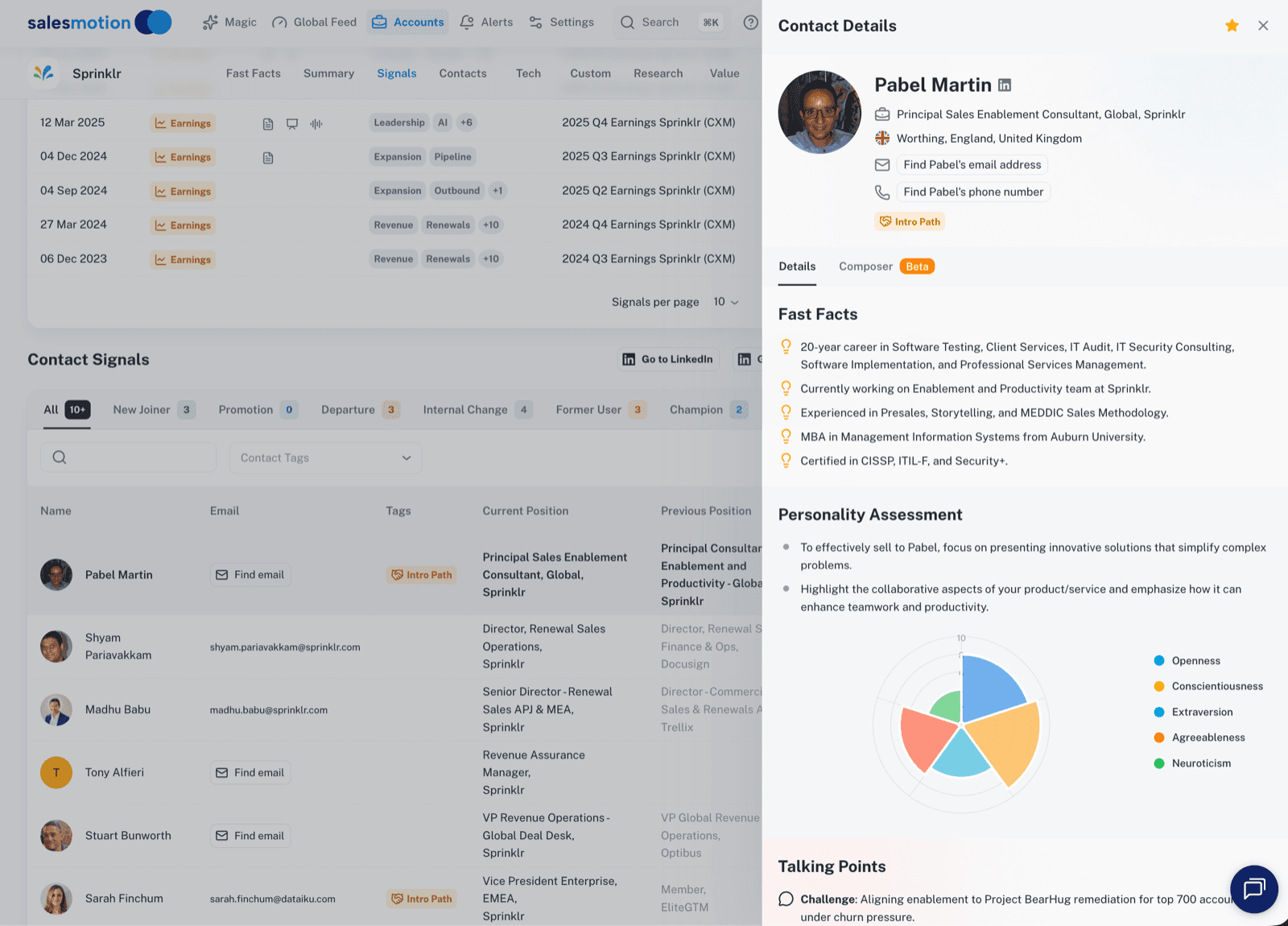
Signal-driven outreach: the platform turns buying signals and account intelligence into personalized email drafts reps can review and send in minutes.
The Migration Is Not As Hard As You Think
The most common objection we hear from teams stuck on expensive contracts: "We have too much invested to switch." But the sunk cost fallacy is real. If your team is not using the tool, the investment is already lost.
The practical migration path:
- Audit your current usage. Check login frequency, feature usage, and actual rep adoption. If less than 30% of your team uses the tool weekly, you are overpaying.
- Map what you actually need. Most teams need three things: accurate contacts for their target accounts, real-time signals on those accounts, and a way to turn research into outreach. Everything else is nice-to-have.
- Run a parallel pilot. Use a mid-market tool alongside your current platform for 30 days. Compare the intelligence quality on the same accounts. This gives you data, not opinions, for the decision.
- Negotiate your exit. If your contract is up for renewal, you have leverage. If it is mid-contract, ask about early termination. Many vendors will negotiate rather than keep an unhappy customer on their renewal list.
Key Takeaways
- ZoomInfo ($15,000-$60,000/year) and 6sense ($55,000-$130,000/year) are built for enterprises with 100+ sellers and dedicated RevOps teams. For teams of 5-50 reps, both are overkill.
- Budget tools like Apollo ($49/user/month) and Lusha ($36/user/month) save money but deliver roughly 50% data accuracy, which costs more in wasted rep time and damaged sender reputation than it saves in subscriptions.
- The mid-market tier ($5,000-$15,000/year) offers the best ROI for most B2B sales teams, with deep account intelligence, real-time buying signals, and unlimited users on team plans at a fraction of enterprise pricing.
- 67% of purchased sales tool features go unused. Before buying any tool, audit which features your team will actually use daily.
- B2B contact data decays at 2.1% per month. Platforms that monitor accounts in real time maintain relevance better than static databases that refresh quarterly.
- The fastest way to evaluate: test with your own accounts, measure time to first useful insight, and run a 30-day parallel pilot before committing.
Frequently Asked Questions
How much does ZoomInfo actually cost per year?
ZoomInfo starts at $14,995/year for a single user on its Professional plan. Most teams pay between $25,000 and $60,000/year depending on the number of users, credit volume, and add-on modules like ZoomInfo Engage or FormComplete. Enterprise contracts can exceed $100,000/year. All plans require annual commitments, and pricing is not publicly listed, which means every negotiation starts without a reference point.
Why do teams move off 6sense?
The most common reasons are cost relative to usage, implementation complexity, and opaque predictive models. 6sense averages $55,000/year with mandatory multi-year contracts and 4-8 week implementation timelines. Teams that lack dedicated RevOps resources or ABM maturity often find the platform too complex to operationalize. Reviewers consistently cite that intent predictions feel like a black box, making it hard to trust the output enough to act on it.
What is the best ZoomInfo alternative for small teams?
For teams of 5-50 reps, mid-market platforms offer the best balance of depth and affordability. Mid-market platforms offer account intelligence with real-time buying signals and AI-generated research at a fraction of enterprise pricing. Salesmotion starts at $85/month for individuals or $990/month for teams with unlimited users. Apollo ($49/user/month) is strong for contact data on a budget but lacks deep account context. Cognism is strong in European markets. The right choice depends on whether you need contact volume (Apollo/Lusha) or account intelligence.
How do I calculate the real cost of bad sales data?
Start with your rep count, multiply by hours spent per week on research and data cleanup, and multiply by loaded hourly cost. For a team of 10 reps spending 5 hours/week on data tasks at $50/hour loaded cost, that is $130,000/year in labor. Add the indirect cost: bounce rates above 2% damage sender reputation, reducing deliverability for your entire domain. Then add the opportunity cost of reps spending time fixing data instead of selling. Most teams find that bad data costs 3-5x more than the subscription fee for a tool that delivers accurate intelligence.
Can I switch from ZoomInfo mid-contract?
Yes, though it depends on your contract terms. Some ZoomInfo contracts include early termination clauses with prorated fees. Even without one, running a parallel pilot with a mid-market alternative during the remaining contract period lets you build the internal business case with real data before renewal. When renewal comes, you have leverage: concrete usage data showing what your team actually needs versus what you are paying for.