Lead generation breaks down at the point of signal handling, not list building. Revenue teams already have more than enough names. The gap is deciding which account matters now, what changed, and how to act before the window closes.
That problem has gotten worse as sales teams added more data sources. Reps are expected to monitor LinkedIn activity, hiring trends, funding announcements, earnings calls, product launches, website behavior, and CRM history at the same time. Without a clear operating model, that stack creates busywork instead of pipeline. Outreach goes out late, research stays shallow, and priority accounts get treated like every other record in the system.
The teams getting better results in 2025 are running a signal-driven process. They use buying signals and operational triggers to rank accounts, route work, and tailor outreach while the context is still fresh. If you need a practical primer on what counts as a real signal, this breakdown of buyer intent data and trigger signals is a useful starting point.
That shift matters because relevance is now an execution problem, not just a messaging problem. AI agents can watch for changes, enrich accounts, draft context-aware outreach, and push the next best action to the right rep without hours of manual research. The upside is not more activity. It is better timing, tighter prioritization, and a sales motion that responds to live account behavior instead of static lists.
The nine practices below hold up in real revenue teams because they connect strategy to execution. Used together, they form an operating system for pipeline generation that scales without burying reps in admin work.
1. Intent Data and Trigger-Based Prospecting

If your reps are still prospecting from static lists first, they’re starting too cold. The better move is to prioritize accounts that are actively showing buying intent or going through change. That includes funding events, leadership hires, expansion moves, job postings tied to your category, website activity, and public statements that reveal active priorities.
This isn’t theory. Digital Applied’s lead generation statistics summary reports that leads sourced through third-party intent signals convert at 18.7% versus 5.5% for traditional cold outreach, a 3.4x difference. It also notes that intent-sourced opportunities carry 23% higher average contract values. That’s the commercial case for acting on relevance instead of volume.
What to monitor
The mistake is trying to monitor everything. Good teams only track signals that map to their value.
- Leadership changes: A new CRO, VP Sales, or RevOps leader often means new systems, new benchmarks, and openness to change.
- Hiring patterns: If an account is hiring aggressively in functions your product supports, that’s usually a better signal than generic company growth news.
- Strategic announcements: Funding, expansion, product launches, compliance moves, and partnerships often create urgency.
- Behavioral intent: Repeat visits to pricing, integrations, or solution pages should trigger fast follow-up.
For a deeper look at how to operationalize this, Salesmotion has a useful primer on buyer intent data.
Practical rule: Don’t contact an account because something happened. Contact them because you can explain why that event changes their priorities.
What works in practice
A rep selling revenue operations software sees that a target account just hired a head of sales operations and opened roles across SDR management. That’s not a generic “congrats on the hire” email. It’s a reason to say, “You’re scaling the team and adding process ownership. That usually exposes routing gaps, handoff issues, and inconsistent follow-up. Worth comparing notes?”
That message lands because the timing makes sense. Generic personalization doesn’t.
Skip the comparison fatigue?
If you're shopping for a sales intelligence tool, here's the short version.
Salesmotion combines account intel, buying signals, verified contacts, and AI-drafted outreach in one tool. From $85/mo, live in an hour, no annual contract.
2. Account-Based Marketing with Personalized Outreach

ABM works when you stop pretending every target account deserves the same level of effort. It’s a resource allocation strategy. Pick the accounts that matter, map the buying group, and coordinate outreach across sales, marketing, and customer-facing teams.
That discipline matters because most B2B buying is messy. One contact rarely closes the deal. You need a point of view for finance, operations, end users, and the executive sponsor. Salesmotion’s guide to account-based marketing is useful if you’re building that structure from scratch.
Personalization at the account level
A lot of teams say they do ABM when they really mean they changed the company name in an email. Real ABM is account-specific, not contact-specific only.
For example, a cybersecurity vendor targeting a large fintech account might build messaging around three live themes:
- Executive risk: How security posture affects board visibility and trust.
- Operational load: How current tooling affects security team efficiency.
- Growth friction: How compliance requirements slow launches in new markets.
Each stakeholder sees the same account story from a different angle. That’s where personalization starts to feel credible.
ABM gets stronger when sales and marketing react to the same signals, not when they run parallel campaigns with different assumptions.
Where teams go wrong
The biggest ABM failure is overbuilding. Teams create beautiful target account lists, write long briefs, and then never refresh them. Six weeks later, the account context has changed and the campaign is stale.
Keep it tighter than that. Review target accounts regularly. Drop accounts that no longer fit. Add accounts where buying signals are stacking up. If marketing is running ads, events, or content syndication into ABM accounts, sales should know what’s been seen and what message is already in market before they send the first outbound note.
ABM is one of the strongest best practices lead generation approaches when your ACV is high and your sales cycle involves multiple stakeholders. It’s a poor fit if your team can’t maintain account intelligence or won’t narrow focus.

“Salesmotion empowers me to cultivate a great buyer experience. I'm able to challenge prospects' thinking and be a trusted consultative seller. A major part of this is Salesmotion insights.”
Austin Friesen
Account Executive, FY25 #1 President's Club, Clari
3. LinkedIn-Based Prospecting and Social Selling
LinkedIn is still one of the cleanest places to identify decision-makers, track role changes, and warm up an account before direct outreach. But most sellers misuse it. They either spam connection requests or treat posting as a vanity exercise with no link to pipeline.
Use it for signal capture first. A prospect commenting on a post about hiring, operational complexity, pricing pressure, or GTM changes is telling you what they care about in public. That’s better than guessing.
If your team is trying to sharpen its approach, these effective LinkedIn content strategies can help reps and leaders show up with more relevance.
How to use LinkedIn without sounding scripted
A good workflow is simple. Follow target accounts. Track key stakeholders. Watch for events like promotions, role changes, hiring posts, product launches, and executive commentary. Then tie your outreach to the post, not just the profile.
Example. A VP of Sales posts about onboarding a distributed team after a regional expansion. A weak message says, “Saw your profile and thought we should connect.” A better message says, “Your note on ramping a distributed team stood out. That kind of expansion usually exposes coaching consistency and pipeline visibility issues. We help sales leaders tighten both during scale-up.”
That’s still outbound. It just doesn’t feel blind.
What social selling should actually mean
Social selling isn’t “be active on LinkedIn.” It means using public interaction to lower friction before a direct ask.
- Engage selectively: Comment where you can add a point of view, not empty agreement.
- Track continuity: If a prospect liked a post, visited a profile, or responded to a comment thread, log it in CRM so the next rep doesn’t restart cold.
- Map the committee: LinkedIn is still one of the fastest ways to identify adjacent stakeholders around a live opportunity.
Used well, LinkedIn gives you context, not just access. That’s the difference.
4. Predictive Lead Scoring and Account Prioritization
Many organizations don’t have a lead shortage. They have a prioritization problem. Everything looks urgent in the CRM, so reps work the loudest lead, the newest lead, or the one assigned five minutes ago. That’s not a strategy.
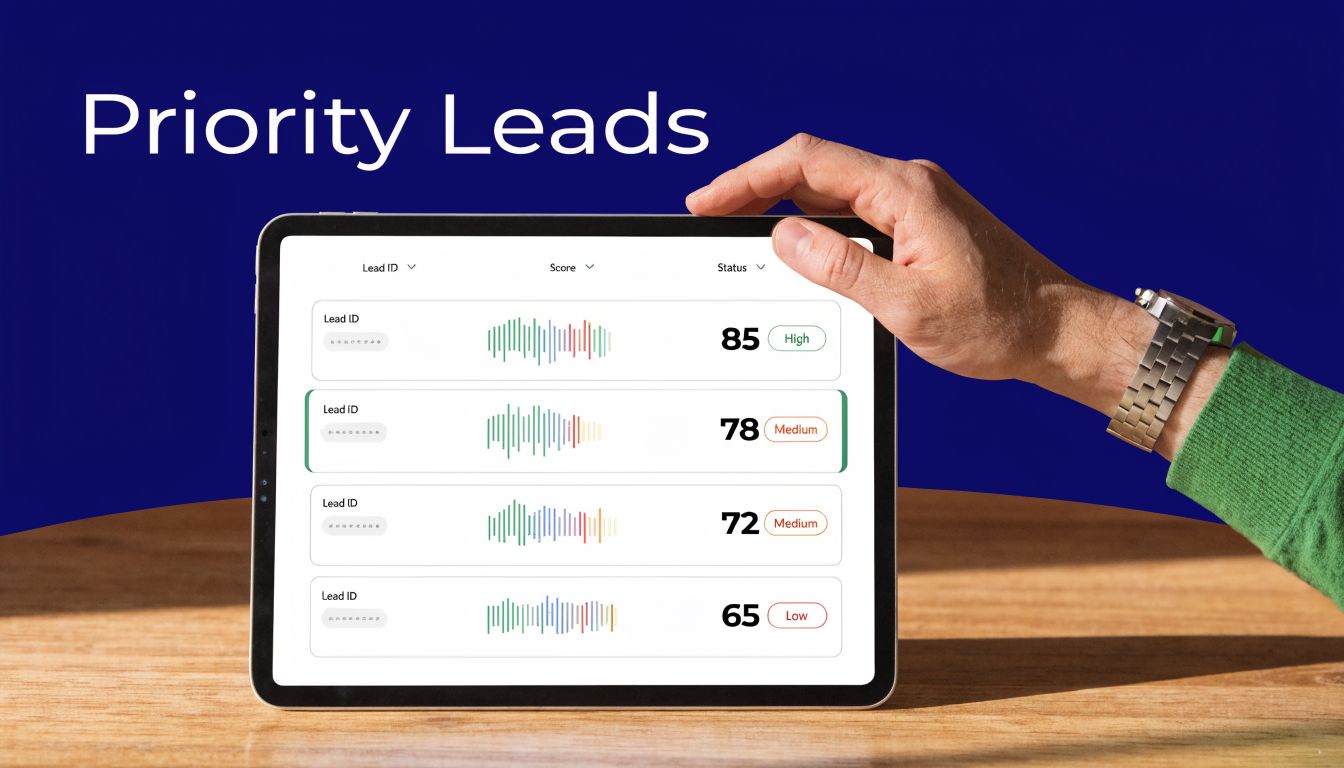
Predictive scoring helps when it combines fit, behavior, and timing. The model should tell reps where to spend the next block of prospecting time, not just assign a decorative number no one trusts. Salesmotion covers the mechanics in its guide to AI lead scoring.
Score for action, not reporting
The best scoring systems answer practical questions:
- Which accounts should SDRs contact today?
- Which inbound leads need immediate human follow-up?
- Which existing opportunities deserve more executive attention?
- Which accounts should marketing keep nurturing instead of passing to sales?
That means your scoring model should include explicit buying signals, not just demographic fit. A perfect ICP account with no momentum may deserve less attention than a decent-fit account showing active change.
A useful operating model is to give reps both a score and a reason. Don’t just say an account is high priority. Show that it visited a high-intent page, added roles tied to your category, and had recent executive movement. Reps trust scores they can explain.
A score without context creates compliance. A score with context changes behavior.
Keep humans in the loop
Scoring models drift. Markets change. Messaging changes. Product fit changes. If RevOps never audits the model, reps will ignore it.
One practical approach is to review won and lost deals every quarter and ask whether the score predicted reality. If strategic accounts score low but close well, your model is underweighting something. If heavily engaged leads keep stalling, you may be overvaluing activity that looks like interest but doesn’t indicate buying intent.
Predictive scoring is powerful, but only when it helps managers coach and helps reps choose. If it only makes dashboards prettier, it’s noise.

“We have very limited bandwidth, but Salesmotion was up and running in days. The template made it easy to load our accounts and embedding it in Salesforce was simple. It was one of the easiest rollouts we've done.”
Andrew Giordano
VP of Global Commercial Operations, Analytic Partners
5. Content-Driven Lead Generation and Thought Leadership
Content earns pipeline when it is tied to buying signals and used as part of the sales motion, not treated as a publishing exercise.
Buyers read before they reply. They compare vendors before they book time. If your team is absent from that research phase, reps are forced to create context from scratch on every outbound touch. That is expensive, slow, and hard to scale.
The stronger approach is signal-driven content distribution. Publish material that matches specific moments in the buying journey, then use engagement data to trigger the next action automatically. A prospect who reads an implementation guide needs a different follow-up than one who only skims a category overview. Revenue teams that operationalize that distinction get more relevant conversations and less wasted SDR effort.
What good content does for pipeline
Strong lead generation content usually serves one of three jobs:
- Clarifies an active problem: It helps buyers define the issue in business terms.
- Improves decision quality: It gives committees a practical way to compare options, risks, and trade-offs.
- Connects timing to action: It links the problem to a trigger such as team growth, tooling changes, headcount shifts, or process failure.
That is why detailed guides, benchmark breakdowns, implementation walkthroughs, and teardown-style analysis often outperform polished brand copy. Useful content reduces uncertainty. Buyers respond to that.
If you want inspiration for how brands package educational assets, BlazeHive's content examples are worth reviewing.
Build content for follow-up, not just form fills
A lot of B2B teams still judge content by first-touch attribution alone. That misses how content affects revenue. Good assets help outbound land better, help inbound mature faster, and help live deals move with fewer basic questions.
Lead nurturing matters here, but the core point is operational. Content gives your team a reason to re-engage and a way to tailor that re-engagement to what the buyer already showed interest in. AI agents can handle much of this work. They can classify what was consumed, map it to likely pain points, and trigger the right email, retargeting audience, or rep task without manual sorting.
Don’t gate everything
Gate the assets that justify direct follow-up. Keep enough public content open so serious buyers can evaluate your thinking without friction.
One practical model works well. Publish short, high-frequency content in public. Gate the asset that helps a buyer act, such as a diagnostic worksheet, internal business case template, or vendor evaluation framework. That gives marketing a conversion point without hiding all of the value behind a form.
Thought leadership is often mismanaged because teams confuse visibility with influence. Real thought leadership changes how buyers frame a problem and what they ask in the first meeting. If a prospect reads your material, shows intent through engagement, and enters pipeline already aligned on the problem, content did its job.
6. Referral and Partner-Based Lead Generation
Warm introductions still beat cold outreach when they’re structured properly. The key phrase there is “structured properly.” A lot of companies say referrals matter, then leave them to chance.
Referral and partner motion works best when you define who should ask, when they should ask, and what a good introduction looks like. That can come from customers, implementation partners, investors, ecosystem partners, or internal executives with strong networks.
Build a repeatable referral engine
The easiest referrals come right after a customer sees value. That doesn’t mean every happy customer will volunteer names. Your team needs to make the ask specific.
Instead of “Do you know anyone who might be interested?” try a narrower request: “Who else on your team or in your network is dealing with the same handoff and pipeline visibility issues you solved?” That gives the customer something to work with.
The same logic applies to partners. A consulting firm, systems integrator, or adjacent software vendor won’t send useful leads unless the routing rules, ownership model, and mutual value are clear.
- Define the ideal referral: Spell out company type, buyer title, and trigger conditions.
- Equip advocates: Give them short forwardable language, not a brochure.
- Protect trust: Follow up quickly and professionally. Don’t burn partner credibility with sloppy handling.
- Track source quality: Some partners send volume. Others send deals. Those aren’t the same.
Why this channel gets neglected
It requires operational discipline, and that’s less glamorous than launching a campaign. But warm channels often produce better conversations because trust transfers before the first meeting.
A practical example: a RevOps platform partners with a CRM consultancy. The consultancy sees account assignment and lead routing issues during client audits. Instead of tossing over names occasionally, both teams agree on trigger scenarios, intro language, and ownership. Now the partner motion becomes a system, not luck.
That’s how referral lead gen becomes scalable.
7. Sales Intelligence and Research-Based Prospecting
Research quality shows up immediately in outreach. You can hear it in the first sentence. Generic prospecting sounds like it came from a list. Research-based prospecting sounds like someone understands the account’s world.
The challenge is labor. Teams know they should research accounts, but manual digging doesn’t scale. One of the more useful underserved ideas in lead gen right now is the shift toward AI-driven signal monitoring to reduce signal overload. Uforocks’ lead generation best practices article highlights this gap and notes that 70% of B2B reps report spending 2 to 3 hours weekly on manual account research that yields low relevance.
Set a research floor
Every outbound motion needs a minimum standard for context. Before a rep contacts an account, they should know:
- What changed: A trigger, initiative, or shift worth mentioning.
- Why it matters: The business implication tied to your value.
- Who owns the problem: The likely stakeholder or buying group.
- What to say next: A reasoned point of view, not a generic CTA.
Salesmotion’s overview of B2B sales intelligence tools is relevant here because the category is no longer just contact data. It’s account context, signal tracking, and usable insight.
What this looks like in the field
Say an account mentions margin pressure in an earnings call, opens hiring for pricing operations, and promotes a commercial leader into a broader role. A weak rep sees three disconnected facts. A strong rep or system connects them: the company is trying to improve commercial efficiency, so pricing, process, forecasting, or revenue execution tools may now be more relevant.
Good research doesn’t mean more notes. It means better hypotheses.
Managers should audit this. If reps can’t explain why the account is worth contacting now, they’re probably not ready to hit send.
8. Outbound Sales Engagement with Multi-Channel Sequences
Multi-channel outbound works because buying committees do not engage in one place, on one schedule, or after one touch. Revenue teams that treat outreach as a coordinated system, not a batch of disconnected tasks, create more surface area for response and far more signal to act on.
The point is not to add channels for the sake of volume. The point is to match the message, channel, and timing to the account’s level of intent, then let automation handle the repetitive work. Gartner’s guidance on B2B buying enablement supports the broader reality here: B2B buying is complex, involves multiple stakeholders, and requires sellers to engage buyers in ways that reduce friction across the decision process. That is why a sequence should feel like one coherent conversation across email, phone, LinkedIn, and follow-up, not four separate campaigns.
Build sequences around signals, not templates
Generic seven-touch cadences create activity, but they rarely create pipeline. Strong teams build sequence logic around observable signals such as funding news, hiring shifts, event attendance, pricing changes, product launches, website revisit behavior, or engagement with prior content.
That changes the job of the rep. Instead of deciding who to contact and what to say from scratch, the rep works from a ranked queue with a reason to act now and a recommended message angle. AI agents are increasingly useful here because they can watch for trigger events, draft channel-specific touches, suppress low-fit accounts, and route engaged prospects into the right next step without manual list work.
A practical sequence often looks like this:
- Touch one, email: Name the trigger and tie it to a business issue the account is likely dealing with.
- Touch two, LinkedIn: Reinforce the same thesis with a short, relevant note rather than a generic connection request.
- Touch three, call: Use the same context so the outreach feels consistent.
- Touch four, email: Add proof, a customer pattern, or a different business impact.
- Touch five, decision point: Pause, recycle, or escalate based on engagement signals.
Good orchestration protects relevance
Sequence design is an operations problem as much as a messaging problem. If marketing, SDRs, AEs, and automation tools all touch the same account without coordination, buyers get duplicate messages and confidence drops fast.
The better approach is channel orchestration with clear rules. Cap touch volume by account. Suppress outbound when an opportunity is active. Change messaging when a prospect attends an event, downloads a technical asset, or replies in another channel. For teams working trade shows and field outreach, partners such as Stand Builders Sydney can support the event execution side, but pipeline still depends on how tightly that engagement is carried into post-event sequences.
Timing matters more than cadence complexity
I have seen teams waste months tuning the spacing between step four and step five while ignoring the bigger issue: they contacted the account with no credible reason to do it now. Timing usually drives performance more than clever cadence design.
Use multi-channel sequences when there is a trigger, a relevant hypothesis, and a defined next action. If those pieces are missing, wait. If engagement stalls, stop forcing touches and move the account back into nurture until a new signal appears.
That discipline is what separates automated outreach from automated noise.
9. Event-Based and Webinar Lead Generation
Events create pipeline when they capture buying signals and route the right next action fast. Revenue teams that treat webinars, roundtables, customer events, conference meetings, and trade shows as signal sources get more value than teams that treat them as batch lead collection.
The mistake is familiar. Marketing exports a list, SDRs send the same follow-up to everyone, and sales leaders wonder why attendance did not turn into meetings. Event programs perform when follow-up reflects what the buyer did. Registered but missed the session. Stayed for 40 minutes. Asked a technical question. Requested a demo at the booth. Those are different signals, and they should trigger different workflows.
Preparation matters as much as execution. Build a target account list before the event. Map expected attendees to active opportunities, open expansion paths, or dormant accounts worth re-engaging. For webinars, the invite should connect the session to a live business issue, not a calendar filler topic. For in-person events, book meetings before the event starts and define what reps need to capture in the conversation, including pain point, timeline, stakeholders, and agreed next step.
After the event, speed helps, but relevance matters more. A buyer who asked about implementation risk should get a reply that addresses implementation risk. A no-show should get the recording and one clear reason to continue the conversation. An account that sent multiple attendees deserves coordinated outreach, not three separate reps sending duplicate emails.
An autonomous workflow earns its keep. AI can classify attendee behavior, summarize notes, draft follow-up by segment, push tasks to the right owner, and suppress generic nurture when an account shows real purchase intent. That reduces manual sorting and gives reps a better starting point while the signal is still fresh.
A practical pattern works well. After a webinar on revenue efficiency, send one follow-up to attendees who engaged significantly, one to passive attendees, and one to no-shows. If a named account asks a strong question or visits the booth with an active project, skip the generic sequence and move straight to AE ownership with context attached.
For companies investing in trade shows, physical presence still affects results. Booth traffic quality depends on positioning, staffing, and meeting design, not just floor location. If your team is planning that motion, Stand Builders Sydney offers a useful look at exhibition setup considerations.
Do not grade event programs on registrations alone.
Track meeting conversion, opportunity creation, pipeline influenced, and account progression after the event. Also measure follow-up coverage by segment and response time from event to first sales action. If the team collected names but failed to create informed next steps, the problem was not the event. It was the operating model around it.
9-Point Comparison of Lead Generation Best Practices
| Approach | Implementation complexity | Resource requirements | Expected outcomes | Ideal use cases | Key advantages |
|---|---|---|---|---|---|
| Intent Data and Trigger-Based Prospecting | High, real-time monitoring and integrations | Real-time data feeds, monitoring platform, trained reps | Short-window, high-conversion opportunities; improved timing | Time-sensitive deals, accounts undergoing change | Exceptional timing; prioritized high-intent accounts |
| Account-Based Marketing (ABM) with Personalized Outreach | High, cross-functional coordination and customization | Dedicated ABM tools, account research, creative resources | Larger deals, faster multi-stakeholder closes, measurable ROI | Strategic enterprise accounts, named-account programs | Highly relevant messaging; strong sales-marketing alignment |
| LinkedIn-Based Prospecting and Social Selling | Medium, platform skills and consistent activity | Sales Navigator, content/engagement time, outreach tools | Warmer outreach, relationship building, steady pipeline | Executive outreach, professional services, personal brand-led sales | Access to decision-makers; social proof and warm signals |
| Predictive Lead Scoring and Account Prioritization | Medium–High, modeling and data governance | Historical CRM data, ML models, data science or vendor support | Better prioritization, forecasting, and productivity gains | Organizations with sizable historical data and volume | Objective scoring; early risk detection and dynamic prioritization |
| Content-Driven Lead Generation and Thought Leadership | Medium, sustained content strategy | Content team, SEO, promotion budget, time to scale | Inbound leads, authority, long-term organic growth | Demand gen, awareness building, product-education markets | Scalable, lower CPL over time; reusable assets |
| Referral and Partner-Based Lead Generation | Low–Medium, program design and relationship management | Partner/customer programs, incentives, tracking systems | High-quality, faster-closing leads with strong retention | Customer-success-led growth, channel partnerships | Warm introductions; low CAC and high LTV |
| Sales Intelligence and Research-Based Prospecting | Medium, data enrichment and workflow integration | Enrichment tools, research processes, CRM integration | More relevant outreach, higher response rates, faster qualification | Complex B2B sales and enterprise opportunities | Deep account context; competitive and strategic insights |
| Outbound Sales Engagement with Multi-Channel Sequences | Medium, sequence design and ongoing optimization | Sales engagement platform, templates, testing resources | Scalable personalized outreach and improved response metrics | High-volume SDR teams, scaled prospecting programs | Consistency, automation, multi-channel reach |
| Event-Based and Webinar Lead Generation | Medium–High, production and promotion logistics | Event platform, speakers, promotion budget, lead capture tools | Concentrated high-engagement leads; credibility and networking | Thought leadership, product demos, market education events | Live interaction, strong engagement, opportunities for meetings |
From Practices to Pipeline Operationalizing Your Strategy
Pipeline does not break because teams lack tactics. It breaks because signals, ownership, and timing are disconnected.
That is the operating shift behind modern lead generation. High-performing revenue teams do not treat intent, outbound, content, referrals, events, and scoring as separate programs competing for budget. They run them as one system. The job is to detect buying motion early, decide which accounts deserve action now, and trigger the next best step without asking reps to do manual detective work between every touch.
Lead nurturing sits inside that system. It is not a side program run after capture. As noted earlier, teams that nurture leads well tend to see stronger ROI because follow-up happens with context, sequence discipline, and clear handoffs between marketing, SDRs, and AEs. The same goes for SLAs. If ownership is vague after a form fill, webinar attendance, or account trigger, good leads stall before anyone has a real conversation.
A practical model usually comes down to five working parts:
- Signal capture: Track account changes that indicate timing, not just firmographic fit.
- Prioritization: Rank and route accounts by likelihood to buy and urgency.
- Message creation: Give reps a real reason to reach out based on what changed.
- Execution discipline: Define who follows up, how fast, and through which channel.
- Learning loop: Review conversion patterns and feed that back into scoring, routing, and messaging.
Many teams get the trade-off wrong. They ask reps to personalize at scale, then bury them in research tabs, CRM cleanup, and list review. That does not produce better conversations. It produces slower follow-up and lower-quality outreach.
AI-assisted workflows are useful when they remove that manual burden. The right setup can watch for triggers, summarize why an account moved, recommend priority, and prepare outreach grounded in account context. Reps still own judgment, objection handling, and deal strategy. The system handles monitoring, synthesis, and workflow execution.
The same principle applies to outbound personalization. Generic templates sent at volume rarely fail because the copy is slightly off. They fail because there is no credible "why now." LeadAngel’s discussion of lead generation strategies speaks to that gap. The practical takeaway is simple. Outreach tied to a real account event gets more attention than outreach built from static persona language.
Salesmotion fits that signal-driven model. Its platform uses AI agents to monitor account changes, assemble research context, and turn those inputs into outreach workflows that revenue teams can act on. For sales and revenue leaders, the value is straightforward: less rep time spent gathering context, faster response to buying signals, and better odds that outreach lands when the account is in motion.
The goal is not to automate relationships. The goal is to automate the low-value work that delays them.
If your team wants to turn raw account activity into timely, relevant pipeline conversations, explore Salesmotion. It’s built to help revenue teams monitor real-world triggers, prioritize accounts, and turn research into outreach without piling more manual work onto reps.