
Why Most Go-to-Market Strategies Fail (And How to Fix Them)
Generic marketing campaigns rarely succeed in today's hyper-targeted world of strategic account-based selling. Most companies fail by blasting the same basic messages to everyone, hoping something resonates. A successful go-to-market (GTM) strategy requires understanding and addressing the unique needs of each target account.
Common Pitfalls in GTM Strategies
A major pitfall is the lack of a clearly defined ideal customer profile (ICP). Without knowing exactly who you're trying to reach, messages become vague and ineffective. For example, trying to sell enterprise solutions to small businesses usually fails because their needs and budgets differ drastically. Poor market research makes this worse - if you don't understand your competition or customer pain points, you can't create compelling solutions.
Not having a structured go-to-market strategy template leads to inconsistency and missed steps. Research shows that 68% of companies launch products without a proper GTM plan. In contrast, businesses that follow a defined process see 10% higher success rates in their launches. Learn more about GTM planning fundamentals.
Shifting to an Account-Based Approach
Smart sellers focus on understanding individual accounts through:
- Deep Account Research: Understanding each company's specific challenges, structure, and decision-makers
- Custom Communication: Creating messages that speak directly to each account's needs
- Multiple Contact Points: Building relationships across different roles and departments
- Active Monitoring: Watching for changes and opportunities to adjust your approach
Fixing a Failing GTM Strategy
To fix a struggling GTM strategy, start by examining your data. Look at which approaches work and which don't. You may need to redefine your ICP, update your messaging, or modify your sales process.
Getting all teams aligned is crucial - sales, marketing, and product groups must work together toward shared goals. Set up regular check-ins to track progress and quickly address any issues. By focusing on understanding and serving specific accounts well, you can turn an underperforming GTM strategy into a reliable source of growth.
See Salesmotion in action
Take a self-guided interactive tour — no signup required.
Building Your GTM Strategy Template: Essential Components for Success

A solid go-to-market (GTM) strategy template serves as the foundation for effective account-based selling. Think of it as your playbook - it helps teams stay coordinated when targeting key accounts, engaging prospects, and closing deals. When everyone follows the same framework, you'll see better results and smoother execution.
Defining Target Accounts and Ideal Customer Profile
Start by getting specific about your target accounts. Look beyond basic company details and dig into their real needs, pain points, and how decisions get made. Let's say you sell cybersecurity software - a target account could be a bank that needs help meeting strict security regulations.
Your ideal customer profile (ICP) builds on this foundation. Map out exactly who makes the perfect customer within those target companies - their role, influence level, key challenges, and typical budget range. This clarity helps you focus on prospects most likely to buy.
Mapping Key Stakeholders and Decision-Makers
After defining your ICP, identify the key players involved in purchasing decisions at each account. Look beyond just the final signature - you need to know everyone who influences the deal. Figure out who champions new solutions, who might resist change, and how they all work together. This knowledge shapes how you communicate with each person.
Crafting Compelling Value Propositions
Your GTM template needs clear value propositions that connect your solution to what matters for each account. Don't just list features - explain how you solve their specific problems. For that bank example, show exactly how your security software helps them stay compliant and protect customer data. The right GTM template organizes your approach through key stages like preparation, discovery, and recommendations. Learn more about effective templates here.
Outlining Engagement Strategies and Tactics
Detail exactly how you'll connect with each account in your GTM plan. Pick specific ways to build relationships with key contacts - maybe it's personalized emails, LinkedIn outreach, targeted content, or even physical mail campaigns. Set clear schedules for follow-up so you stay consistent without overwhelming anyone. For more tips, check out How to master....
Defining Metrics and Measurement
Finally, decide how you'll track success. Choose key performance indicators (KPIs) that matter - like number of meetings booked, deals created, average deal size, and how long sales take to close. Check these numbers regularly to spot what's working and what needs to change. Keep fine-tuning your approach based on real results.

“Salesmotion has been a game-changer for me. I used to spend 12 hours a week on prospect research, now it's down to 4. Plus I'm finding stuff I was totally missing - podcasts, news mentions, the good bits.”
George Treschi
Account Executive, FY25 President's Club, Sigma
Advanced Market Research and Strategic Account Profiling
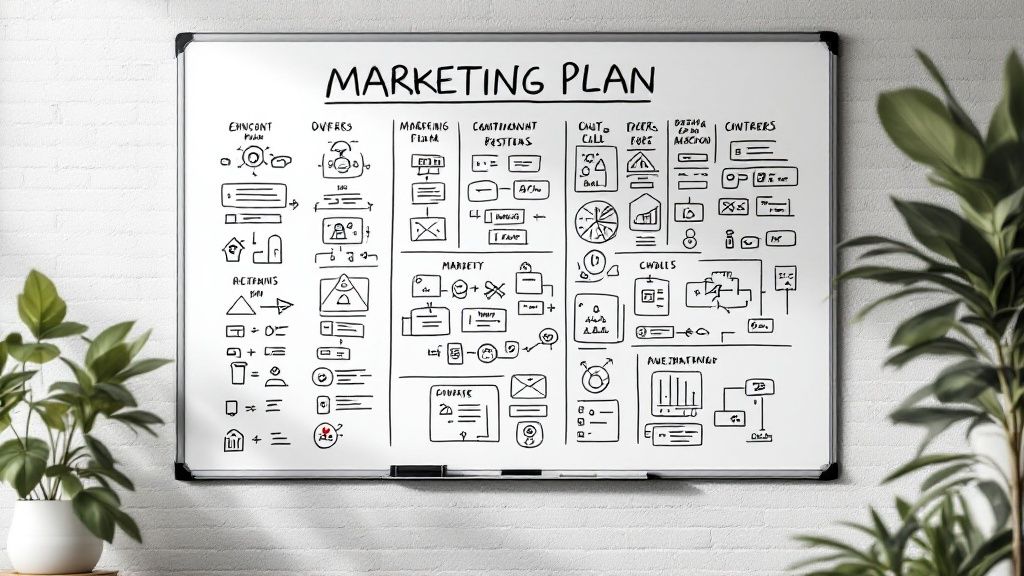
Strategic account profiling and thorough market research are essential elements of an effective go-to-market strategy template. For sales teams using account-based selling methods, building detailed profiles of target accounts goes far beyond basic demographic data to understand the unique characteristics of each potential client.
Understanding the Buying Ecosystem
Every target account has its own buying ecosystem - a network of people who influence and make purchasing decisions. Sales teams need to map out this entire web of relationships. While a CEO might give final approval, input from technical leaders, department heads, and end users can make or break a deal. Understanding these dynamics helps sales teams navigate complex deals more effectively.
Identifying Account-Specific Pain Points
Each account faces its own set of challenges that go beyond standard industry problems. Sales teams need concrete answers to key questions: What keeps their executives up at night? Which business goals remain out of reach? Where are they losing money or market share? Take Oatly for example - when entering the US market, they discovered through research that coffee shops needed reliable dairy alternatives. This insight shaped their entire market approach. Learn more about effective GTM strategies here.
Crafting Compelling Value Propositions
With clear insights into an account's buying process and pain points, sales teams can build compelling value propositions. The focus should be on showing exactly how your product solves their specific problems and helps them meet business goals. Skip the feature lists and focus on measurable results and real business impact.
Practical Techniques for Account Profiling
Here are proven methods to build rich account profiles:
- Discovery Calls: Well-planned conversations to uncover needs and decision-making patterns
- Social Selling: Use LinkedIn and other platforms to understand roles and relationships
- Account Intelligence Databases: Tools like Salesmotion provide real-time data on buying signals and account changes
These research techniques give sales teams the detailed knowledge they need to connect with accounts on a deeper level. By truly understanding each account's unique situation, teams can create more focused outreach that resonates with decision makers and drives better results.
Strategic Account Planning and Multi-Thread Engagement
At the heart of account-based selling lies strategic account planning. This means creating a customized go-to-market strategy for each major account, moving past generic outreach to build meaningful connections. Success requires really getting to know your account's business challenges, needs, and internal workings.
Building Account-Specific Battle Plans
Smart sellers treat key accounts as unique markets that need their own strategy. They create detailed battle plans with clear goals and actions like:
- Stakeholder Mapping: Finding all the key players who influence and make decisions, learning their roles and connections
- Power Base Analysis: Understanding who really drives decisions, who they listen to, and how to work effectively with these dynamics
- Competitive Positioning: Knowing which vendors are already there, what makes your solution different, and being honest about where you shine or fall short versus competitors
Multi-Thread Engagement: Reaching Beyond the Single Contact
Building relationships with multiple people at your target account is key to winning big deals. This multi-thread engagement means connecting with folks across different teams and levels. While getting buy-in from leadership matters, the end users who'll work with your product daily can majorly impact the final choice.
Orchestrating Coordinated Outreach
Good multi-thread engagement needs everyone on the same page. Sales teams should plan outreach that keeps the core message consistent but speaks to each person's specific role and priorities. This could mean mixing personalized emails, LinkedIn messages, useful content, and even physical mail.
Maintaining Momentum in Extended Sales Cycles
Enterprise deals often take time to close. Keeping things moving means staying engaged and building trust throughout. Share updates that matter, offer helpful insights, and show value to everyone involved. Want to see this in action? Check out how Salesmotion customers speed up their deals.
The best strategic sellers use tools and data, like those from Salesmotion, to spot the right times to reach out and craft messages that resonate. When you truly understand each account and build multiple strong relationships, you're much more likely to win complex deals.

“The Business Development team gets 80 to 90 percent of what they need in 15 minutes. That is a complete shift in how our reps work.”
Andrew Giordano
VP of Global Commercial Operations, Analytic Partners
Measuring and Optimizing GTM Performance

The most effective go-to-market strategies require constant attention and refinement. Sales teams that consistently hit their targets know that success comes from measuring results, analyzing data, and making smart adjustments based on real performance metrics.
Key Metrics for Strategic Selling
Generic marketing metrics don't provide enough insight for account-based selling approaches. You need focused metrics that show how well you're connecting with specific target accounts. This means tracking both forward-looking and historical performance indicators.
-
Leading Indicators: These early signals help predict future success before deals close. Key examples include:
- Number of meetings with decision-makers
- Engagement rates on targeted content
- Deal progression speed through sales stages
- Response rates to outreach
-
Lagging Indicators: These concrete results show what actually happened, including:
- Deal win rates
- Average contract value
- Customer retention rates
- Revenue per account
Tracking and Analyzing GTM Effectiveness
The best sales teams don't just collect numbers - they dig deep to understand what drives success. This means spotting trends, finding patterns in won deals, and identifying common roadblocks. For example, if prospects aren't converting after demos, you might need to adjust your product presentation or qualification process. Learn more about strategic analysis in our guide on How to analyze earnings calls to improve pipeline generation.
Implementing Continuous Improvement
Schedule regular check-ins with your team to review GTM performance - monthly or quarterly works well for most organizations. Focus these sessions on concrete questions: Which accounts are moving forward? Where are deals getting stuck? What messaging resonates best with different buyer personas?
Adapting Your Approach Based on Results
Your go-to-market strategy should flex and grow based on what you learn. Use your performance data to make informed changes to your target account profiles, sales messaging, and engagement tactics. The most successful sales teams stay agile, testing new approaches while keeping what works. Let the numbers guide your decisions, not assumptions or hunches.
Implementing Your GTM Strategy: From Template to Execution

The best sales strategy only works if you can put it into action effectively. Let's look at how to take your go-to-market (GTM) strategy from planning to successful implementation, with a focus on account-based selling. This practical guide will help you connect your strategy to real-world results while maintaining your existing sales momentum.
Resource Allocation and Cross-Functional Coordination
Getting a new GTM strategy off the ground often means shifting resources around. You'll need to set aside the right budget, assign the right people, and invest in supporting tools and technology. This might mean bringing in new sales software or moving team members to focus on specific target accounts.
Success requires strong teamwork across departments. Sales, marketing, and product teams need clear communication channels and shared goals. Regular check-ins, unified tracking systems, and quick problem-solving sessions help keep everyone aligned and moving forward.
Change Management and Driving Adoption
New strategies mean new ways of working, which can be tough for sales teams to embrace at first. The key is having a solid plan for managing this change. Be clear about why changes are happening, provide thorough training, and make sure your team has the support they need.
Set up practical learning opportunities like hands-on workshops, personal coaching sessions, and easy-to-access online resources. These help your sales team get comfortable with new approaches while maintaining their productivity.
Timeline Planning and Stakeholder Management
Create a realistic schedule with clear phases and milestones. Breaking down the implementation into smaller steps makes it easier to track progress and spot potential delays early. Remember to keep all key players in the loop - from company leaders to sales managers and important customers.
Regular updates on progress, active listening to feedback, and quick responses to concerns help maintain support throughout the rollout. This open communication prevents surprises and helps address issues before they become problems.
Maintaining Momentum and Addressing Challenges
Keeping energy high during a long implementation can be challenging. Make it a point to celebrate small victories, recognize team efforts, and remind everyone of the benefits ahead. This helps maintain focus and motivation as you work toward bigger goals.
Be ready to face unexpected hurdles - they're a normal part of any major change. Stay flexible with your planning, tackle problems head-on, and learn from setbacks. Sometimes this means adjusting your GTM strategy or fine-tuning your approach to target accounts.
By focusing on these key areas, you'll set up your GTM strategy for success. When executed well, with strong account-based selling practices, this approach can lead to significant sales growth and a stronger market position.
Ready to improve your sales results with smart account targeting? Learn more about Salesmotion to discover how we can help you identify promising accounts, create personalized outreach, and close deals more efficiently.
Article created using Outrank