A lot of teams still ask, “What’s a good open rate?” That’s the wrong first question.
A better question is this: are your emails relevant enough to earn attention at the right moment? The benchmark data makes that clear. General B2B SaaS open rates average 24.7%, while triggered emails can reach 45.38% and strong service-based campaigns can land in the 35% to 45% range, according to LINK Mobility’s 2025 benchmark review. That gap isn’t just about copy. It’s about timing, context, and whether the buyer has a reason to care now.
Sales managers should treat open rates for emails as a directional signal, not a trophy. They can tell you whether your team is earning the first step of attention. They can’t tell you, on their own, whether that attention is turning into replies, meetings, and pipeline.
Still, the metric matters. If nobody opens the message, nothing downstream happens.
What Is an Email Open Rate Anyway?
Email open rate is the percentage of delivered emails that were opened. The formula is straightforward: (Unique opens ÷ Delivered emails) × 100. Delivered emails exclude bounces, so the metric is measuring performance against messages that made it through. Braze lays out that definition clearly in its guide to email open rates.

That’s the clean version. The messy version is what most sales leaders deal with.
Why the metric got less trustworthy
Apple’s Mail Privacy Protection changed how teams should read open rates. MPP can pre-fetch email images even when a person hasn’t actively opened the message, which inflates reported opens. That means a rep can look at a dashboard, see a healthy number, and assume subject lines are working when the buyer may never have engaged at all.
So yes, track opens. Just don’t confuse them with intent.
Practical rule: Use open rate as an early warning signal. Use downstream engagement to decide whether the campaign is actually working.
If your opens collapse, something is usually off in one of three areas: deliverability, targeting, or relevance. If opens look healthy but meetings don’t move, the problem often sits after the open. That could be weak body copy, a poor call to action, or an offer the buyer doesn’t care about.
What sales managers should watch instead
Open rates for emails still have value when you compare patterns, not just absolute numbers. They help answer questions like:
- Did the new sender identity help? A shift here can point to trust or recognition.
- Did the signal-based segment outperform the generic list? This shows whether relevance improved.
- Did the first email in the sequence earn attention better than the rest? That tells you whether your initial hook is strong enough.
A second metric matters just as much. Click-to-open rate, or CTOR, looks at how many people clicked after opening. That gives a better read on engagement because it’s closer to real action than an image load.
If you want a useful comparison point outside pure sales outreach, this breakdown of typical email open rates for ecommerce is worth reviewing. It’s a different motion, but it reinforces the same lesson: context matters, and one “average” number rarely tells the whole story.
See Salesmotion in action
Take a self-guided interactive tour — no signup required.
The Only Open Rate Benchmarks That Matter for Sales
Most benchmark articles blur together newsletters, promotions, lifecycle campaigns, and outbound sales email. That’s why they’re often useless for frontline sales management.
A sales team needs benchmarks tied to email type, because the difference between a generic cold sequence and a trigger-based message is massive. LINK Mobility’s benchmark summary makes that gap explicit: general B2B SaaS open rates average 24.7%, triggered emails can hit 45.38%, and generic outreach often sits below 20% in practice when it lacks relevance and timing.
A realistic benchmark view
Here’s a practical way to frame it for managers reviewing outbound performance.
| Email Type | Average Open Rate (%) | Top Quartile Performance (%) |
|---|---|---|
| Generic B2B outreach | 15.1 to 20.8 | Below the stronger B2B SaaS range |
| General B2B SaaS email | 24.7 | 35 to 45 |
| Triggered emails | 45.38 | Above the average benchmark level for triggered sends |
| Newsletter campaigns | 40.08 | Over 62 |
This table uses only figures cited in the verified benchmark sources, primarily the LINK Mobility review and the newsletter benchmark summary from GlueLetter.
What to compare against
Don’t compare your outbound SDR sequence to a house newsletter. Those are different assets with different audience intent. A newsletter recipient often opted in and expects to hear from you. A prospect in a cold sequence didn’t.
The useful comparisons are narrower:
- Cold outbound vs. cold outbound
- Triggered outbound vs. triggered outbound
- Named-account outreach vs. broad list outreach
- First-touch opens vs. later-step opens
That’s how you avoid sandbagging or fooling yourself.
If your team is proud of a “good average,” check what’s inside it. One strong segment can hide a lot of weak outreach.
What a sales leader should actually target
For generic outbound, the benchmark is mostly diagnostic. If your team lives in the lower end of the B2B range, the issue usually isn’t a missing subject line trick. It’s that the message feels interchangeable. Prospects can smell that immediately.
For signal-based outreach, expectations should be higher. When the email is anchored to a real event such as a funding round, an executive hire, or a hiring push tied to your category, it behaves more like a triggered message than a cold blast. That’s the core opportunity. Not “beat the average.” Shift your motion into a more relevant category.
One caution: open rates can look better than reality because of mailbox privacy features, so use these benchmarks as directional. The trend line matters more than a single campaign report.

“Salesmotion has been a game-changer for me. I used to spend 12 hours a week on prospect research, now it's down to 4. Plus I'm finding stuff I was totally missing - podcasts, news mentions, the good bits.”
George Treschi
Account Executive, FY25 President's Club, Sigma
The Three Pillars of High Open Rates
High open rates for emails usually come from three things working together. Sender reputation. Message relevance. Recipient context. Miss one, and performance starts leaking before the buyer even reads a word.
Sender reputation
This is the technical foundation. If your domain looks risky, the market never gets to vote on your message because inbox providers filter it first.
MoEngage’s benchmark review notes that poor sender reputation can reduce opens by 15% to 30%, while strong authentication such as DKIM, SPF, and DMARC can improve delivery by 10% to 20% in the right conditions. That’s why a team with decent copy can still underperform badly. The email doesn’t get a fair chance.
For managers, this means open rate issues aren’t always coaching issues. Sometimes they’re infrastructure issues. If you need a practical starting point, this guide to email deliverability best practices covers the operational side sales teams often ignore.
Message relevance
Relevance is the buyer’s answer to one question: why should I open this now?
Not “why is this product good.” Not “why is this seller persistent.” Why now.
A weak subject line can hurt opens. But in B2B sales, a weak reason to care hurts more. The subject line is just packaging. Relevance is the product inside it.
Here’s what usually fails:
- Template-first messaging that could go to any company in the category
- Personalization theater like dropping in a first name with no real insight
- Pitching too early before establishing a business reason for the conversation
Recipient context
Context is where relevance becomes credible. Two prospects at the same company can need very different messaging because their roles, priorities, and incentives differ.
A CRO may care about coverage, conversion efficiency, or rep productivity. A VP of Marketing may care about pipeline quality, campaign attribution, or handoff friction. Same account. Different angle.
Good outbound doesn’t just say “I noticed something happened.” It explains why that event matters to this person’s goals.
When teams improve all three pillars together, open rates tend to rise for the right reasons. Not because they gamed the inbox, but because they became safer to receive, easier to trust, and more worth opening.
Testable Tactics to Improve Your Team's Opens Today
You don’t need a full rebuild to improve open rates for emails. You need a short list of controlled tests, a clean review loop, and enough discipline to stop changing five things at once.
Start with the inbox surface area
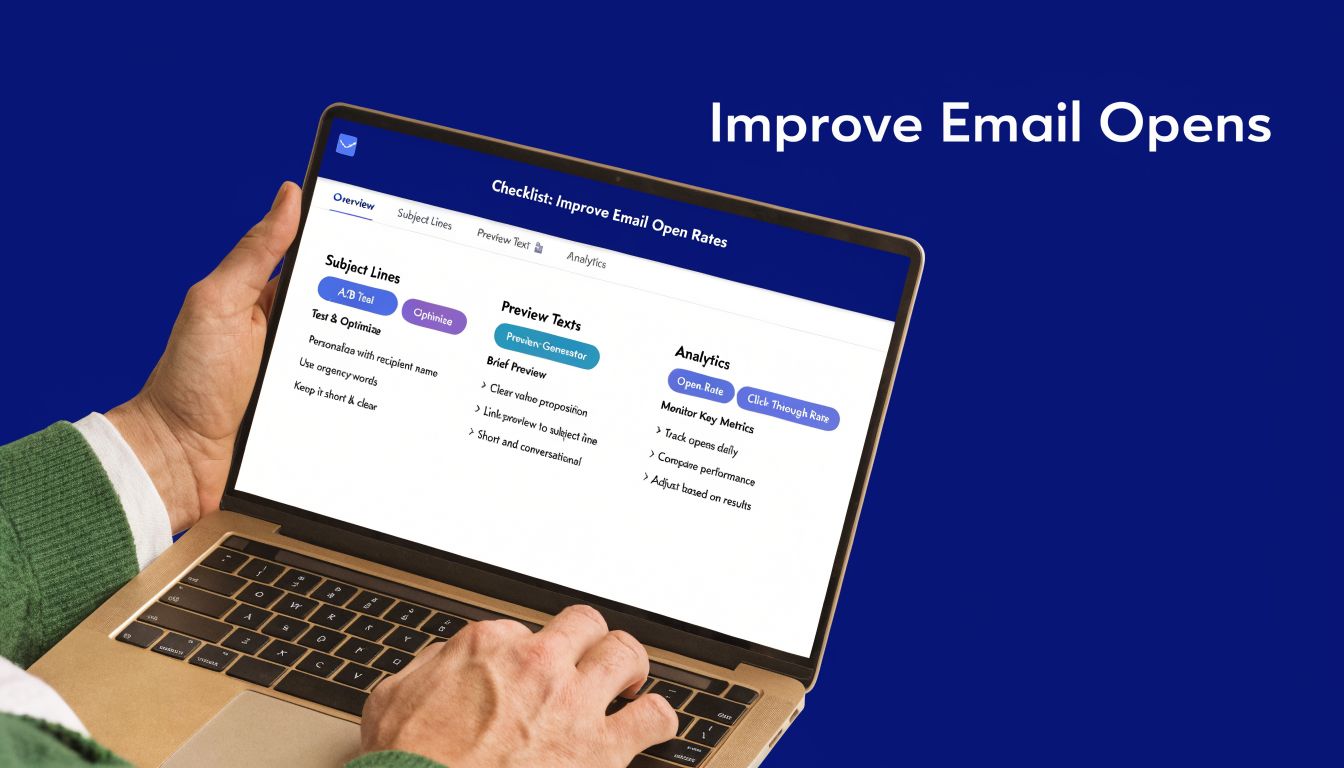
Before anyone reads your message, they see three things: sender name, subject line, and preview text. Teams often obsess over the second and ignore the other two.
Run structured tests around:
-
Sender identity
Test rep name versus rep plus company. In some markets, a recognizable company helps. In others, a human sender lowers resistance. -
Subject line framing
Try a direct statement against a simple question. Keep the topic grounded in the buyer’s world, not your offer. -
Preview text
Make it carry the reason for the email. Don’t waste it on filler or default copy.
Fix list quality before rewriting copy
Managers often coach reps on messaging when the deeper issue is list quality. If the wrong people are in sequence, or stale contacts keep soaking up volume, your benchmark won’t mean much.
Use a basic hygiene cadence:
- Remove invalid and bouncing contacts so delivered volume reflects real opportunity.
- Review low-engagement segments and decide whether they need different messaging or should be suppressed.
- Separate named accounts from broad prospecting lists so performance comparisons stay honest.
This is also where sequence discipline matters. If the team is guessing on step timing, thread structure, and follow-up logic, open rate analysis gets noisy fast. A simple reference for tightening the process is this article on tips for making a email candence.
Personalize beyond mail merge
Basic merge tags are fine. They’re not strategy.
What tends to improve opens is personalization with actual buyer meaning. Instead of “saw you work at X,” use something specific to the account or role. It could be a hiring push, a leadership change, a product launch, or a strategic initiative that creates urgency.
A practical rep checklist:
- Reference a concrete business event rather than generic company growth.
- Tie the event to a likely problem the buyer owns.
- Keep the first email narrow so the prospect can understand the relevance in seconds.
Manager’s filter: If the same opener could be sent to fifty accounts with only the company name swapped, it probably won’t earn a strong open.
Measure each test in sequence, not in isolation. You’re looking for patterns by segment, motion, and timing. That’s how a team moves from random improvement to repeatable performance.

“The Business Development team gets 80 to 90 percent of what they need in 15 minutes. That is a complete shift in how our reps work.”
Andrew Giordano
VP of Global Commercial Operations, Analytic Partners
The Unscalable Limit of Manual Personalization
Manual personalization works. It just doesn’t scale well enough for common scenarios.
A strong rep can research an account, find a trigger, connect it to a stakeholder priority, and write a thoughtful email. The problem is volume and consistency. Once the book of business gets large, that process breaks. Reps revert to broad templates because they have meetings, forecasts, CRM hygiene, internal updates, and too many accounts to monitor properly.
That’s the hidden tax in most outbound programs. Not laziness. Manual research capacity.
Where manual effort hits the wall
The sequence might look personalized because it includes a company name, title, and one line from LinkedIn. Buyers see through that fast. It’s still generic outreach dressed up as customization.
The harder part is finding a live reason to email now. That means spotting signals such as:
- An executive move that changes priorities or process
- A funding event that creates pressure to scale
- A hiring pattern that suggests a new initiative
- A public statement that reveals strategic direction
Most reps won’t catch those consistently across all target accounts. They can’t. The work is too fragmented.
Why signal-based personalization changes the game
Count’s market summary points to the gap clearly. It notes that generic personalization can improve opens by 15% to 20%, while hyper-relevant, signal-triggered outreach tied to events like funding or executive hires has the potential to lift B2B sales open rates by 30% or more. That’s the underserved opportunity in modern outbound because it shifts the message from “hello from a vendor” to “this is timely and specific.”
That’s where tools built around account signals start to matter. Platforms such as Clay, Common Room, and personalized cold email tools at scale approaches can help teams operationalize relevance instead of relying on hero reps.
One example is Salesmotion, which uses three AI agents around target accounts. A Research Agent builds structured account context from public sources. A Signal Agent watches for changes worth acting on. A Prospector Agent turns that context into outreach sequences tied to actual events and stakeholder priorities. That setup addresses the specific reasons opens stall: weak timing, vague relevance, and inconsistent account prep.
The real ceiling on outbound performance usually isn’t copy quality. It’s how often the team can show up with a credible reason to be in the inbox today.
This is the strategic shift. Don’t ask reps to “personalize more.” Build a system that surfaces the right trigger, explains the so-what, and makes relevant outreach repeatable.
From Open Rates to Real Opportunities
The best benchmark in this whole category doesn’t come from cold outbound. It comes from emails people want. Top-performing newsletters can exceed 62% open rates, and welcome emails often reach 80% to 90% or more, according to the newsletter benchmark summary at GlueLetter. The lesson is simple. When the recipient expects value and sees immediate relevance, opens climb.
That’s why chasing open rates alone is a dead end. The key question isn’t how to trick more people into opening. It’s how to make the email feel timely, legitimate, and useful before they even click.
The mindset shift that matters
Sales managers should coach teams away from vanity-metric thinking:
- Stop rewarding volume without context
- Stop treating subject lines as the whole strategy
- Stop reviewing open rates without pipeline follow-through
Open rates for emails still matter. They tell you whether your message earned initial attention. But relevance is what creates the conditions for that attention. If your team wants a broader view of email as a growth channel, this piece on unlocking email's B2B growth potential is a useful complement to a sales-led perspective.
For teams trying to turn opens into actual conversations, the next step is usually better timing and better follow-up. This guide on how to rengage a prospect via email is useful when an account has shown signs of life but hasn’t moved yet.
The strongest teams don’t build their outbound motion around “getting the open.” They build it around becoming relevant at exactly the moment the buyer is most likely to care. Higher open rates follow from that. Better meetings do too.
If your team is still relying on reps to manually track account changes, piece together context, and write timely outreach from scratch, that’s a hard ceiling on relevance. Salesmotion gives revenue teams a way to monitor account signals, generate actionable context, and turn those triggers into outreach workflows without adding more manual research time to every rep’s day.