You're probably living in the gap between too much activity and not enough clarity. The rep has a full pipe of accounts, the inbox is noisy, the CRM is only half current, and the “personalized” sequences still sound like they were written by someone who glanced at a website and hit send. That's where an outreach platform earns its place, not as a fancy sender, but as the system that helps teams decide what to say, to whom, through which channel, and at what moment.
The category has matured fast. Outreach, one of the best-known vendors, was founded in 2014 and was estimated at $300.8 million ARR with a $4.4 billion valuation in 2024, which tells you this isn't a niche productivity tool anymore, it's a revenue infrastructure category (Latka's Outreach company profile). Outreach's own current positioning describes it as an agentic AI platform for revenue teams, and that's the right mental model for 2026. The question isn't whether a team can send emails. It's whether the platform can turn signals into timely, relevant action without burying reps in manual prep.
Why Outreach Platforms Exist in the First Place
Monday morning usually starts with the same mess. A sales manager has a stack of accounts to review, each account has multiple stakeholders, and the rep needs to decide whether the next touch should be email, phone, LinkedIn, or text. On top of that, someone in RevOps wants clean activity reporting, a CSM needs a renewal save plan, and leadership still expects pipeline to move because “we sent enough touches.”
That's the manual research tax. Reps spend too much time stitching together fragments, recent hires, funding news, competitor mentions, job postings, and stale CRM notes, then they have to guess which fragment matters enough to mention. Good outreach doesn't start with a template. It starts with a reason.
The category exists because timing beats volume
Modern outreach software is built around measurable multichannel execution, not simple email blasts. Industry and vendor documentation describe sequences across email, phone, LinkedIn, and text, with routing based on behavior and reporting that tracks open rates, reply rates, meetings booked, and sequence performance (ZoomInfo's outreach software overview). Outreach's reporting also measures delivered, opened, clicked, and replied outcomes, which shows how the category has shifted toward performance rather than volume alone.
That shift matters because a rep can send a lot and still miss the moment. A new VP hire, a competitor mention on an earnings call, or a job posting that maps to your product can be the difference between a ignored sequence and a reply. The platform exists to catch those moments and convert them into a message that feels relevant, not random.
Practical rule: if the platform can't improve both what you say and when you say it, it's not solving outreach, it's just automating busywork.
The best way to think about the category is as a signal-to-message loop. Signals come in, the platform decides what matters, and the rep gets a message that reflects the account's current reality. That's why modern outreach platforms sit closer to revenue operations than to email marketing.
A useful companion read on the strategic side of this workflow is what an outreach strategy looks like in practice, because the platform only works when the motion behind it makes sense.
Skip the comparison fatigue?
If you're shopping for a sales intelligence tool, here's the short version.
Salesmotion combines account intel, buying signals, verified contacts, and AI-drafted outreach in one tool. From $85/mo, live in an hour, no annual contract.
What an Outreach Platform Actually Does
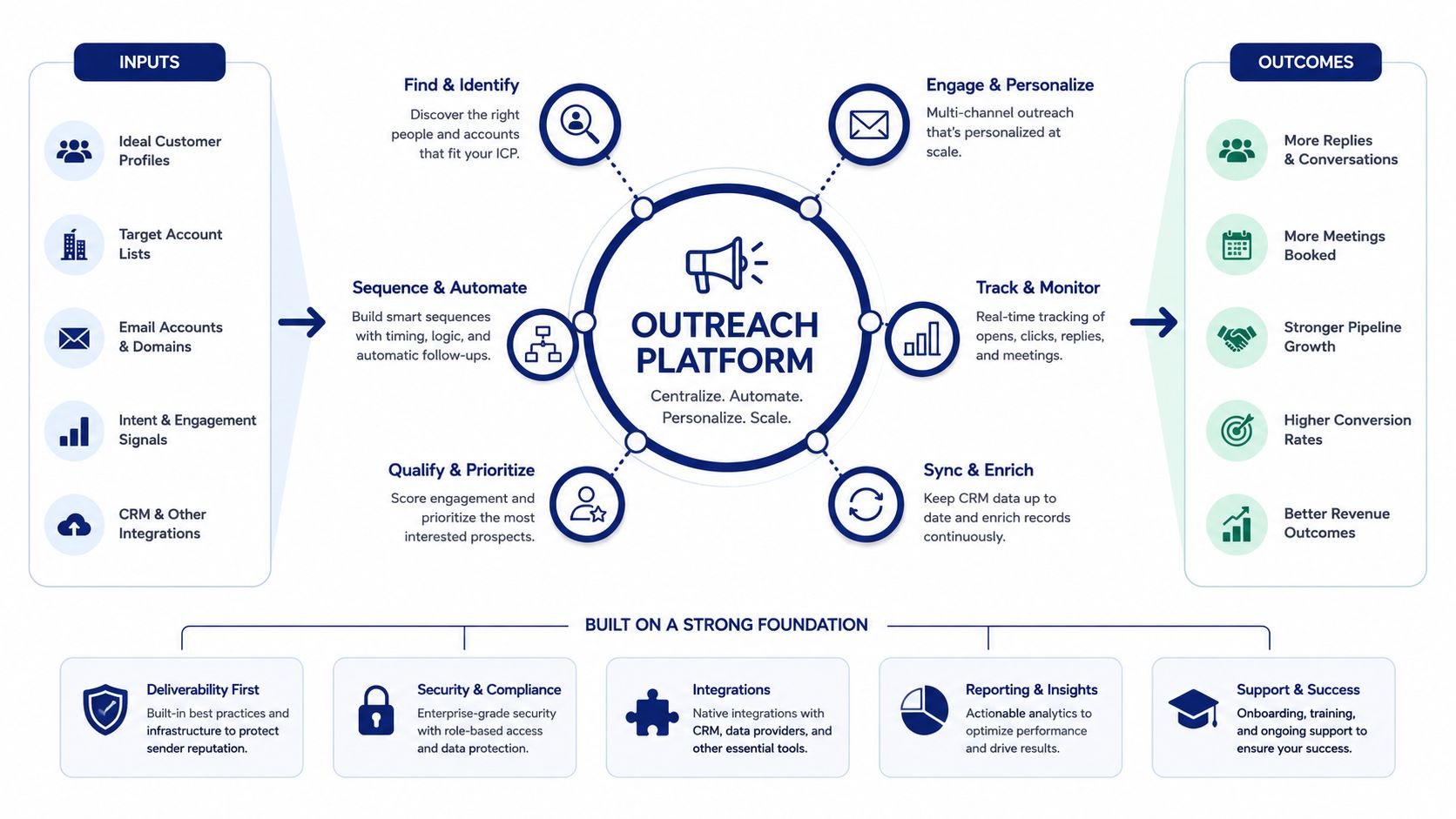
Think of an outreach platform like a delivery van with a smart dispatcher. It doesn't just carry packages, it decides which package goes to which address, which route makes sense, and what happens if nobody answers the door. In sales terms, it chooses who gets contacted, through which channel, in what order, and with which message, then tracks whether the prospect engaged.
The basic building blocks are straightforward once you strip away the jargon. A sequence is the ordered set of touches. A touchpoint is the individual email, call, LinkedIn message, or text. Engagement events are the signals that tell the system someone opened, clicked, replied, or booked. Outcomes are the business results that matter, such as meetings and pipeline movement.
The workflow sits between the rep and the prospect
A rep shouldn't have to remember every follow-up or manually switch channels by hand. The platform handles that sequence logic, so the rep can focus on the quality of the message and the next best action. That's why these tools live between a seller's brain and the places buyers respond, their inbox, calendar, and social channels.
The multichannel part matters. Industry guidance describes outreach as a mix of email, phone, LinkedIn, and SMS with CRM syncing and engagement tracking in one workflow (SalesHive's overview of B2B outreach platforms). In practice, that means a rep can open a record, see the right cadence, and know the next step is already queued.
For a more consumer-facing example of channel sequencing, browse Twitter lead generation shows how direct messaging logic changes once outreach moves beyond one inbox. The channel may differ, but the operating principle is the same, the system decides the next touch based on behavior.
What makes this category valuable isn't the calendar of sends. It's the decision layer between signal and sequence. Without that layer, reps still end up guessing. With it, they can act from context instead of memory.

“Salesmotion is instrumental in helping me prioritize net-new accounts, understand their strategic initiatives, and cover more ground. With a lot of green-field accounts, I'm heavily leaning on the AI insights to tier my accounts and focus my time. The platform is incredibly intuitive and easy to use.”
Rob Webster
Enterprise Account Executive, Synthesia
How Outreach Platforms Differ from CRM, Sales Engagement, and Sales Intelligence
A lot of buyers get tripped up. The tools sit near each other, the demos overlap, and vendors often use the same language for different jobs. The cleanest way to separate them is to ask what each one owns.
CRM owns the system of record. Sales engagement owns the cadence execution. Sales intelligence owns data enrichment and signals. An outreach platform sits at the intersection, coordinating execution against an account view that's already been enriched and scored.
| Category | Owns | Does not own |
|---|---|---|
| CRM | Pipeline truth, account records, deal stages, activity history | Sequencing logic, signal prioritization, personalized outreach drafting |
| Sales engagement platform | Cadence execution, task queues, multichannel sending, follow-up automation | Full system-of-record governance, deep account intelligence, enrichment breadth |
| Sales intelligence platform | Contact and company data, event signals, account research, account context | Full outbound execution, sequence management, pipeline record ownership |
| Outreach platform | Orchestrated execution against signals, engagement tracking, workflow alignment | Replacing CRM, acting as the sole data system, owning every enrichment source |
CRM still matters because it is the record of truth. Outreach's CRM connection overview says data can be created and synced both to Outreach and back to the CRM, which is useful, but it also means governance matters because sync errors can move both directions (Outreach CRM connection overview). That's why no serious team should treat an outreach platform like a CRM replacement.
The practical boundary a sales manager should remember
Sales engagement tools are good at the send. Sales intelligence tools are good at the why now. CRM is good at the what happened. The outreach platform becomes valuable when it helps connect those three pieces without making the rep juggle separate tabs and manual judgment.
Outreach's own platform positioning shows how far the category has expanded, from simple sequencing into prospecting, deal management, forecasting, coaching, and account expansion (Outreach.ai). That expansion reflects buyer expectation, the tool should support the broader revenue workflow, not just blast messages.
If you're comparing the category directly, a useful companion read is this overview of sales engagement platforms, because the overlap is real, but the ownership boundaries are what keep teams from overbuying or underutilizing the stack.
The mistake isn't choosing the wrong logo. The mistake is assuming one tool can do every job equally well.
Core Features and Must-Have Capabilities
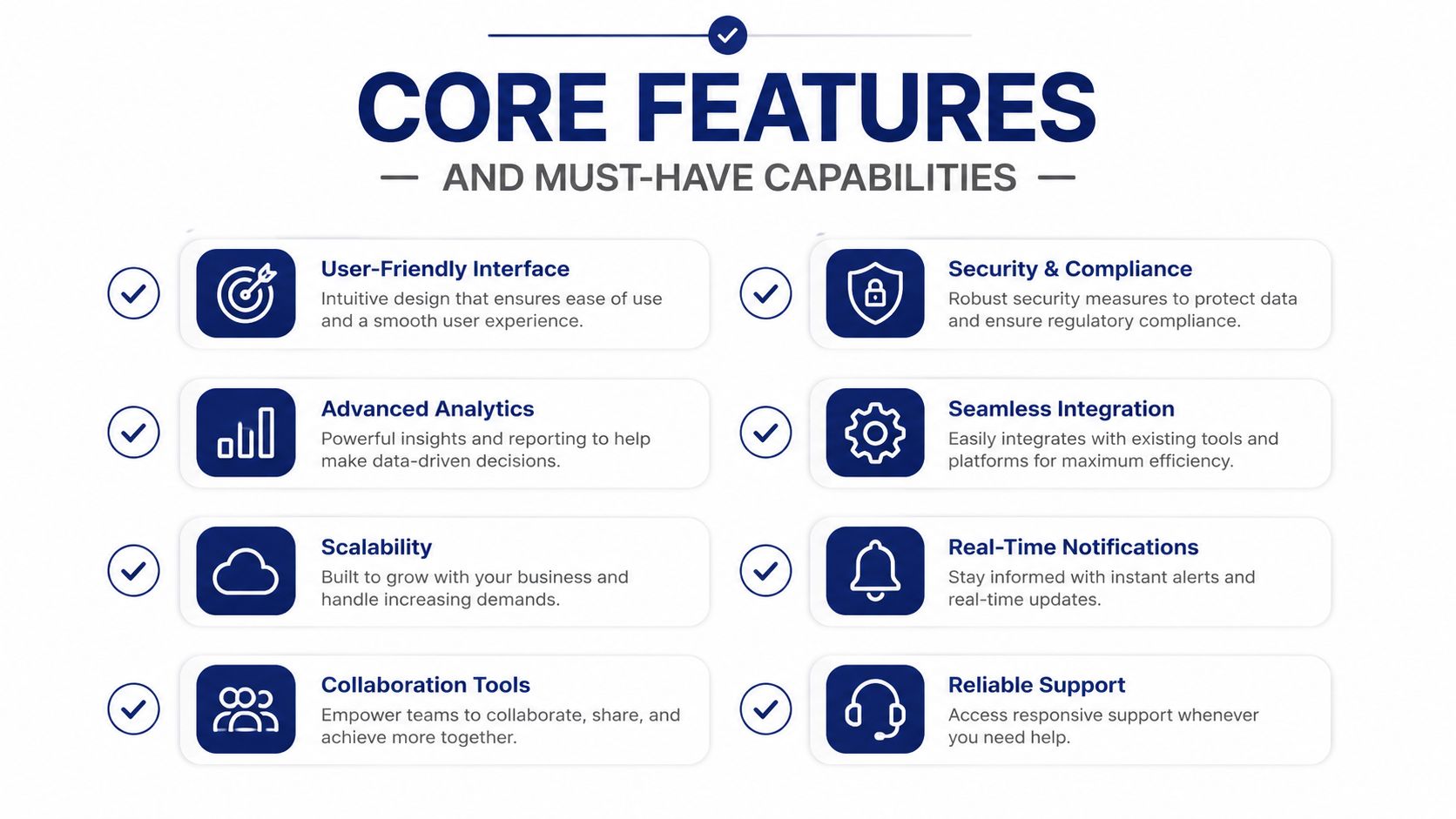
A solid outreach platform should make a rep faster without making them sloppier. That sounds obvious, but plenty of products sell convenience while increasing noise. The best systems reduce the time between signal and action, while keeping admins in control of data quality and message governance.
Start with the capabilities that change rep behavior
A buyer should expect multichannel sequence builders that can run email, phone, LinkedIn, and text in one motion. That matters because reps don't sell through one channel anymore, and the platform should keep the cadence coherent instead of turning it into a pile of disconnected tasks.
Next comes branching logic. If a prospect replies, clicks, or books, the platform should adjust the next step. If the signal is strong, the cadence should change. If the signal is weak, the rep shouldn't keep sending the same pattern and hoping for a different result.
Bi-directional CRM sync is essential in a serious revenue stack. It reduces drift between seller workflow and the system of record, but it also means operations needs guardrails around field mapping and ownership. A platform that looks simple in a demo can become messy fast if it can't sync cleanly.
Good admin rule: if a workflow can't be explained to a new manager in one whiteboard session, it will eventually create reporting debt.
The intelligence layer is the real filter
The feature people often overvalue is the shiny AI copy generator. That can help with speed, but it rarely fixes a weak strategy. A good subject line writer without signal context is still writing blind. The better feature is the intelligence layer that attaches every touchpoint to a real account event, a hire, a funding round, a competitor mention, a product launch, or a job posting.
For RevOps, API access matters because it lets the outreach platform feed objects like prospects, opportunities, sequences, mailings, calls, tasks, and analytics into broader workflow automation (Outreach platform SDK objects). That scope is what makes the platform usable in serious account orchestration, not just rep-level execution.
The reporting layer should show more than send volume. It should let managers compare sequence performance, channel performance, and engagement outcomes in a way that maps back to pipeline reality. If a vendor can't explain how it surfaces that, keep looking.
A platform that only helps write more messages is a content tool. A platform that helps teams send the right message after the right signal is the one that earns budget.

“The Business Development team gets 80 to 90 percent of what they need in 15 minutes. That is a complete shift in how our reps work.”
Andrew Giordano
VP of Global Commercial Operations, Analytic Partners
How Signal-Driven AI Agents Change the Outreach Game
Change in 2026 isn't that AI writes faster. It's that AI can sit upstream of the message and help decide what deserves a message at all. That's why the most useful outreach systems are moving from template automation toward signal-driven agents that do research, watch for change, and draft outreach from actual account context.
One useful model comes from Salesmotion's three-agent setup. The Research Agent builds account briefs from public sources and turns scattered information into a structured view. The Signal Agent monitors accounts around the clock and flags events worth acting on. The Prospector Agent then turns those signals into outreach sequences grounded in an actual trigger, not a mail-merge placeholder. Salesmotion's own account intelligence positioning describes this flow as moving from zero context to a ready-to-send email in the time it takes to read it (Salesmotion's AI agents for sales teams).
Research, signal, and message belong in one loop
The value of this model is not just automation. It's compression. A rep used to spend hours pulling together recent news, stakeholder context, and talk tracks. Now the system can synthesize that groundwork and hand the rep a draft that sounds informed because it is.
The second piece is what the Signal Agent does with timing. The same platform can notice a new executive hire, a hiring spike, or a competitor reference, then explain why the event matters and what to do next. That's the difference between generic monitoring and useful monitoring.
A related workflow challenge appears in Sift AI's multi-agent workflow guidance, especially around cross-channel triage. The lesson transfers cleanly, the value is in routing the right trigger to the right action, not in stacking more automation for its own sake.
AI should narrow noise, not amplify it
The hardest operational problem is avoiding alert fatigue. Good AI doesn't surface every possible signal. It filters, prioritizes, and hands reps the few moments with the best chance of a response. That's especially important when the team is already drowning in notifications.
Useful standard: if the agent can't explain the “so what” in plain language, the signal probably isn't ready for a rep.
The strongest outreach systems use AI to improve judgment, not replace it. They make the message more specific, but they also make the timing more defensible. That combination is what changes outreach from a repetitive task into an account-aware motion.
An Evaluation Checklist for Picking the Right Outreach Platform
Most demos sound good because they show the send, not the system. A better evaluation starts with five operational questions. If the vendor can't answer these clearly, the platform is probably better at presentation than performance.
The five questions that separate useful from flashy
Does it improve signal-to-message timing?
A strong answer describes how a trigger turns into a workflow, not just how a template gets sent. A weak answer talks about scheduling and subject lines.
Can it show which channels change behavior by segment?
A good answer should show segment-level comparisons or at least explain how the team can compare channels by audience type. A weak answer treats all replies as equal and all channels as interchangeable. If you want broader buying context, this buyer's guide to AI sales tools is worth a look.
How does it govern alert fatigue?
Good systems let admins suppress low-value signals, route alerts by ownership, and decide what becomes a task versus an FYI. Weak systems flood Slack and email until the team stops trusting alerts.
What does bi-directional CRM sync look like in admin?
The right answer covers field mapping, conflict handling, and ownership rules. The wrong answer says “it syncs automatically” and leaves out the governance details.
What controls exist around AI-generated copy?
A serious vendor explains how reps review, edit, and approve drafts before they go out. A shallow one focuses on how fast it can generate wording and ignores review discipline.
Don't overvalue the demo that writes the prettiest email
The two common mistakes are simple. Teams over-index on flashy AI demos, then underweight data hygiene and admin controls. That usually leads to a tool nobody trusts or a workflow nobody wants to maintain.
A platform should make outreach more relevant, but it also has to survive real operations. That means CRM integrity, clear ownership, and message governance matter just as much as personalization. If the platform doesn't help you run the motion cleanly after the demo, it'll collect dust after the pilot.
The right purchase decision is less about feature count and more about whether the tool can run the actual job your team needs done, every day, without creating hidden work for RevOps.
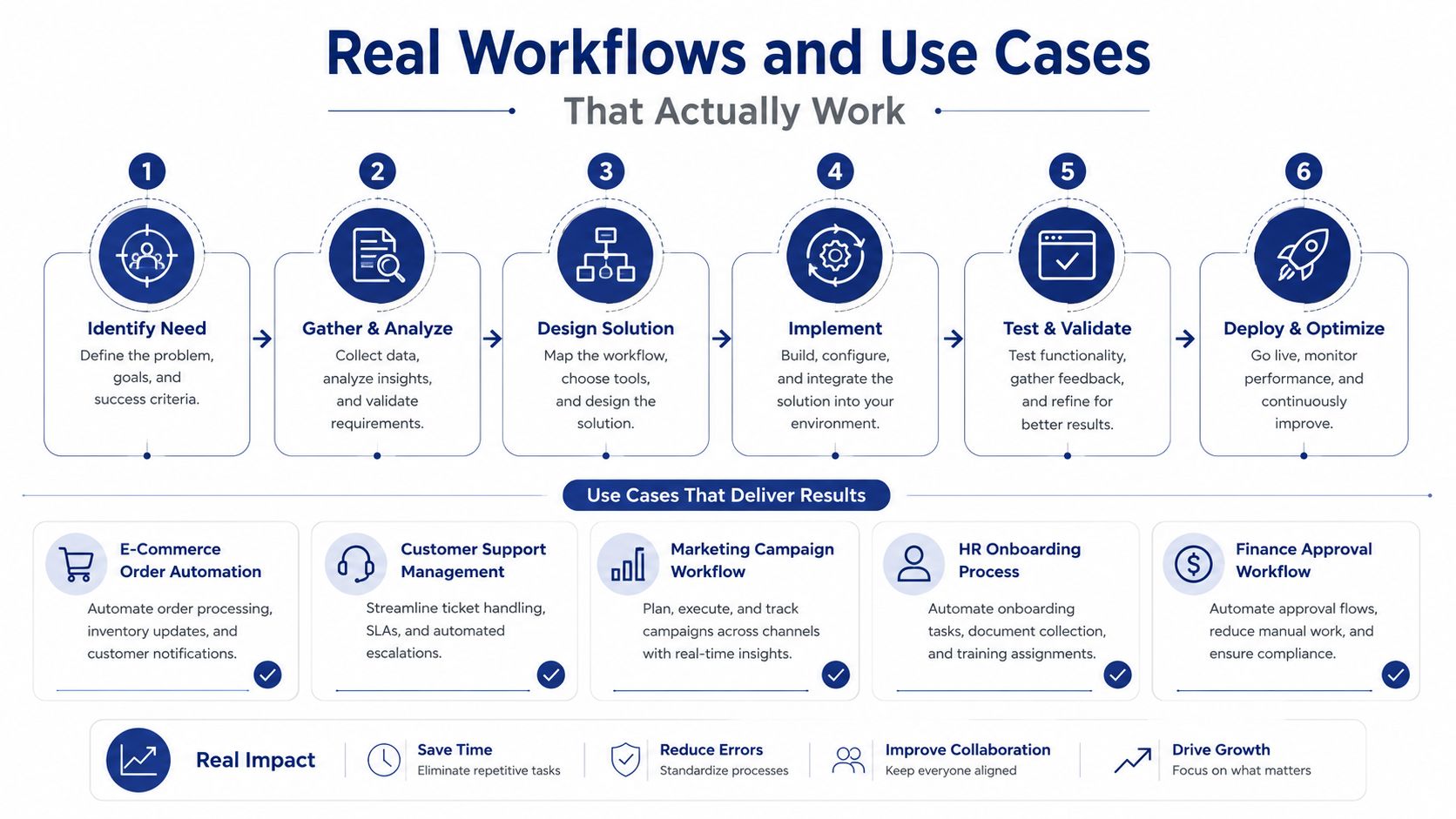
Real Workflows and Use Cases That Actually Work
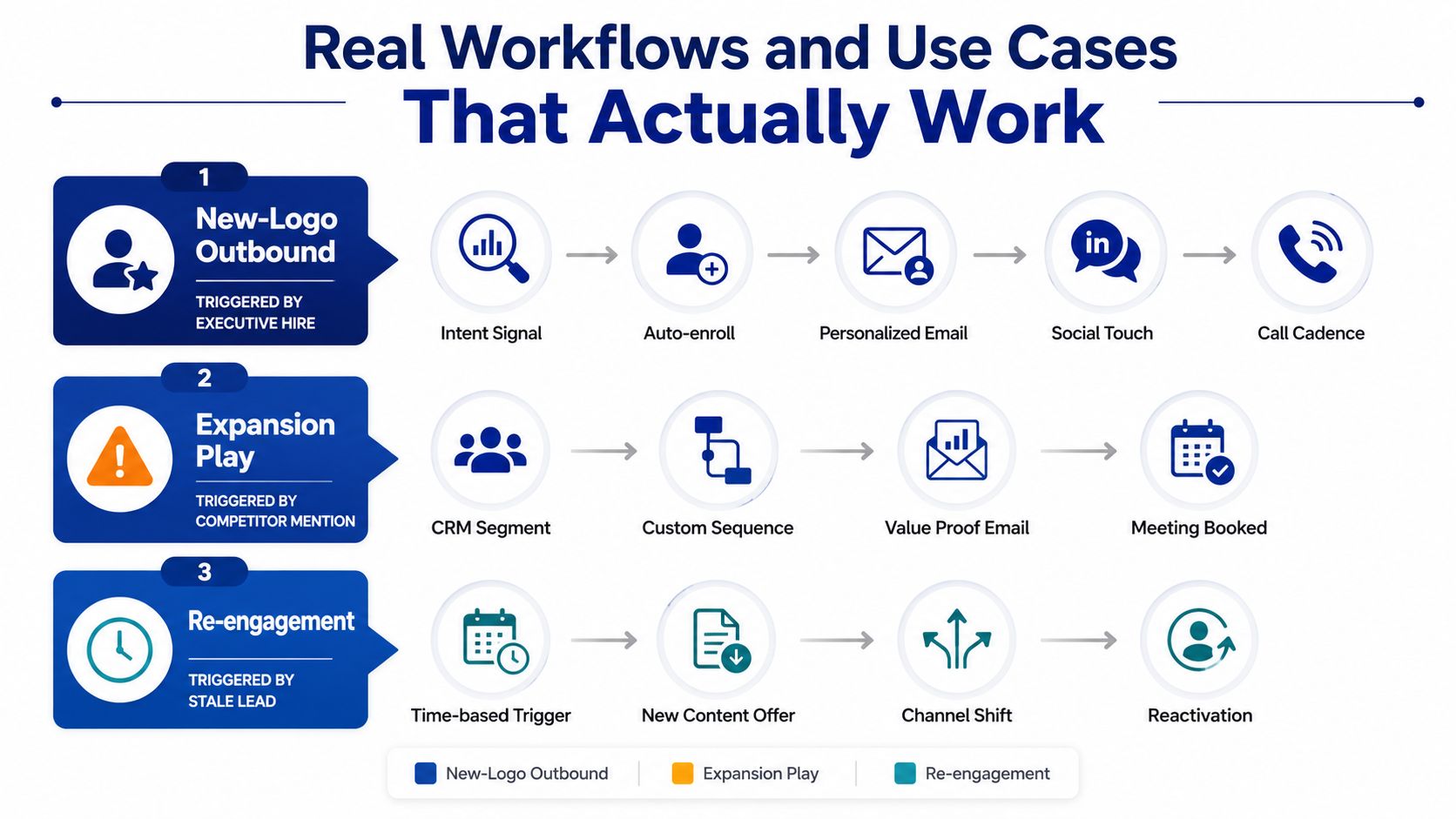
The cleanest way to judge an outreach platform is to watch it in motion. A new-logo motion, an expansion play, and a re-engagement sequence each need different triggers, different logic, and different language. If the platform can handle those three, it can usually handle the rest of the book.
New logo outbound starts with a real trigger
A rep notices an executive hire at a target account. The signal hits the platform, the account is auto-enrolled, and the draft references the change in leadership rather than opening with a generic intro. The best version of this motion doesn't sound clever, it sounds informed.
That matters because the prospect can tell the difference. A message that says “I saw the company is growing” sounds like a template. A message that names the specific role, the likely initiative, and the business implication sounds like prep work. That's the point.
Expansion and re-engagement need different logic
An expansion play often starts with a competitor mention in an earnings call or a change in internal priorities. The platform should help the rep shift from prospecting language to value proof, then narrow the sequence around the use case that matters most to the customer.
Re-engagement works differently. A stale lead with no response shouldn't get the same cadence forever. A time-based trigger, a new content offer, and a channel shift can make the conversation feel fresh without being pushy. If the account has gone quiet, the platform should make it easy to change the angle instead of just increasing the send count.
One way to think about these motions is as three different jobs.
- New-logo outbound: use an external trigger, then lead with a reason to care.
- Expansion: use a customer-side change, then show why the existing relationship creates an opening.
- Re-engagement: use inactivity as the trigger, then introduce a new hook instead of replaying the old one.
The workflows work when the trigger, message, and channel fit the moment. When they don't, more automation just produces more ignored messages. The platform's job is to make the right pattern easy to repeat.
Implementation Best Practices and the KPIs That Prove It Works
Rollout should feel controlled, not heroic. Start by auditing the current sequences, then map each ICP to the signals that matter. If the team can't explain why a given signal should trigger outreach, it probably shouldn't.
From there, tighten admin governance around CRM sync and alert routing. Slack and email alerts are useful only when they point the right rep to the right motion. A platform that shouts at everyone is not operationally mature, it's just loud.
Measure the metrics that reflect real behavior
The dashboard should center on reply rate, meetings booked per signal, time-to-first-touch after a trigger, and pipeline influenced by agent-generated outreach. Those are the measures that tell you whether the platform is helping reps act on the right moment, not just send more messages.
Activity volume still matters operationally, but it doesn't prove impact on its own. A team can send more and still miss the opportunity if the timing and relevance are off. That's why the platform has to be judged on signal quality and response quality together.
A practical rollout pattern is to expand account by account instead of flipping the whole org at once. That gives RevOps time to tune alerts, sequence logic, and review rules before the motion spreads. It also gives managers a chance to coach the change instead of explaining a broken dashboard later.
If you're picking a platform this quarter, use a simple 30-day test. Audit your top sequences, map the signals, define your admin rules, and launch on a small account set. By day 90, you should know whether the platform is helping your reps reach the right people with a message that fits the moment.
If you want a practical way to turn account signals into cleaner outreach without adding more manual research to your team's week, start a pilot with Salesmotion.