TL;DR: The highest-converting B2B teams don't run more campaigns — they respond to trigger events within 48 hours while competitors take days. Every strategy in this guide is organized around that principle: detect the signal, act fast, be relevant. The common thread across all 10 is timing, not volume. See how teams automate signal detection.
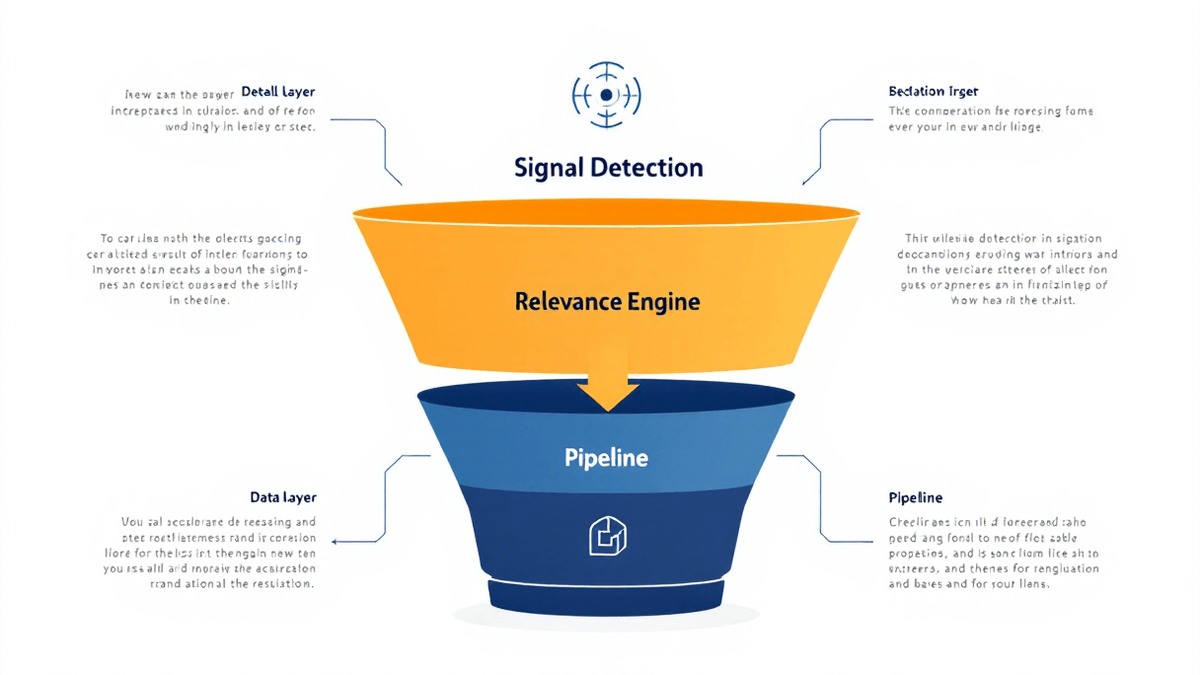 The demand gen engine: detect signals, create relevance, convert to pipeline.
In B2B sales, the gap between a generic pitch and a relevant conversation determines your success. Too many teams get stuck in a cycle of manual research, weak messaging, and signal overload. Hitting your quota comes down to how relevant and timely your outreach is.
This guide breaks down 10 proven demand gen strategies with execution steps, KPIs, and vertical-specific examples. For teams looking to build a foundation, it’s helpful to explore the core principles of how to generate business leads for sustainable growth. We’ll build on that by detailing specific, repeatable motions that turn market signals into meetings.
Forget generic advice. For each of the ten strategies, we'll break down:
- What it is: A clear, simple definition.
- Why it works: The strategic value behind the approach.
- Key Signals: The specific triggers that tell you it's time to act.
- Execution Steps: A concrete, step-by-step guide.
- Measurement KPIs: The key metrics to track for success.
- Vertical-Specific Examples: How to apply the strategy in different industries.
Get ready to implement demand gen strategies that turn real-world account activity into a measurable, predictable pipeline.
1. Account-Based Marketing (ABM)
Account-Based Marketing (ABM) flips the traditional demand gen funnel. Instead of casting a wide net, ABM focuses your sales and marketing resources on a select list of high-value target accounts. You treat each account as its own market, requiring personalized messaging and tight team alignment. This is one of the most effective demand gen strategies for B2B companies with complex sales cycles.

Why It Works
ABM concentrates your firepower where it matters most, leading to higher conversion rates and larger deals. By aligning sales and marketing around the same accounts, you eliminate wasted effort and create a seamless buying experience. Tech consulting firms, for example, often see 60-70% higher win rates on target accounts by using this hyper-focused strategy.
How to Execute Your ABM Strategy
- Identify & Tier Your Target Accounts: Start small. Select 10-50 high-value accounts based on your Ideal Customer Profile (ICP). Group them into tiers (e.g., Tier 1 for highly personalized one-to-one outreach; Tier 2 for one-to-few campaigns).
- Align Sales & Marketing: Both teams must agree on the target list, messaging, and success metrics. Create account-level playbooks that detail the coordinated plan. For a step-by-step framework, see our outbound ABM playbook.
- Use Account Intelligence: Leverage platforms to automate the detection of buying signals and trigger personalized outreach. A key signal might be a target account actively researching your competitors.
- Create Personalized Content: Go beyond just adding a name to an email. Develop content like case studies or webinars that speak directly to a target account's specific pain points.
- Measure and Optimize: Track engagement across all touchpoints to see which accounts are showing true buying intent. Focus on account-level metrics, like pipeline influence and win rate, not just individual lead scores.
See Salesmotion on a real account
Book a 15-minute demo and see how your team saves hours on account research.
2. Trigger-Based Outbound
Trigger-based outbound ditches generic cold outreach for contact based on real-world events. Instead of reaching out randomly, your team engages prospects the moment a catalyst creates a new need or urgency. These triggers can include funding announcements, new executive hires, or product launches. This approach is one of the most potent demand gen strategies because it transforms a cold call into a timely, relevant conversation.

Why It Works
This strategy aligns your outreach with your prospect's immediate context, dramatically increasing reply rates. When a company gets a new round of funding, its priorities shift, opening a window of opportunity. Salesloft, for instance, reports a 40% improvement in reply rates using trigger-based sequences. This timeliness builds instant credibility and positions your team as insightful partners, not just another vendor.
How to Execute Your Trigger-Based Strategy
- Prioritize Your Buying Signals: Don’t track everything. Identify the top 3-5 triggers that create the strongest need for your solution. For a cybersecurity firm, a competitor's data breach is a top-tier trigger.
- Build a Rapid-Response Playbook: Create pre-built email and call script templates for your most common triggers. This lets reps personalize and send outreach within minutes of a signal.
- Integrate Signals into Your Workflow: The best signals are useless if they are hard to access. Pipe trigger alerts directly into the tools your sales team already uses, like Slack or your CRM.
- Combine and Contextualize Triggers: A single signal is good, but a combination is better. A sequence that references a recent funding announcement and a subsequent key hire tells a powerful story.
- Track and Optimize Signal Performance: Not all triggers are equal. Monitor which signals lead to the highest meeting and conversion rates. This data will show you where to focus your resources for maximum impact.

“The Business Development team gets 80 to 90 percent of what they need in 15 minutes. That is a complete shift in how our reps work.”
Andrew Giordano
VP of Global Commercial Operations, Analytic Partners
3. Intent Data & Predictive Scoring
Intent data and predictive scoring are powerful demand gen strategies that use machine learning to identify which accounts are most likely to buy. This approach combines behavioral signals (like competitor website visits) with firmographic data to rank accounts. By scoring potential customers, your teams can prioritize high-opportunity targets, improving efficiency and shortening sales cycles.

Why It Works
This strategy replaces guesswork with data-driven precision, letting your teams focus on accounts that are actively in-market. Instead of cold outreach, you engage prospects who are already researching solutions like yours. Enterprise software vendors, for example, often report 3-4x higher win rates on high-intent accounts because they can tailor outreach to the prospect's real-time needs.
How to Execute Your Intent Data & Scoring Strategy
- Build Your Data Foundation: Start with your first-party data. Analyze CRM history and customer engagement to understand the characteristics of your best customers. This creates a solid baseline for your model.
- Layer in Third-Party Intent Signals: Integrate third-party intent data from providers like 6sense or Demandbase. This data reveals which accounts are researching relevant keywords, competitors, or topics.
- Develop & Validate Your Scoring Model: Create a model that weights different signals based on their correlation with success. For example, a visit to your pricing page might be weighted more heavily than a blog view. Validate the model against sales results quarterly.
- Integrate Scoring into Daily Workflows: Make scores easily accessible in your CRM. Create dashboards that highlight top-priority accounts, triggering specific sales plays and marketing campaigns.
- Measure and Refine: Track metrics like pipeline velocity and conversion rates from high-intent accounts. Success is measured by how effectively your scoring model predicts and influences revenue.
4. Content Marketing & Thought Leadership
Content marketing and thought leadership are foundational demand gen strategies focused on creating and distributing valuable content to attract an audience. Instead of directly pitching products, this approach builds authority and trust by educating prospects on their pain points. By providing genuine value through research, case studies, and webinars, you position your brand as the go-to expert.
Why It Works
This strategy works because modern B2B buyers self-educate online before ever speaking to a sales rep. High-quality content intercepts them during this discovery phase, building credibility early. For example, professional services firms that consistently publish points of view on key industry trends can attract 30-50% more inbound qualified leads, while SaaS companies using targeted case studies often see 40-60% higher conversion rates from those prospects.
How to Execute Your Content & Thought Leadership Strategy
- Focus on Buyer Problems: Build your content calendar around your customer's priorities, not your product's features. Use signal data to understand what’s happening in your target accounts to inform what you write about.
- Create Vertical-Specific Content: Develop assets that address the unique challenges within your target industries. Generic content rarely resonates with sophisticated buyers.
- Anchor with Original Research: Combine your thought leadership with hard data. Commissioning original research provides a credible, shareable asset that sets you apart from opinion-based content.
- Repurpose and Distribute: Maximize your content's impact by repurposing it across multiple formats. A research report can become a webinar, blog posts, infographics, and social media updates.
- Measure Pipeline Influence: Track content performance beyond simple clicks. The ultimate goal is revenue, so measure how specific assets influence pipeline creation, accelerate deal velocity, and contribute to closed-won deals. For a comprehensive playbook, see how to improve pipeline through content.

“The moment we turned on Salesmotion, it became essential. No more hours on LinkedIn or Google to figure out who we're talking to. It's just there, served up to you, so it's always 'go time.'”
Adam Wainwright
Head of Revenue, Cacheflow
5. LinkedIn & Social Selling
LinkedIn & social selling transforms your sales team from cold callers into trusted advisors. This approach leverages LinkedIn’s network to identify, connect with, and nurture prospects by building relationships. Instead of a hard sell, it focuses on establishing credibility and staying top-of-mind, making it one of the most effective demand gen strategies for modern B2B sales.
Why It Works
Social selling meets buyers where they already spend time researching solutions. It allows reps to build authentic connections and provide value before asking for a meeting. Sales teams using LinkedIn Sales Navigator, for example, often report 30-40% higher meeting conversion rates compared to cold email alone. By establishing thought leadership, you build trust that shortens sales cycles.
How to Execute Your LinkedIn & Social Selling Strategy
- Optimize Your Profile for Credibility: Your LinkedIn profile is your digital first impression. Use a professional photo, a value-driven headline (not just your job title), and a summary that speaks to your audience's pain points.
- Build Your Network Strategically: Connect with key decision-makers within your target accounts. Personalize every connection request to explain why you want to connect.
- Share and Engage with Valuable Content: Consistently share insightful content (2-3 times per week) that helps your audience. Engage with your prospects' posts by leaving thoughtful comments to build rapport.
- Use Sales Navigator for Intelligence: Leverage tools like LinkedIn Sales Navigator to research accounts, identify buying committee members, and monitor for signals like job changes.
- Personalize Your Outreach: When you reach out, make it relevant. Reference a recent post they shared, a company announcement, or a mutual connection. The goal is to start a conversation, not to pitch immediately.
- Integrate with Other Channels: Combine your LinkedIn activity with email and phone calls. A multi-channel approach significantly increases response rates.
6. Event Marketing & Sponsorships
Event marketing and sponsorships leverage industry conferences and trade shows to generate demand in a concentrated timeframe. Instead of reaching out one by one, events let you engage multiple stakeholders from many target accounts at once. This strategy involves attending, hosting, or sponsoring events to build brand visibility and accelerate pipeline. It remains one of the most powerful demand gen strategies for B2B, with trade shows in life sciences often driving 20-30% of a biotech company's annual pipeline.
Why It Works
Events create a unique, face-to-face environment that cuts through digital noise and accelerates trust. They offer direct access to engaged prospects who are actively seeking solutions. A well-executed sponsored speaking slot at a major industry event can increase executive visibility and generate a 40-60% uplift in subsequent inbound inquiries.
How to Execute Your Event Marketing Strategy
- Select Events Strategically: Don't just follow the crowds. Choose events based on the concentration of your Ideal Customer Profile (ICP). Prioritize one or two high-impact events over a dozen smaller ones.
- Plan Pre-Event Outreach: The real work starts before the event. Identify registered attendees from your target account list and schedule meetings in advance. Relying on booth walk-ups leads to low ROI.
- Equip Your Sales Team: Arm your team with account intelligence, key talking points, and specific objectives for every conversation. Use sales intelligence to prioritize who to engage with.
- Develop a Follow-Up Cadence: Before the event, map out your post-event follow-up plan. This should include a multi-touch sequence ready to deploy immediately after.
- Measure Pipeline Influence: Shift focus from vanity metrics like booth scans to pipeline influence and deal velocity. Track the long-term impact on revenue, not just immediate leads.
7. Outbound Email Campaigns & Cold Outreach
Outbound email campaigns involve proactively contacting potential customers who haven't expressed interest in your product. This strategy uses targeted email sequences to start conversations with prospects outside your existing pipeline. The goal is to move beyond inbound leads by engaging ideal customers, making it a cornerstone of many B2B demand gen strategies.
Why It Works
Effective cold outreach puts you in control of your pipeline. Instead of waiting for leads, you directly engage decision-makers with a relevant message. Pairing outbound with account research ensures every touchpoint is credible. Research from platforms like Outreach shows that multi-touch sequences combining email, LinkedIn, and phone calls can generate three times higher meeting rates than single-channel efforts. When done well, cold outreach can be a highly scalable and predictable revenue driver.
How to Execute Your Outbound Strategy
- Build a High-Quality List: Quality trumps quantity. Focus on a curated list of 100 highly targeted prospects who match your ICP rather than blasting 1,000 generic contacts.
- Develop a Compelling Hook: Your opening line is critical. Use account intelligence to create trigger-based hooks. For example, "I noticed you recently hired a new CTO, which often signals a shift in security priorities..."
- Personalize Your Message: Go beyond a
[First Name]tag. Reference specific company news or initiatives. Keep the initial email concise, ideally 3-4 sentences. - Create a Multi-Touch Sequence: Don't rely on a single email. Design a sequence of 4-7 touches across multiple channels like email and cold calls, spaced out over several weeks.
- Track and Optimize: Monitor metrics that drive revenue, like reply rate, meetings booked, and pipeline influence. A/B test your subject lines and calls-to-action to improve performance.
8. Strategic Partnerships & Channel Marketing
Strategic partnerships extend your demand gen efforts by leveraging the networks and credibility of other organizations. Instead of building every audience from scratch, you tap into existing relationships with vendors, resellers, and consultants to co-create demand. This approach is one of the most scalable demand gen strategies for companies looking to accelerate market penetration.
Why It Works
This strategy is a force multiplier for your sales and marketing teams. A trusted partner's recommendation can bypass sales objections and shorten sales cycles. For example, enterprise software vendors that partner with consulting firms like Deloitte often see 2-3x higher deal values than their direct sales channels because the partner provides strategic validation. It's about getting the right introduction from a source the buyer already trusts.
How to Execute Your Partnership Strategy
- Identify & Qualify Partners: Be selective. Identify partners whose ideal customer profile overlaps with yours but who are not direct competitors. One deeply integrated partner is worth more than ten superficial ones.
- Align Incentives & Goals: Establish clear, mutually beneficial terms from the start, including commission structures, lead sharing agreements, and joint success metrics.
- Invest in Partner Enablement: Your partners are an extension of your team, so equip them for success. Provide training, support channels, and marketing collateral. The easier you make it for them to sell, the more they will.
- Launch Joint Go-to-Market Activities: Collaborate on co-branded webinars, case studies, and events. Exploring powerful affiliate marketing strategies can also expand your reach.
- Measure and Manage: Track partner-sourced pipeline and revenue separately to calculate ROI. Implement regular check-ins to continuously refine the partnership and sharpen your joint messaging.
9. SEO & Organic Search
Search Engine Optimization (SEO) is a demand gen strategy focused on capturing inbound interest from buyers actively researching solutions on search engines like Google. It involves optimizing your website's content and technical structure to rank higher in search results. By doing so, you drive sustainable, high-intent organic traffic, making it one of the most cost-effective demand gen strategies for long-term growth.
Why It Works
SEO aligns your content directly with user intent. When a potential customer searches for a solution, your brand appears as a helpful resource, building trust and generating qualified leads without paid ads. B2B SaaS companies like HubSpot generate a massive portion of their pipeline by creating educational content that ranks for high-value keywords, attracting the right audience consistently.
How to Execute Your SEO Strategy
- Map Content to the Buyer’s Journey: Identify the questions and pain points your ideal customers have at each stage of their journey. Develop content that directly answers these queries.
- Build Topical Authority with Pillar Pages: Create comprehensive "pillar" pages on core topics. Support these with a "cluster" of related articles that link back, signaling your expertise to search engines.
- Prioritize Technical SEO: Ensure your website is technically sound. Focus on improving site speed, mobile-friendliness, and a clear site structure. A positive user experience is a crucial ranking factor.
- Earn High-Quality Backlinks: Build your site's authority by earning links from other reputable websites. This can be achieved through guest posting, creating original research, or developing link-worthy tools.
- Measure Pipeline Influence: Go beyond tracking rankings and traffic. Use analytics to measure how organic search influences lead generation, pipeline creation, and closed-won deals.
10. Customer Advocacy & Referral Programs
Customer advocacy and referral programs transform your happiest customers into a powerful marketing engine. This strategy leverages the voice of satisfied clients to generate high-quality introductions, case studies, and warm referrals. It turns existing relationships into a scalable demand channel, making it one of the most cost-effective demand gen strategies.
Why It Works
This strategy is built on trust and social proof. A recommendation from a peer is far more persuasive than a sales pitch. When a prospect sees a company like theirs succeeding with your solution, it de-risks their decision. Dropbox's early, explosive growth was famously fueled by a simple referral program that rewarded both the referrer and the new user.
How to Execute Your Customer Advocacy & Referral Program
- Identify & Nurture Advocates: Use data to pinpoint your happiest customers. Look for high NPS scores, positive survey feedback, and strong product usage. These are your prime candidates.
- Make Referrals Frictionless: Create a simple, clear referral process. Use easy-to-complete forms, define the reward upfront, and ensure your team follows up on referrals immediately.
- Build an Advocacy Toolkit: Equip your advocates with co-branded content they can easily share, like case studies they are featured in or social media templates.
- Formalize the Ask: Don't just hope for referrals. Integrate the "ask" into your customer lifecycle after key success milestones, like a successful implementation.
- Measure the Impact: Track the entire referral funnel from introduction to closed-won deal. Attribute revenue to specific advocates to understand your ROI.
Demand Gen Strategies: 10-Point Comparison
| Strategy | Implementation complexity | Resource requirements | Expected outcomes | Ideal use cases | Key advantages |
|---|---|---|---|---|---|
| Account-Based Marketing (ABM) | High — requires account selection, playbooks, cross-team alignment | High — dedicated ABM roles, personalized content, account intelligence tools | Higher conversion and deal sizes; measurable pipeline but longer ramp time | Enterprise B2B; complex buying committees; high-value accounts | Laser-focused spend; stronger sales-marketing alignment; larger deals |
| Trigger-Based Outbound | Medium — integrate signals and automate workflows | Medium — monitoring platform, automation, trained reps | Faster responses and higher reply rates; timely engagement | Time-sensitive buying moments; growth-stage accounts; event-driven outreach | High relevance and timing; scalable personalization |
| Intent Data & Predictive Scoring | High — requires ML models, data integration and calibration | High — multi-source data, analytics team, prediction platforms | Prioritized pipeline; shorter sales cycles; improved win rates | Prioritizing large account lists; SDR/AE routing; RevOps optimization | Data-driven prioritization; early-stage intent detection |
| Content Marketing & Thought Leadership | Medium — editorial process and distribution planning | Medium–High — writers, designers, promotion budget | Long-term organic demand; stronger credibility; slow-to-materialize pipeline | Brand building, nurture programs, ABM content support | Trust and authority; evergreen assets that aid discovery |
| LinkedIn & Social Selling | Low–Medium — profile optimization and consistent engagement | Low–Medium — Sales Navigator, training, content | Improved engagement and relationships; modest short-term pipeline lift | Executive outreach, individual prospecting, employee advocacy | Direct access to decision-makers; high credibility environment |
| Event Marketing & Sponsorships | High — logistics, coordination, pre/post planning | High — sponsorships, travel, booth staff, content | Concentrated meetings and relationships; variable ROI; accelerated cycles | High-touch account engagement, product launches, industry positioning | Multi-stakeholder engagement; intensive networking at scale |
| Outbound Email Campaigns & Cold Outreach | Low–Medium — sequence setup, deliverability and compliance | Low–Medium — engagement platform, list acquisition, copy resources | Scalable reach; low average response rates; highly testable results | New market entry, volume prospecting, complementing other channels | Scalable and measurable; easy to A/B test messaging |
| Strategic Partnerships & Channel Marketing | High — partner recruitment, enablement and joint planning | Medium–High — partner programs, incentives, legal and enablement | Expanded reach and lower CAC; longer-term, partner-sourced revenue | New geographies/verticals, integrations, enterprise GTM | Leverage partner relationships for credibility and scale |
| SEO & Organic Search | Medium — technical SEO + content strategy and upkeep | Medium — SEO specialists, content creation, technical fixes | Sustainable inbound traffic; high-intent leads; long-term ROI | Awareness and consideration stages; evergreen demand capture | Cost-efficient over time; improved discoverability and authority |
| Customer Advocacy & Referral Programs | Medium — program design, processes and governance | Low–Medium — CS resources, incentives, case study production | High-quality, trust-backed leads; faster closes; better retention | Expansion plays, reference-led sales, mature customer bases | High-trust referrals; low acquisition cost and strong conversion |
From Strategy to Action: Unifying Your Demand Engine
We've covered ten powerful demand gen strategies, from the precision of ABM to the foundational reach of SEO. Each can build pipeline, but the real catalyst for growth isn't mastering just one. It's unifying them into a single, cohesive demand engine.
Think of each strategy as an interconnected part of a larger system. Your content fuels your social selling on LinkedIn. Intent data provides the perfect trigger for a timely outbound email. Relationships built at an event are nurtured through a targeted ABM play. The common thread weaving these activities together is account intelligence.
The Silo Trap: Why Disconnected Efforts Fail
Many revenue teams fall into the "silo trap." Marketing runs its content plays, Sales executes outbound campaigns, and the partner team develops channels. While each team might see some success, they leave immense value on the table. This disconnected approach leads to inconsistent messaging and a fragmented buyer experience.
A good ICP fit isn't enough to break through the noise. The critical element is timing. This is the core principle behind signal-based selling. A funding announcement, a key hire, or a new product launch are signals that turn cold outreach into a warm, relevant conversation. Without a system to capture and act on this intelligence, your team is flying blind. This is where most demand gen strategies fall short—not because the tactics are flawed, but because the execution lacks timely context.
Weaving the Thread: Intelligence-Led Demand Generation
The most sophisticated revenue teams operate on another level. They don't just execute strategies; they orchestrate them based on real-time signals. This intelligence-led approach ensures every action is purposeful and perfectly timed.
Here’s how this unified model elevates the strategies we've discussed:
- Trigger-Based Activation: Instead of a generic email blast, your team is alerted when a target account hires a new CRO. This triggers a specific, hyper-personalized outreach sequence.
- Contextual ABM: Your ABM campaigns are no longer static. They adapt when a target account acquires a smaller company, opening a new conversation about integration.
- Smarter Content Distribution: You don't just publish a blog post and hope for the best. You use signals to push your case study on supply chain optimization to accounts that just announced global expansion.
This is the future of demand generation. It’s about moving from brute-force activity to precise, intelligence-driven action. By creating this connective tissue between your strategies, you build a resilient demand engine that consistently engages the right accounts at the right time. The result is a more efficient sales cycle, higher conversion rates, and a predictable, scalable pipeline.
Ready to unify your demand gen strategies with actionable account intelligence? Salesmotion is the platform that turns market signals into perfectly timed revenue opportunities, embedding crisp, relevant context directly into your team's workflow. See how you can move from reactive tactics to a proactive demand engine at Salesmotion.
Key Takeaways
- Account-Based Marketing concentrates resources on high-value target accounts, delivering higher conversion rates and larger deals through personalized, coordinated sales and marketing efforts.
- Trigger-based outbound replaces generic cold outreach with timely engagement tied to real-world events like funding rounds, executive hires, and product launches, dramatically improving reply rates.
- Intent data and predictive scoring use behavioral signals and machine learning to identify accounts that are actively in-market, letting teams prioritize prospects most likely to buy.
- Content marketing and thought leadership build long-term brand authority by educating buyers during the self-research phase, generating inbound demand that compounds over time.
- The most effective demand gen strategies are not executed in isolation but unified into a single intelligence-led engine where signals from one channel inform and trigger actions across others.
- Timing is the critical differentiator that separates top-performing teams from the rest, and account intelligence provides the real-time context that makes every tactic more precise and effective.
Frequently Asked Questions
Which demand gen strategy should I start with if I have limited resources?
Start with trigger-based outbound and content marketing. Trigger-based outbound requires minimal tooling -- you can begin with Google Alerts and LinkedIn Sales Navigator -- but delivers outsized results by timing your outreach to real buying signals. Content marketing compounds over time, building organic traffic and credibility that supports every other strategy on this list.
How do I measure the success of my demand gen strategies?
Move beyond vanity metrics like impressions or MQLs. Focus on pipeline influence metrics: how many qualified opportunities each strategy creates, the conversion rate from signal to meeting, deal velocity, and ultimately closed-won revenue attributed to each channel. Track these at the account level, not just the individual lead level, to get a true picture of what drives deals.
What is the difference between demand generation and lead generation?
Demand generation is the broader discipline of creating awareness and interest in your solution across your target market. Lead generation is a subset focused on capturing contact information from interested prospects. Demand gen strategies like thought leadership and social selling build long-term brand credibility, while tactics like gated content and webinar registrations generate specific leads for your pipeline.
How does account intelligence improve demand generation?
Account intelligence provides the real-time context that makes every demand gen tactic more effective. Instead of static campaigns, intelligence-led teams can trigger ABM plays when a target account announces a new initiative, personalize outbound emails with references to recent funding rounds, and prioritize accounts showing the highest intent signals. This shifts demand gen from volume-based activity to precision-based engagement.
How long does it take to see results from demand gen strategies?
Timelines vary by strategy. Trigger-based outbound and paid advertising can generate pipeline within weeks. ABM and content marketing typically take three to six months to show measurable results, but they compound over time. The fastest path to ROI is combining quick-win tactics like signal-based outbound with long-term plays like SEO and thought leadership.