The biggest sales enablement trends all boil down to one thing: arming your reps with timely, relevant context using AI-powered intelligence and hyper-personalization. The goal is to finally move beyond static content libraries and start delivering actionable insights directly into a seller's daily workflow. It’s about turning market signals into revenue opportunities.
Why Sales Enablement Trends Matter More Than Ever

Let's get straight to the point. Today's B2B buyers are buried in information, and your sales reps are drowning in manual research. The old playbook of generic outreach and hoping for the best is officially broken.
This is where modern sales enablement comes in. The focus has shifted from simply providing resources to delivering critical context at the right moment. It's about empowering your team with the "why you, why now" for every interaction.
Think of it this way: old-school sales was like using a paper map—static and quickly outdated. Today’s enablement is a real-time GPS, constantly rerouting your team based on live market signals.
Eliminating the Manual Research Tax
One of the biggest drags on sales productivity is the "manual research tax"—the hours reps spend piecing together intel from news sites, financial reports, and social media. This is time they aren't spending building relationships or closing deals.
Embracing current sales enablement trends isn't just about efficiency; it's a strategic necessity. It's how you cut through the noise, eliminate wasted effort, and win in a competitive environment where timing and relevance are everything.
This shift isn't just a concept; it's a market reality. The sales enablement platform market is exploding, valued at USD 3.82 billion in 2025 and projected to hit USD 14.99 billion by 2035. What’s fueling this growth? The urgent need to shorten sales cycles, where real-time signals—like funding announcements or executive moves—turn cold outreach into real pipeline. You can learn more about the growth of the sales enablement market in recent reports.
From Content Library to Intelligence Engine
The evolution of sales enablement is clear, moving from passive support to active, intelligent guidance.
- Past Enablement: Focused on creating content like case studies and battle cards. Success was measured by how many times a rep downloaded a file.
- Present Enablement: Centers on delivering context. It answers the crucial question: "What just happened at this target account, and why does it matter to us today?"
- Future Enablement: Involves automating the application of that context. It will automatically generate a value-based point of view and recommend the next best action, right inside a rep's workflow.
By embracing the latest sales enablement trends, you equip your team to stop chasing cold leads and start engaging accounts that show clear buying intent. This move from passive to proactive is the key to unlocking consistent revenue growth.
See Salesmotion in action
Take a self-guided interactive tour — no signup required.
AI-Powered Account Intelligence Takes Center Stage

The single biggest shift in sales right now is the rise of AI-powered account intelligence. For years, most sales enablement platforms were just digital filing cabinets where content was stored and forgotten. That era is over.
AI is turning enablement into an active intelligence engine. It’s no longer about finding information; it’s about interpreting data to deliver the crucial “so what” context reps need to cut through the noise with timely, relevant outreach.
From Data Points to Actionable Insights
Imagine a sales rep spots a press release about a target account. That's a data point. Now, imagine that same rep getting an automated brief explaining how that news creates a specific, urgent need for their solution. That's an opportunity.
This is the core of modern sales enablement.
The old model was reactive. Reps found a piece of news and scrambled to figure out why it mattered. The new model is proactive. AI monitors the market, flags a trigger event, and tells the rep precisely how to act on it.
This proactive approach solves a huge problem for B2B sales teams: the burden of manual research. Instead of spending hours scouring the internet, reps are freed up to build relationships and close deals. As AI becomes more central, understanding the landscape of different AI SaaS companies shows just how powerful these tools have become.
Monitoring Critical Business Triggers
Modern AI platforms continuously monitor a wide range of business triggers. These signals aren't just conversation starters; they are powerful "reasons to call" that go far beyond generic prospecting.
- Financial Triggers: Events like new funding rounds or M&A activity often signal a company's readiness to invest.
- Leadership Changes: A new C-suite executive almost always indicates a strategic shift and a window of opportunity to introduce a new idea.
- Product and Market Moves: A product launch or expansion into a new country reveals a company’s top priorities.
- Hiring and Org Changes: A spike in hiring for a specific role can expose immediate operational needs and pain points.
By monitoring these signals, AI translates market activity into actionable intelligence. For example, Salesmotion can detect a surge in cybersecurity job postings at a target account and automatically generate a talk track for reps focused on security. You can learn more about this in our guide to AI for account research.
The "So What" Is Now Automated
The real magic is AI's ability to connect a market event to a customer's potential pain point and then link that pain point directly to your solution.
AI doesn't just say, "Company X got funding." It says, "Company X just secured $50 million to scale their sales team, meaning they'll likely struggle with onboarding. Here’s a playbook on how our platform solves that exact problem."
This automated context is a game-changer. It equips reps for value-driven outreach that immediately shows they understand the prospect's world. Since buyers do more research on their own than ever, every conversation has to deliver context-specific value from the start.
AI-powered account intelligence ensures reps show up to every interaction with a relevant point of view, turning a cold call into a strategic conversation. This isn’t a futuristic concept; it's the new standard for high-performing sales teams.

“Salesmotion is instrumental in helping me prioritize net-new accounts, understand their strategic initiatives, and cover more ground. With a lot of green-field accounts, I'm heavily leaning on the AI insights to tier my accounts and focus my time. The platform is incredibly intuitive and easy to use.”
Rob Webster
Enterprise Account Executive, Synthesia
Hyper-Personalization at Scale Becomes the Standard
Generic outreach is dead. For years, "personalization" meant adding a \{first_name\} tag to an email. Today, that low-effort approach gets your email deleted. A critical trend in sales enablement is the shift from basic mail-merge tactics to true hyper-personalization, fueled by real-time intelligence.
This isn't just about sounding less robotic; it's about proving you've done your homework and have a valid reason to reach out. Buyers are more informed than ever and expect you to be, too. With 80% of all sales interactions now happening in digital channels, relevance is the only thing that matters.
Moving Beyond Surface-Level Personalization
The difference between basic personalization and hyper-personalization is showing you have a point of view, not just a contact list. It’s about connecting a specific, timely event at their company to a challenge you can solve.
The contrast is stark.
- Generic Outreach: "Hi Jane, I saw you're the VP of Operations. Our software helps companies improve efficiency. Can we schedule a 15-minute call?"
- Hyper-Personalized Outreach: "Hi Jane, I read your Q3 earnings transcript where you mentioned plans to expand into APAC. My team recently helped a similar company navigate that exact expansion, cutting their setup time by 40%. Are you facing similar challenges?"
The first email is about you. The second is about them. It builds immediate credibility by referencing a specific business initiative, proving you understand their world. This is the kind of insight modern sales enablement platforms deliver.
Using Signal-Based Triggers to Scale Relevance
How do you do this for every prospect without burning out your sales team? Automate the discovery of these "reasons to call." This is where signal-based selling changes the game.
Modern platforms monitor thousands of data sources for business triggers—a new executive hire, a funding announcement, a product launch. When a significant event happens, the platform alerts the rep and provides the context they need to craft a powerful message in minutes.
The core idea is to let technology handle the research so reps can focus on the human side of selling. The goal is for every rep to sound like they spent hours preparing for a single call—for every call they make.
This automated approach lets teams build outreach sequences powered by real-world events. For instance, a new executive hire can trigger a sequence with messaging tailored to a leader's typical first-90-day priorities. This turns a manual, hit-or-miss effort into a scalable, repeatable process. To see this in practice, check out our guide on the essentials of an AI prospecting strategy.
The table below shows how a signal-driven methodology transforms traditional sales activities.
From Generic Outreach to Hyper-Personalized Engagement
| Sales Activity | The Old Way (Generic and Inefficient) | The New Way (Signal-Driven and Personalized) |
|---|---|---|
| Outreach Trigger | Based on a static list or territory. | Triggered by a real-time event (e.g., funding, product launch). |
| Messaging | Uses a generic, one-size-fits-all value proposition. | Cites the specific event and connects it to a relevant pain point. |
| Rep's Role | Spends hours on manual research to find a reason to call. | Receives an automated alert with the "so what" already explained. |
| Buyer's Reaction | Deletes another irrelevant email. | Recognizes the seller understands their current business context. |
Ultimately, this shift represents a fundamental change in B2B sales. Hyper-personalization is no longer a nice-to-have; it's standard procedure for any team that wants to win complex deals. By embracing this trend, you equip your entire team to open more doors and have more meaningful conversations.
Weaving Enablement into the Daily Grind
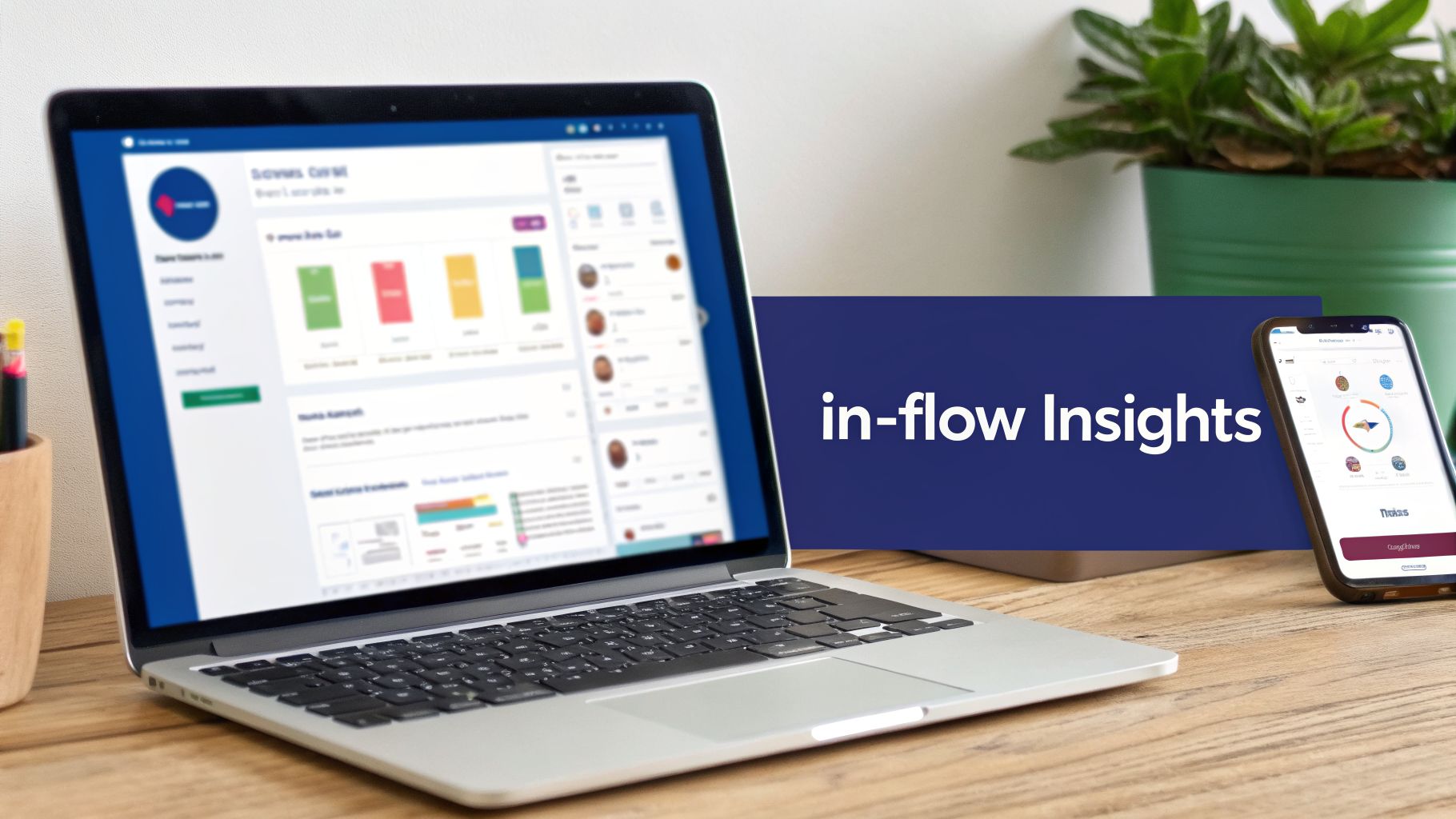
Let's be honest. Even the best intelligence tools are useless if reps don’t use them. Adoption has always been the weakness of new sales tech. One of the biggest trends today tackles this problem by embedding insights directly into the tools reps already use.
The goal is simple: eliminate context switching. Instead of asking sellers to open another tab, modern enablement pushes critical information into their existing workflow—inside the CRM, Slack, or email client. This small shift has a huge impact on productivity.
This flips the model completely. Enablement is no longer a destination you visit; it's a service that comes to you. It's the difference between looking up directions before a trip and having a GPS guide you turn-by-turn.
From Manual Pull to Automated Push
The old way was a manual "pull" system. A rep had a meeting, so they'd block off time to "pull" info from a dozen different places. It was slow, inconsistent, and often skipped under pressure.
The new model is an automated "push" system. It delivers timely, relevant insights exactly when and where they're needed, often before the rep knows they need them.
The idea behind workflow integration is this: if your tool requires a rep to open a new tab, log in, and search, you're losing the adoption battle. Real enablement reduces friction, it doesn't add steps.
Imagine a rep is about to start a crucial meeting. Instead of them frantically Googling for last-minute intel, an automated alert pops up in Slack. This pre-meeting brief has the latest company news, executive talking points, and potential risks or opportunities—all ready to go.
Making Intelligence Actionable in Real Time
This real-time delivery is powered by "always-on" account monitoring and trigger-based alerts. These systems constantly scan the market for important events at your target accounts.
When a trigger event happens, the platform translates it into an actionable alert and sends it to the right person.
- Slack Alerts for Timely Triggers: A target account announces a new product. The account owner gets an instant Slack notification with the news and a suggested talk track.
- CRM Integration for Deep Context: Every piece of intelligence is automatically logged and updated on the account record in your CRM. This builds a single source of truth without manual work. A powerful Salesforce CRM integration can transform your sales process.
- Email Notifications for Key Updates: For major signals like a big funding round, an email brief can be sent to the entire account team to keep everyone aligned.
Scaling Strategic Account Planning
This integrated approach makes strategic account planning a consistent, scalable process instead of a rare effort from top reps.
When intelligence flows into daily workflows, account plans are no longer static documents. They become living resources updated in real time as new signals appear. A rep can watch a company’s priorities shift from one quarter to the next, backed by evidence delivered right to their screen.
By embedding enablement where the work happens, you remove the biggest barriers to adoption. You make it easier for reps to do the right thing. This isn't just a trend about convenience; it's about building a smarter, more proactive sales engine.

“The Business Development team gets 80 to 90 percent of what they need in 15 minutes. That is a complete shift in how our reps work.”
Andrew Giordano
VP of Global Commercial Operations, Analytic Partners
Aligning Sales and Marketing with Shared Intelligence
For too long, sales enablement was seen as a one-way street—a service department for sales. But that view is outdated.
One of the biggest shifts today is the realization that enablement is the connective tissue for the entire revenue engine. That starts with tearing down the wall between sales and marketing.
We all know the frustrating story. Marketing generates leads based on broad personas, and sales complains they're not qualified. Meanwhile, reps uncover insights on calls that rarely get back to marketing to sharpen their campaigns. The result is two teams working hard but completely out of sync.
Shared intelligence changes the game.
Creating a Unified Go-to-Market Playbook
Modern account intelligence platforms act as a single source of truth for both teams. When sales and marketing work from the same real-time data, their efforts start complementing each other instead of clashing.
The insights reps use to personalize their outreach are the same insights marketing can use to build relevant, timely campaigns.
The new model isn't a linear handoff from marketing to sales. It's a continuous feedback loop where sales insights fuel marketing strategy, and marketing campaigns warm up the right accounts for sales outreach.
This alignment ensures everyone is targeting accounts based on real-world buying signals, not just static firmographics. It's a key part of any modern go-to-market strategy. To learn more, check out our guide on improving collaboration between sales and marketing.
Turning Sales Insights into Marketing Campaigns
Let’s make this practical. Imagine an intelligence platform like Salesmotion flags a sudden hiring spike for "Cloud Security Architect" roles across a dozen target accounts.
In the old model, maybe a few reps would notice and mention it in their emails. In the new model, this signal becomes a strategic asset for the entire revenue team.
- For Sales: Reps get an immediate alert with a clear "reason to call" that speaks directly to a prospect's likely pain point—scaling security for new cloud infrastructure.
- For Marketing: The marketing team can create a targeted campaign around this exact signal today. They can launch ads, publish a blog post, and schedule a webinar focused on the challenges new Cloud Security Architects face.
This creates a powerful one-two punch. Marketing is no longer guessing what message might resonate. They're building campaigns based on validated, real-time market needs that sales is already acting on. The result is higher engagement and warmer conversations.
The Power of a Shared Signal-Based Strategy
When both teams operate on the same intelligence, the entire revenue process becomes smarter and more efficient. Marketing's campaigns warm up the accounts showing the strongest intent, and sales follows up with hyper-personalized messaging that echoes the campaign's idea.
This is how you move away from a siloed mentality and toward an integrated revenue strategy. The focus shifts from disconnected KPIs (like MQLs or dials made) to a single, shared goal: generating pipeline from the right accounts at the right time.
Putting These Sales Enablement Trends into Action
We’ve covered the big trends, but knowing what’s happening and using it to drive revenue are two different things. Let's get practical. How do you turn theory into a working strategy?
It starts with a mental shift. Your team needs to move from reactive, list-based selling to proactive, signal-based engagement.
The goal is to build a system where your reps always show up with a relevant point of view. It’s not about working harder; it’s about working smarter. Let technology handle the research so your team can spend their time building relationships and having strategic conversations.
Your Practical Roadmap to Implementation
Getting started doesn't have to be a massive project. It begins with a focused exercise to identify what matters to your business. From there, you can build repeatable plays that turn market signals into pipeline.
Here’s a simple, three-step guide:
- Identify Your Highest-Value Buying Signals: Look at your last 10-15 big wins. What was happening at those companies right before they engaged with you? Common triggers include new funding rounds, key executive hires, or a spike in hiring for a specific role. Your goal is to pinpoint the top 3-5 signals that consistently precede a closed deal.
- Map Signals to Specific Outreach Plays: For each signal, create a simple playbook. Define the trigger, the likely pain points it creates, and your initial talk track. For example, a new CFO hire is a perfect trigger for a play focused on financial visibility and ROI.
- Integrate and Automate the Workflow: Once you have your plays, use an intelligence platform like Salesmotion to monitor these triggers across your target accounts. Set up automated alerts via Slack or your CRM to push these insights directly to your reps, eliminating the manual research.
This process transforms your go-to-market from a static, list-driven approach to a dynamic one driven by real-time events. This is how you get sales and marketing moving in the same direction.
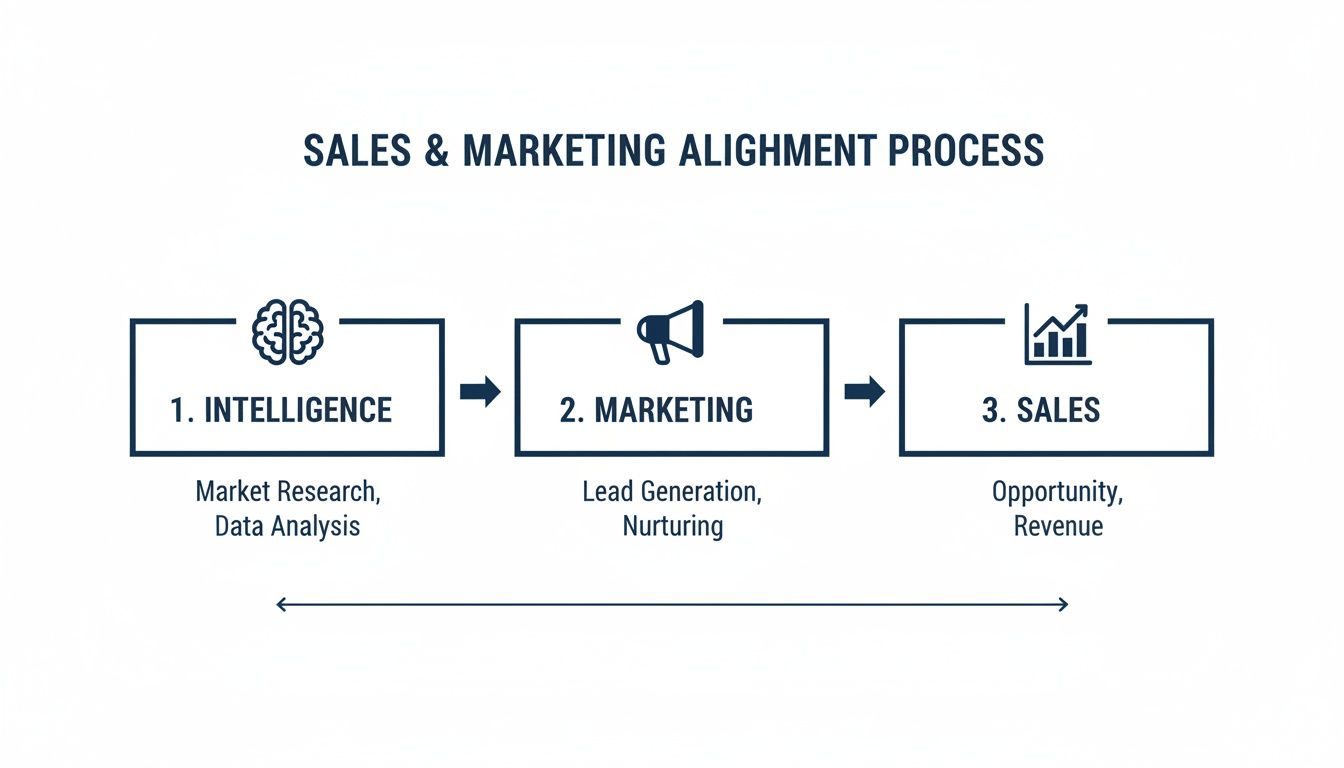
When sales and marketing operate from a shared source of intelligence, their efforts become a powerful, unified force.
Tying It All Back to Business Pains
When you implement this approach, you're directly solving the core challenges that hold revenue teams back.
You move from inconsistent account planning to a scalable, systematic process. Your reps go from having a weak "why now?" to a credible, timely reason to engage every time. And generic messaging gets replaced with hyper-personalized outreach that proves you understand the buyer's world.
This is how modern revenue teams win. They don’t just buy new tools; they adopt a new operating model built on speed, relevance, and shared intelligence. The result is a more effective sales engine that turns market activity into predictable revenue.
Frequently Asked Questions
When digging into these sales enablement trends, a few questions always come up. Here are straight answers to help you move forward.
How Is AI-Powered Enablement Different From Traditional Sales Analytics?
Think of traditional sales analytics as looking in the rearview mirror. It's about your internal data—past win rates, average deal size. It tells you what already happened.
AI-powered enablement is like a real-time GPS for the road ahead. It scans external market signals, not just your past performance. It spots real-time events like a new funding round at a target account and tells you what to do about it right now.
The big difference is the actionable "so what." Traditional analytics reports on outcomes. AI-powered enablement provides the context and the trigger for proactive outreach, making every interaction timely and relevant.
Are These Trends a Good Fit for a Small Sales Team?
Absolutely. In fact, smaller sales teams often benefit the most. Without a large support staff, their reps are stuck with the full "manual research tax."
AI-powered platforms automate that time-consuming work. This lets a small team punch above its weight, performing with the efficiency and insight of a much larger one. It helps them focus on the accounts showing the strongest buying signals to maximize their impact.
What Is the First Step to Implementing Signal-Based Selling?
Start by figuring out what a high-value "signal" looks like for your business. Don't guess—use your data.
Look at your last 10-15 biggest wins. What was going on at those companies right before they started talking to you?
- Did they just get a new round of funding?
- Did they hire a new C-level executive?
- Did they announce a market expansion or a new product?
Find the top 3-5 triggers that appear right before a deal closes. That list is the foundation of your new, signal-based sales strategy.
How Can I Ensure My Team Actually Adopts These New Tools?
Adoption boils down to two things: seamless workflow integration and immediate value. If a new tool adds friction or feels like a chore, your team will ignore it.
The intelligence must be delivered into the tools your reps already live in, like Slack or your CRM. When a rep gets an automated alert with a perfect "reason to call" without leaving their workflow, they get it instantly. Start with a small pilot group, celebrate their early wins, and the rest of the team will want in. For more common questions about sales enablement, you might also want to review Buddypro's FAQ page.
Ready to turn market signals into measurable pipeline growth? Salesmotion automates account research and delivers actionable intelligence directly into your team's workflow. See how it works today.